Skip to content

MaPP: A Unified Marginalized Posterior-Predictive Framework for Data-Efficient RLVR

Sep 2026 · 0 citations
Computer Science

TL;DR

MaPP (Marginalized Posterior-Predictive), a unified framework for data-efficient RLVR that denoises response-level advantage estimation and improves prompt selection using a shared Beta posterior, is proposed.

Abstract

Reinforcement learning with verifiable rewards (RLVR) improves the reasoning capabilities of large language models but incurs substantial costs from rollouts and policy updates. Online prompt selection improves efficiency by using per-prompt Bayesian posteriors to predict difficulty and prioritize informative prompts. However, existing methods overlook how reliably learning signals are extracted from sampled responses. In GRPO, a response's advantage depends on both its own outcome and the randomly sampled outcomes of its peers through group normalization. Our theoretical and experimental analyses show that uncertainty in group composition introduces composition noise, a non-vanishing variance component that imposes an irreducible lower bound on gradient estimation error and impairs downstream prompt selection. We propose MaPP (Marginalized Posterior-Predictive), a unified framework for data-efficient RLVR that denoises response-level advantage estimation and improves prompt selection using a shared Beta posterior. For each response, MaPP replaces the standard group-relative advantage with a composition-invariant intrinsic advantage through closed-form Beta-Binomial marginalization. The resulting posterior-predictive estimator has an error that provably diminishes as the posterior concentrates. Using the same posterior, MaPP derives an uncertainty-aware prompt selection score to improve data efficiency without additional rollout cost. Experiments on mathematics, planning, and visual geometry across five model backbones show that MaPP consistently outperforms GRPO and strong selection baselines, achieving up to +2.45 average accuracy improvement over the strongest baseline under the same rollout budget and setting a new state of the art.
View source

Similar papers

#machine learning Preprint Sep 2026

EmbodiedMind: Adaptive Data Curation and Prefix-Tree Reinforcement Learning for Efficient Embodied Intelligence

Trie-GRPO, a novel reinforcement learning algorithm based on action prefix trees, which enables step-level advantage estimation, is introduced, which resolves the credit assignment problem by isolating intermediate correct decisions from downstream errors, while effectively balancing exploration efficiency and depth co...

Fei-Fan Wang, Zong-Bing Zhang, Yu Zhang et al. · 0 citations
Preprint Aug 2026

Improving Generalization Robustness of Multimodal RLVR

Reinforcement Learning with Verifiable Rewards (RLVR) makes Multimodal Large Language Models more accurate, but the gains are brittle: simply paraphrasing a question or changing the prompt template can degrade them, which challenges reliable deployment in high-stakes scenarios like medical VQA. We trace this to two iss...

P. Zhou, Zhiwei Tang, Xiaopeng Peng et al. · 0 citations
#small language model Preprint Aug 2026

Boosting LLM Exploration via Weak-Model Guidance in RLVR

This work empirically study the potential of outer prefixes, revealing the mechanism of the impact of distributional discrepancy to the exploration dynamics in RLVR training and efficiently mitigates entropy collapse without requiring additional SFT, intricate reward designs, or complex prompting.

Xin Shen, Huishuai Zhang, Peng Li et al. · 1 citation
#artificial intelligence Preprint Sep 2026

Learning Beyond What You Sample: Off-Policy-Aware Cross-Model Trajectory Exchange for RLVR

Reinforcement Learning with Verifiable Rewards (RLVR) methods such as GRPO rely on successful self-generated trajectories, but finite rollout budgets can produce all-fail groups with no reward-based policy-gradient signal. While additional rollouts improve the chance of success at higher cost, successful trajectories m...

Doohyuk Jang, Y. Park, Gyouk Chu et al. · 0 citations

Related blog posts

Microsoft Research Blog Sep 30, 2026

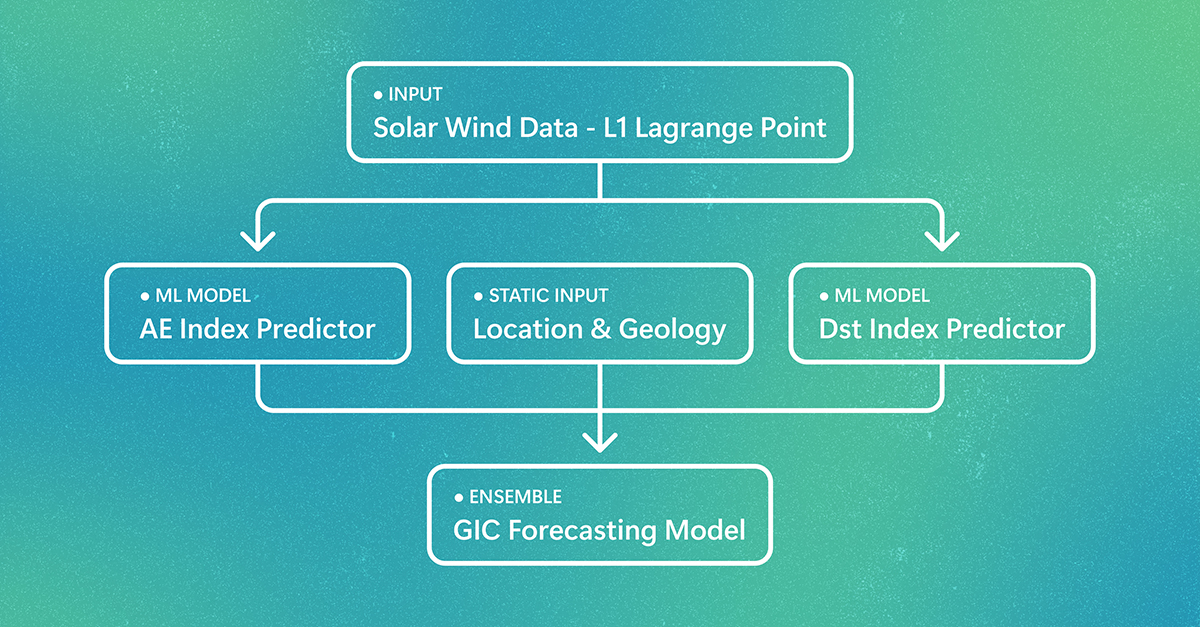
Forecasting space weather risks on power grids

Extreme space-weather events can damage power systems on Earth and degrade GPS accuracy and satellite operations. A new machine learning system can predict where damage is likely to occur 30-60 minutes before a storm arrives. The post Forecasting space weather risks on power grids appeared first on Microsoft Research.

We use cookies to run the site and, with your consent, for analytics and to show ads. See our Cookie Policy.