Skip to content

Persistent Partners Raise Prices Among Learning Agents

Sep 2026 · 0 citations · 56 references
Computer Science

Abstract

When pricing agents meet repeatedly on a platform, the platform decides who faces whom. We ask whether that choice moves the prices the agents learn, and whether a rise comes with learned punishment. In a pre-registered randomised experiment in the Bertrand duopoly of Calvano et al., each agent's price is set by a tabular Q-learning module, not by the small language model attached to it, and we randomise whether each agent keeps its partner, sees its rival's prices and can send messages. Keeping the same partner raises the level of profits, averaged over training, by 0.27 of the gap between competitive and monopoly profit (95% CI 0.20 to 0.35, all twenty paired runs positive), our registered primary result, and the resting price by 0.17 of the Nash-to-monopoly range (post hoc). A plain tabular learner reproduces the effect in all 25 further blocks, and there one permanent partner raises the level more than about three do (+0.23 against +0.05, exploratory). Where rival prices are hidden, the price-setting module cannot see a cut, so cannot punish it, yet the resting price rises as much and the rise lasts to the end of training, while with visible rivals it shrinks with longer training (post hoc). Where the rival is visible, a static best responder accounts for a third to a half of what a forced-deviation probe reads as punishment, on the starts where the rival can see the cut, and net of it the registered test of learned punishment is inconclusive. A test that looks only for punishment would thus miss the rise where the rival is hidden, while a check for profitable deviations flags most of those prices (post hoc). In an exploratory extension, untrained Qwen2.5 7B and 14B models under one prompt show the effect when the rival's price is left out of the prompt and inconsistently when it is shown, the 7B result replicating on fresh blocks, while two other model families show none.

View source

Similar papers

Preprint Sep 2026

Multi-Agent Reinforcement Learning in Markets with Congestion

This paper investigates multi-agent reinforcement learning (MARL) in settings where firms compete for customers using congestible resources. We consider Bertrand competition in which firms compete by announcing prices and customers choose among firms based on both price and congestion. The relationship between price, c...

Qixuan Zai, Randall Berry · 1 citation
Preprint Sep 2026

Agent-based Modeling: Equilibrium, Echo Chambers, and Efficiency in Hybrid Coevolutionary Opinion Games

The Hybrid Coevolutionary Opinion Game (H-COG) is introduced, in which analytical and LLM-driven agents share one network, choose their neighbors by opinion similarity in every round, and hold stances drawn from real Reddit comments on gun control and abortion.

Ming-Zhi Jiang, An-Tzu Teng, Jun-En Liu et al. · 0 citations
Preprint Aug 2026

Online Multi-Agent Contracts

We introduce and study an online variant of the multi-agent contract model. In our model, agents arrive one-by-one and are active with a certain probability. Upon arrival of agent $i$, the principal offers a linear contract $\alpha_i$, specifying the fraction of the principal's reward transferred to agent $i$. Agents c...

Paul Dütting, Michal Feldman, Yoav Gal-Tzur et al. · 0 citations
Preprint Aug 2026

Trusting AI in Competitive Markets

It is found that the gender composition of the market shapes how sellers learn from the advice, and where prices settle as a result, which reverses what recent evidence on gender and AI would predict.

Jussi Keppo, Yuze Li, Gerry Tsoukalas et al. · 0 citations

Related blog posts

GPT-Lab Sep 3, 2026

Adaptive AI Agents in Construction Workflows

Adaptive AI agents can help make BIM data more machine-readable by navigating IFC models, interpreting inconsistent information, and mapping it to defined standards. In this blog, Alok Rawat shares findings from a real-world pilot in construction workflows. The post Adaptive AI Agents in Construction Workflows appeared first on GPT-Lab.

GPT-Lab Aug 28, 2026

We built an AI factory for HVAC control

What does it take to trust AI-driven HVAC optimization? Our AI Model Factory combines agents, machine learning, reinforcement learning and deterministic checks in a governed workflow designed for messy, real-world building data. The post We built an AI factory for HVAC control appeared first on GPT-Lab.

Microsoft Research Blog Jul 30, 2026

EvoLib: Turning experience into evolving knowledge

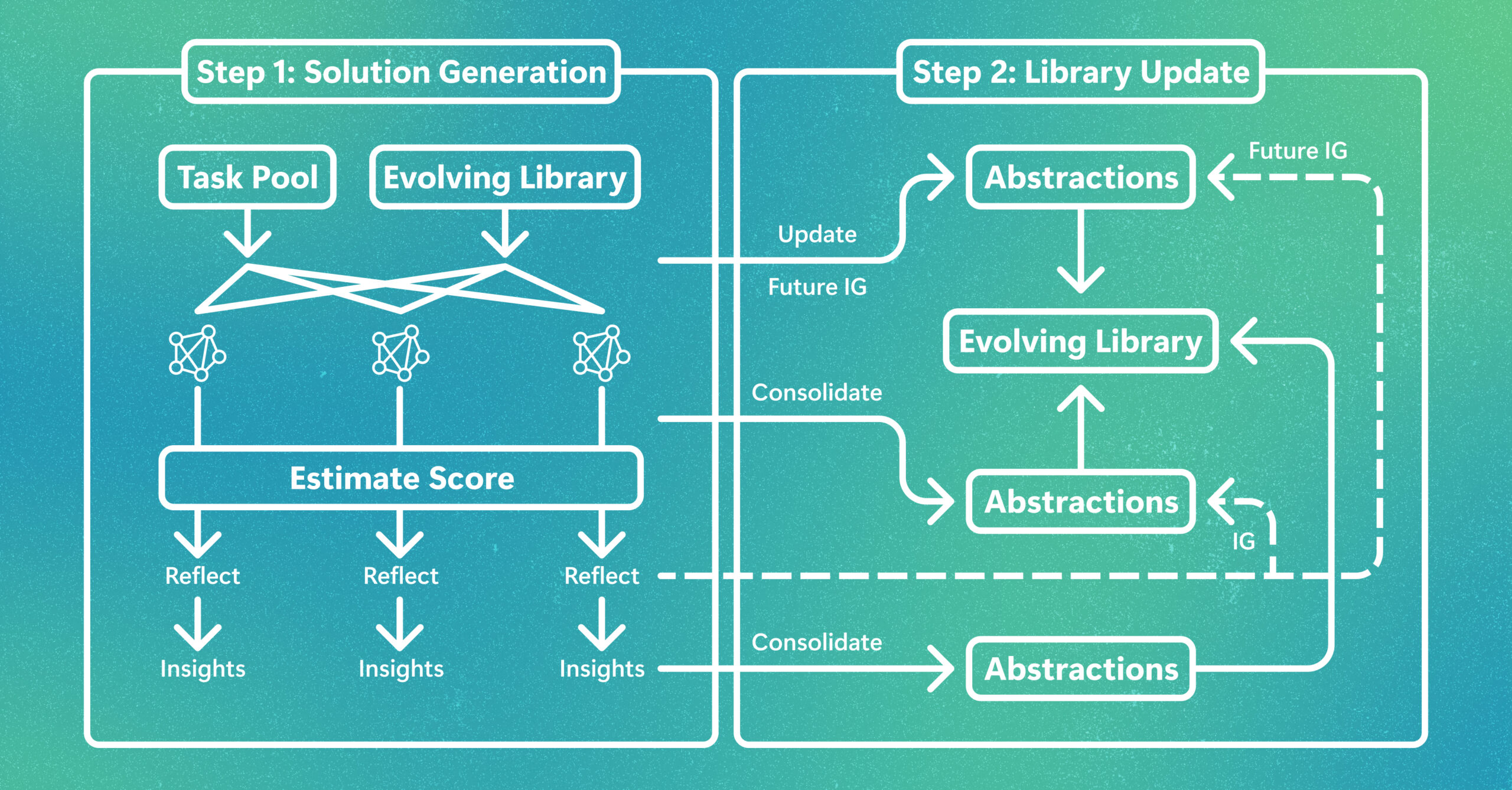
LLMs do not get smarter just by remembering more. EvoLib turns experience into evolving knowledge, taking reusable skills and insights that help models learn and adapt across tasks long after deployment. The post EvoLib: Turning experience into evolving knowledge appeared first on Microsoft Research.

We use cookies to run the site and, with your consent, for analytics and to show ads. See our Cookie Policy.