Skip to content

Fewer Tokens, More Self-Teaching: On-Policy Self-Distillation for Extreme Visual Token Reduction

Sep 2026 · 0 citations · 50 references
Computer Science

TL;DR

LT-OPD, a training framework for extreme visual-token reduction, is proposed and it is shown that on-policy learning can substantially recover capabilities lost to extreme visual-token reduction.

Abstract

Visual token reduction is an effective way to accelerate multimodal large language models (MLLMs), but performance deteriorates rapidly under extremely low token budgets. Existing work has explored both visual-token selection and training-based adaptation to reduced visual inputs. We take a step further by asking how a heavily compressed MLLM should learn from the states induced by its own generations. This setting naturally calls for on-policy self-distillation: a heavily compressed model is supervised on the states induced by its own generations, while its full-token counterpart serves as an information-rich teacher. Based on this insight, we propose LT-OPD, a training framework for extreme visual-token reduction. The student rolls out responses with only a small fraction of visual tokens, and a frozen full-token copy of the same MLLM provides distributional supervision along these student-generated trajectories. To stabilize on-policy learning when visual evidence is severely limited, we further introduce a budget-level curriculum that progressively decreases the token budget during training. Across nine benchmarks on Qwen3.5-4B, LT-OPD raises average retained performance under 5% visual-token retention from 68.6% to 82.3%, outperforming training-free, training-based, and reinforcement-learning baselines at the same budget. The gains transfer consistently to Qwen3.5-9B, GLM-4.6V-9B, and LLaVA-OV-1.5-4B. LT-OPD also reduces KV-cache usage by 85.2% and prefill FLOPs by 85.4% without additional inference overhead, demonstrating that on-policy learning can substantially recover capabilities lost to extreme visual-token reduction.
View source

Similar papers

#computer vision Review Sep 2017

Agile Software Development Methods: Review and Analysis

This publication proposes a definition and a classification of agile software development approaches and analyses ten software development methods that can be characterized as being "agile" against the defined criterion.

P. Abrahamsson, O. Salo, Jussi Ronkainen et al. · 727 citations · ⚡54
#computer vision Jun 2008

The impact of agile practices on communication in software development

The study shows that agile practices improve both informal and formal communication, but indicates that, in larger development situations involving multiple external stakeholders, a mismatch of adequate communication mechanisms can sometimes even hinder the communication.

M. Pikkarainen, Jukka Haikara, O. Salo et al. · 401 citations · ⚡48
#machine learning Review Open access Oct 2014

Software development in startup companies: A systematic mapping study

The results indicate that software engineering work practices are chosen opportunistically, adapted and configured to provide value under the constrains imposed by the startup context.

Nicolò Paternoster, Carmine Giardino, M. Unterkalmsteiner et al. · 394 citations · ⚡54

Diffusion models as plug-and-play priors

The possibility of inferring high-dimensional data inference in a model that consists of a prior and an auxiliary differentiable constraint given some additional information is considered, thereby allowing a range of potential applications in adapting models to new domains and tasks.

Alexandros Graikos, Esmeralda S. Whitammer, N. Jojic et al. · 316 citations · ⚡15

Related blog posts

MIT News · Artificial Intelligence Aug 27, 2026

Looking beyond natural sequences

A new machine-learning framework aims to improve the success rate of computational protein design while moving away from results that reproduce sequences found in nature.

Microsoft Research Blog Aug 11, 2026

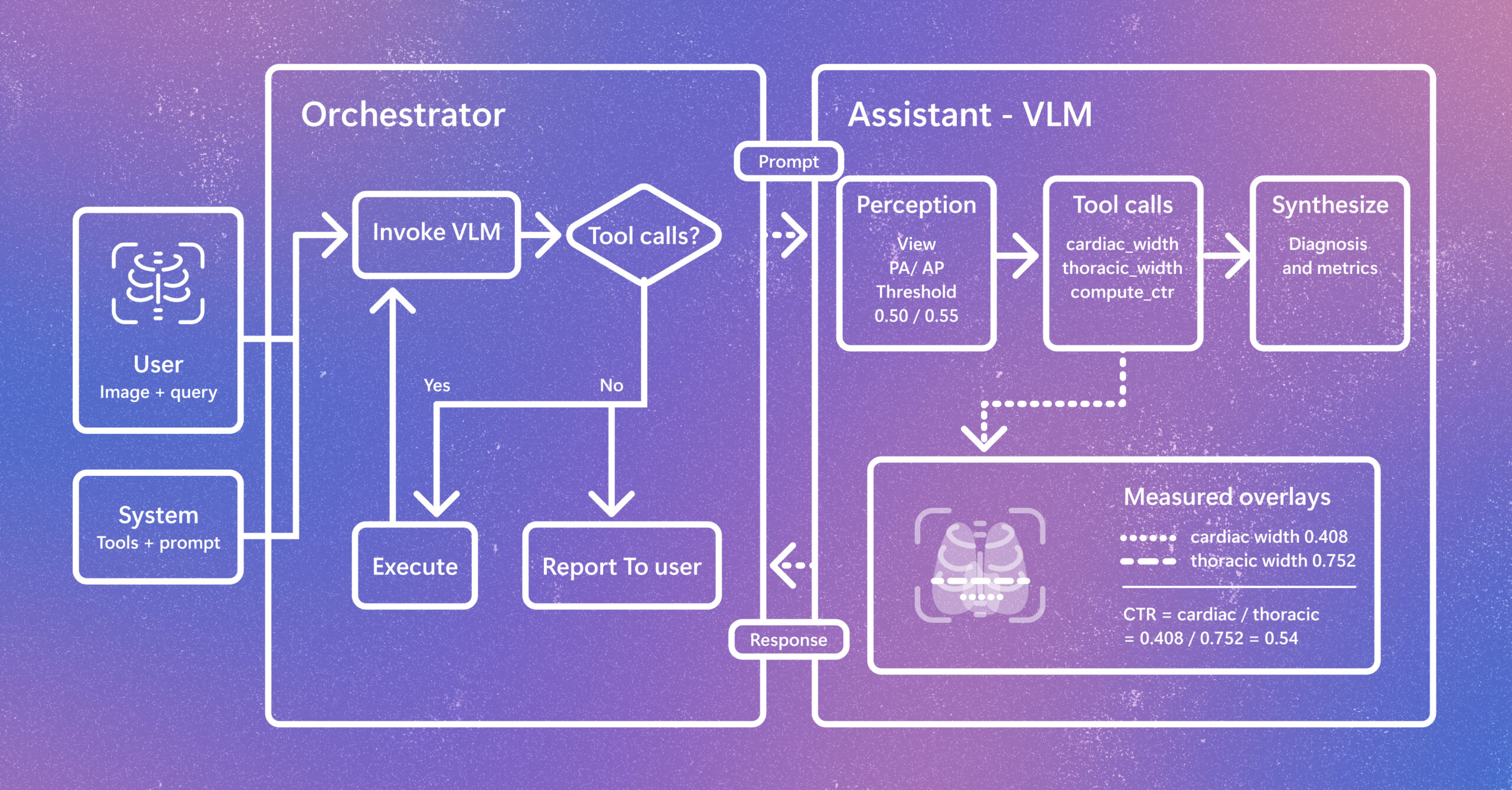
Introducing CARE-X: Towards Clinically Useful Radiology VLMs with Auxiliary Supervision, Reward-Aligned Learning, and Tool-Augmented Measurement

Radiology AI is evolving beyond report generation. CARE-X explores a unified approach that combines flexible reasoning, calibrated predictions, and measurement-based tools for chest X-ray interpretation. The post Introducing CARE-X: Towards Clinically Useful Radiology VLMs with Auxiliary Supervision, Reward-Aligned Learning, and Tool-Augmented Measurement appeared first on Microsoft Research.

We use cookies to run the site and, with your consent, for analytics and to show ads. See our Cookie Policy.