Skip to content

Terminal-Register Certification for Finite-Measurement Learning of Multiscale Quantum States

Sep 2026 · 0 citations · 19 references
Physics Computer Science

TL;DR

It is confirmed that an ideal sequential and terminal measurement schedule delivers the same complete bit string distribution under matched causal operations, while normalized postselection can amplify perturbations inversely with prefix acceptance.

Abstract

Structured quantum-state learning not only depends on an expressive ansatz but also on an operational certificate that stays meaningful with finite measurements and imperfect implementation. We study pure one dimensional states learning by an inverse binary multiscale entanglement renormalization ansatz (MERA). In the learning procedure, the qubits removed during coarse graining are controlled coherently and measured together at the terminal register. We confirm that an ideal sequential and terminal measurement schedule delivers the same complete bit string distribution under matched causal operations, while normalized postselection can amplify perturbations inversely with prefix acceptance. A noise aware theorem introduces an individual calibrated total variation implementation budget to the finite shot certificate. The protocol is estimated on an open boundary transverse field Ising ground state. A frozen 8-qubit schedule using $560$ million simulated training measurements per run achieves fidelity above $0.99$ in all $60$ held-out runs, with a mean fidelity of $0.996886$. 1080 circuit-noise cells and 6480 confidence-coverage rows are covered by fixed-circuit robustness validation without a locked soundness violation. We then address architectural fairness at $n=16$ using three new studies. In a 120-run exact-gradient multistart diagnostic, MERA has higher fidelity in 58/60 paired restarts and lower long-range error in 60/60, although no run met the prespecified stationarity criterion. Finally, a causal cone-complete, parameter matched local circuit achieves $2.62\times$ greater aggregate gate exposure yet loses all 30 paired comparisons in fidelity, long-range error, energy, and entropy.

View source

Similar papers

Preprint Aug 2026

Sound and Efficient Certification of High-Quality Qubit Operations: Theory and Experiment

Can a high-quality quantum gate be certified when uncharacterized state-preparation and measurement errors are dominant? Can this be achieved with low experimental overhead? Here, we introduce a sound black-box certification protocol for a single-qubit gate based on a small set of fixed, deterministic sequences. From t...

Nikolai Miklin, Jan Nöller, J. Martínez et al. · 0 citations
Preprint Aug 2026

Generative Learning for Quantum Measurement Design

FlowMeas is introduced, which uses a generative flow network to directly sample finite ensembles of shallow Clifford measurement circuits subject to a prescribed shot budget and hardware constraints, and establishes generative learning as a flexible and unified framework for quantum measurement design under practical r...

Jun Dai, O. Nahman-Lévesque, Guillaume Rabusseau et al. · 0 citations
Preprint Sep 2026

A Single Fixed Shallow Circuit for Classical Shadows of Arbitrary n-Qubit States

Classical shadows extract quantum properties from reusable classical records, typically obtained through randomized measurement settings. Although individual settings may be shallow, switching among them introduces control, calibration, and reconfiguration costs beyond conventional metrics. Here we construct, for every...

Yu Wang, Xiu-Wu Zhu · 0 citations
Preprint Sep 2026

Certifying fermionic Gaussian states (and a little more) with optimal precision dependence

Fermionic Gaussian states are the workhorse reference states for qubit-based quantum simulation of fermionic systems, yet existing certification protocols either proceed via fidelity estimation, leading to suboptimal sample complexity in the target precision $\epsilon$, only apply to Haar-typical states, or require ada...

Ninnat Dangniam, Laphas Premcharoen, Metrasit Sripech et al. · 0 citations
Preprint Sep 2026

Robust Device-Independent Certification of Boolean-Phase Gates

Device-independent certification of a quantum gate requires the input and output tests to identify the same reference qubits. Self-testing the output Choi state alone does not guarantee this consistency. We develop a robust certification scheme for Boolean-phase gates, a broad family of computational-basis diagonal gat...

Yun-Guang Han, Xing-Yuan Bu, Aleksandra Gočanin et al. · 0 citations
Preprint Oct 2026

Learning Many-Body Hamiltonians Using a Local Probe

Hamiltonian learning provides a systematic framework for reconstructing unknown quantum dynamics. However, existing protocols typically assume direct measurement access to the entire system. With fast single-qubit control and a connected reference backbone, we show that a single measurable qubit suffices to learn all $...

Su-Ying Liu, Zi-Tai Xu, Alexey V. Gorshkov et al. · 0 citations

Related blog posts

MIT News · Artificial Intelligence Aug 27, 2026

Looking beyond natural sequences

A new machine-learning framework aims to improve the success rate of computational protein design while moving away from results that reproduce sequences found in nature.

Microsoft Research Blog Aug 20, 2026

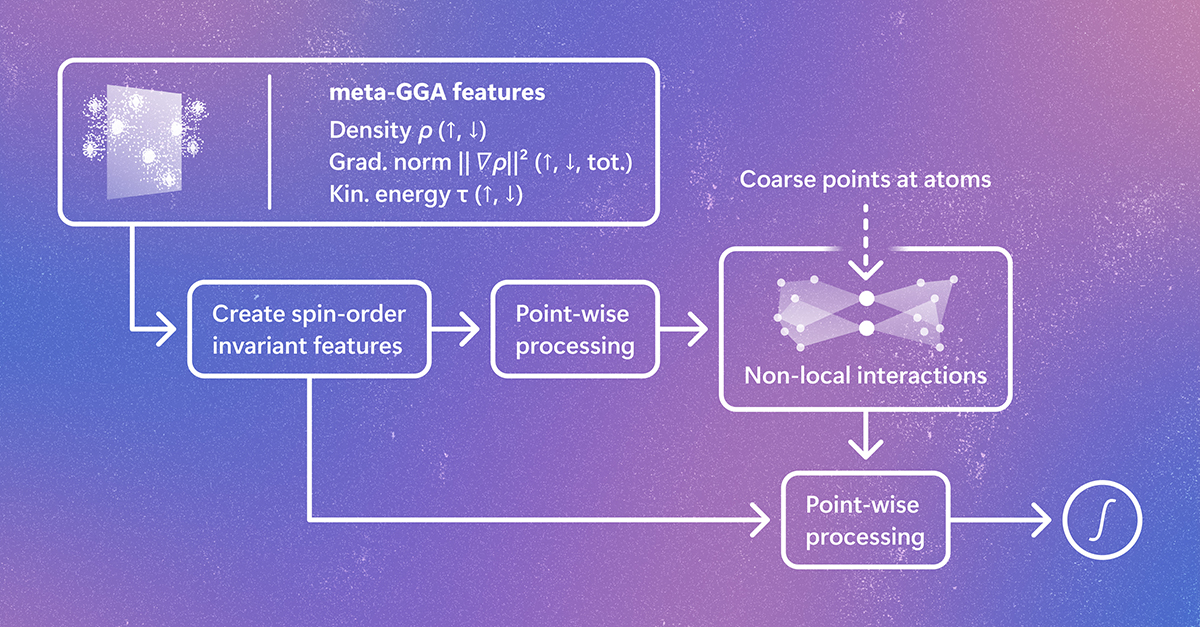
Broadening access to Skala creates a faster path to predictive DFT 

Skala 1.1, the updated deep-learning exchange-correlation functional from Microsoft Research, provides greater accuracy, expanded accessibility across the computational chemistry ecosystem, and a living benchmark to track computational performance. The post Broadening access to Skala creates a faster path to predictive DFT  appeared first on Microsoft Research.

We use cookies to run the site and, with your consent, for analytics and to show ads. See our Cookie Policy.