These results support a state-based view of robot memory: effective memory for control is not simply retained visual history, but compact task-relevant state derived from the interaction history.

Abstract
Visual-memory systems commonly retain or compress past observations. Robot control additionally requires interaction-derived state that no individual frame may explicitly represent, such as persistent identity relations, accumulated progress, or ordered procedures. We introduce Simple Agentic Robot Memory (SimpleARM), a training-free memory layer for frozen generalist robot policies. From the task instruction, SimpleARM specifies what to monitor; frozen perceptual tools maintain compact typed state online; structured access retrieves that state only when a proposed subgoal depends on history; and current-view grounding resolves recalled entities before execution. We evaluate SimpleARM on RoboMME, a benchmark of memory-dependent robot manipulation tasks that require history information no longer available in the current observation. Across all 16 tasks and three policy seeds, SimpleARM achieves 67.17% mean success, compared with 44.51% for the strongest non-oracle baseline. Matched ablations show mechanism specificity: removing relation, reference, progress, or route state produces large losses where the affected state is retrieved for control, while largely sparing other tasks. These results support a state-based view of robot memory: effective memory for control is not simply retained visual history, but compact task-relevant state derived from the interaction history.
GAOKAO-Bench is introduced, an intuitive benchmark that employs questions from the Chinese GAOKAO examination as test samples, including both subjective and objective questions that contribute a robust evaluation benchmark for future large language models and offers valuable insights into the advantages and limitations...
Xiaotian Zhang, Chun-yan Li, Yi Zong et al.· arXiv.org· 216 citations· ⚡17
An algorithm is proposed which leverages disentangled semantic factors to generate adversarial perturbation by altering controlled semantic attributes to fool the learner towards various "adversarial" targets.
Haonan Qiu, Chaowei Xiao, Lei Yang et al.· arXiv.org· 208 citations· ⚡17
This work proposes a HALO that directly maximizes the utility of generations instead of maximizing the log-likelihood of preferences, and suggests that the best loss depends on the inductive biases most appropriate for a given setting, an oft-overlooked consideration.
This work investigates the possibilities of using LLMs in a resume screening setting via a document retrieval framework that simulates job candidate selection and finds that the MTEs are biased, significantly favoring White-associated names in 85% of cases and female-associated names in only 11.1% of cases.
This work shows that orders of magnitude enhancement in performance could be obtained by a combination of hardware improvements and tight quantum-HPC integration and introduces high-performance architectures for quantum-probabilistic computing with custom-designed accelerators to tackle today's industry-scale classical...
Masoud Mohseni, Artur Scherer, K. Johnson et al.· arXiv.org· 121 citations· ⚡9
This paper presents a comprehensive overview of the Ultralytics YOLO family, emphasizing architectural evolution, benchmarking, deployment, and emerging directions from YOLOv5 through YOLO27, and examines detection, segmentation, depth, classification, pose, oriented detection, tracking, export, quantization, and deplo...
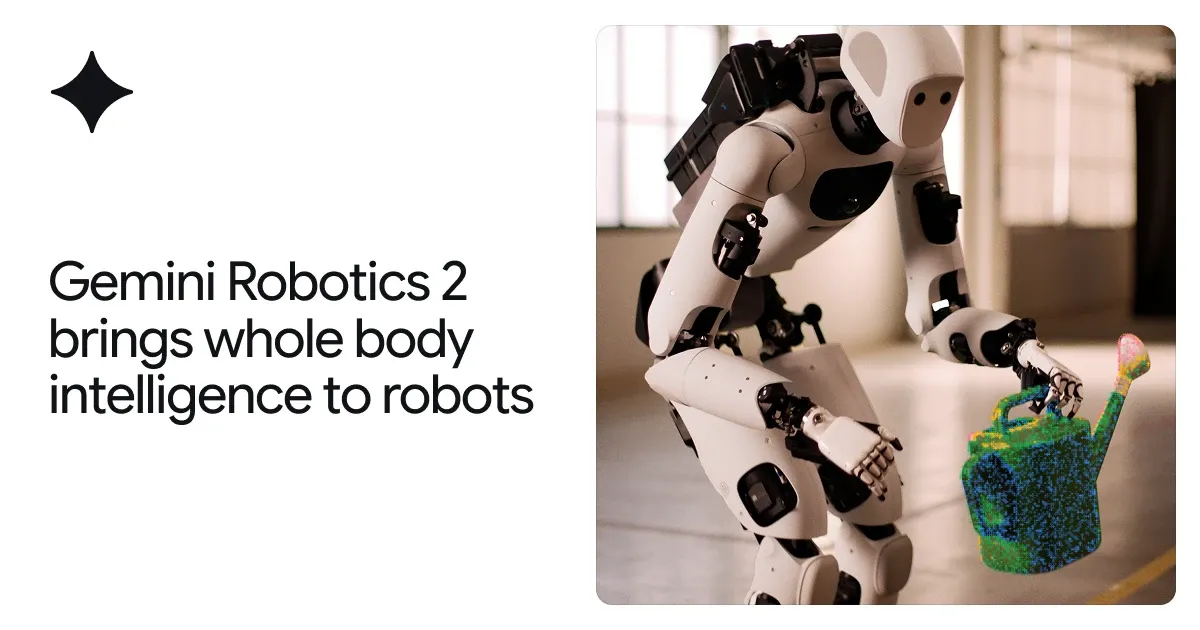
From feet to fingertips — we are teaching robots intelligent whole-body control, fine dexterity, and teamwork to complete a broad range of complex tasks.

