A substantial decrease in menthofuran content in the essential oil of the edited line #10 compared to the wild-type control is revealed, thereby demonstrating a viable strategy for improving mint essential oil quality through genome-editing.
A novel highly efficient CRISPR/Cas9-based dual-sgRNA expression editing system for F. oxysporum suitable not only for single-gene editing but also for large-fragment deletion and multiplex gene editing, although the editing efficiency is somewhat lower.
Wangjie Zhu, Jiao Liao, Yuanyuan Liu et al.· ACS Synthetic Biology· 0 citations
Compared with conventional homologous recombination, the CRISPR-Cas9 system substantially improved gene disruption efficiency, thereby overcoming a major limitation in the genetic manipulation of lichen-forming fungi.
Ze-Yi Wang, Niu-Niu Wang, Hai-Yu Zhang et al.· Journal of Fungi· 0 citations
The application of genome editing, CRISPR/Cas9 has revolutionized plant breeding by enabling precise, efficient, and targeted modification of native genes, significantly accelerating the development of improved agronomic traits of crops. Therefore, CRISPR/Cas9 technology currently the most extensively used genome editi...
Ravindra B. Malabadi, Raju K. Chalannavar· World Journal of Advanced Re...· 0 citations
iPB-REG is established as a practical strategy for producing uniform genome-edited fruit trees and provide a valuable platform for DNA-free genetic improvement and functional genomics in clonally propagated perennial crops.
C. Nishitani, Nozomi Tsujino, Misa Kuroki et al.· bioRxiv· 0 citations
This chapter outlines a comprehensive methodology for the design, assembly, and functional assessment of CRISPR/dCas9 systems optimized for tomato to investigate pathogen-associated responses.
Ananya Mukherjee, Shrabani Basak, Raghuvir Singh et al.· Methods in molecular biology· 0 citations
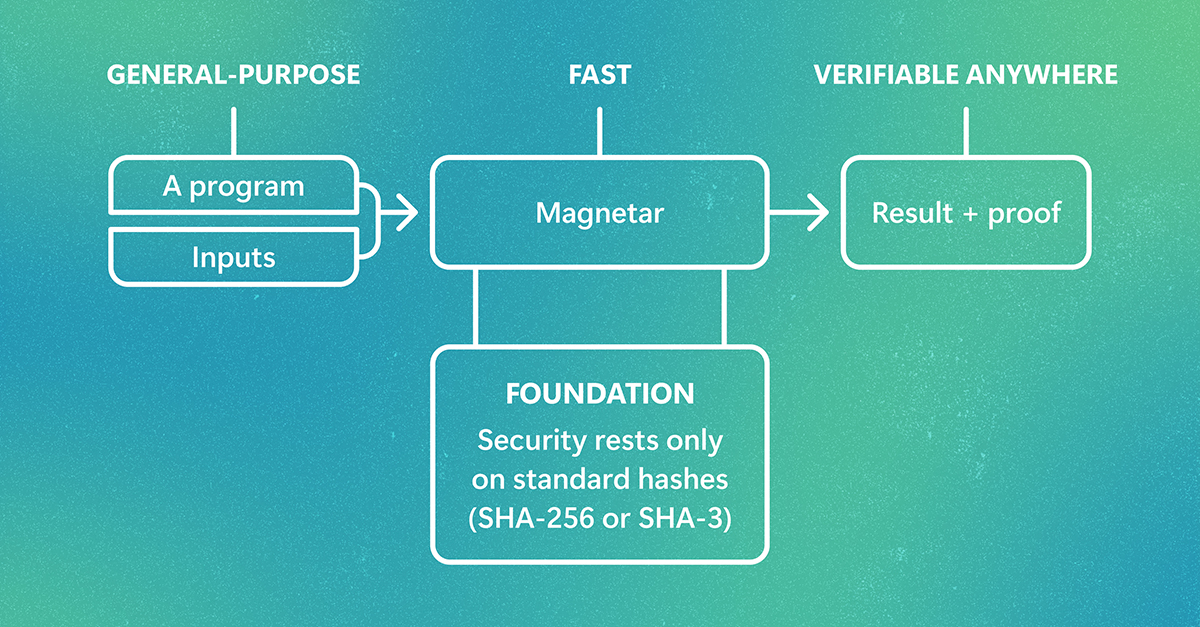
Zero-knowledge proofs can verify computing results without rerunning workloads or exposing sensitive data. Magnetar helps bring them into the mainstream with support for standard programming languages, major speed gains, and quantum-resistant security. The post Proof-based general-purpose computing with Magnetar appeared first on Microsoft Research.