Large language models trained on vast corpora inherently risk memorizing harmful content that may later re-emerge in their outputs. To mitigate this issue, existing unlearning methods typically rely on training-based parameter updates, such as gradient ascent and its variants, to delete targeted content while preserving other knowledge. However, balancing the competing goals of forgetting and retention makes hyperparameter choices for these methods particularly difficult, often requiring repeated tuning to obtain a strong model that still leaves substantial room for improvement and transfers poorly across models and datasets. To address this challenge, we investigate whether unlearning runs exhibit exploitable structure in weight space, and observe that models from different runs still lie in a shared evaluation-performance basin. This suggests that stronger models may be recovered through an unlearning-tailored soup strategy, reducing the need for repeated tuning for further improvement or new settings. Motivated by this, we propose UnlearningSoup, a unified framework that provides two strategies: EfficientSoup uses binary-search-based interpolation to quickly discover a well-performing model in the early stage, where repeated tuning would otherwise make strong model selection costly. PerformanceSoup uses reweighted souping to efficiently unlock the remaining performance potential in the later stage, where repeated tuning becomes increasingly inefficient. Extensive experiments across diverse datasets and models show that UnlearningSoup delivers 2.4x to 3.3x efficiency gains in hyperparameter selection, while consistently improving performance across settings.
The results indicate that software engineering work practices are chosen opportunistically, adapted and configured to provide value under the constrains imposed by the startup context.
Nicolò Paternoster, Carmine Giardino, M. Unterkalmsteiner et al.· Information and Software Tec...· 394 citations· ⚡54
The possibility of inferring high-dimensional data inference in a model that consists of a prior and an auxiliary differentiable constraint given some additional information is considered, thereby allowing a range of potential applications in adapting models to new domains and tasks.
Alexandros Graikos, Esmeralda S. Whitammer, N. Jojic et al.· Neural Information Processin...· 316 citations· ⚡15
It is proved that any global minimizer of the trajectory balance objective can define a policy that samples exactly from the target distribution, and empirically demonstrate the benefits of the trajectories balance objective for GFlowNet convergence, diversity of generated samples, and robustness to long action sequenc...
Esmeralda S. Whitammer, Moksh Jain, Emmanuel Bengio et al.· Neural Information Processin...· 302 citations· ⚡60
This state-of-practice investigation was performed using a literature review followed by a multiple-case study approach and presents how inconsistency between managerial strategies and execution can lead to failure by means of a behavioral framework.
Carmine Giardino, Xiaofeng Wang, P. Abrahamsson· International Conference on...· 175 citations· ⚡19
This work investigates the possibilities of using LLMs in a resume screening setting via a document retrieval framework that simulates job candidate selection and finds that the MTEs are biased, significantly favoring White-associated names in 85% of cases and female-associated names in only 11.1% of cases.
This study conducts a case survey study based on the secondary data of the major pivots happened in 49 software startups, and demonstrates that customer need pivot is the most common among all pivot types.
Sohaib Shahid Bajwa, Xiaofeng Wang, Anh Nguyen-Duc et al.· Empirical Software Engineeri...· 127 citations· ⚡15
Martin Trust Center Managing Director Bill Aulet introduces Dear Dreamer, a free platform for middle and high school students who want to learn about entrepreneurship.
Microsoft Research Blog· microsoft.comSep 30, 2026
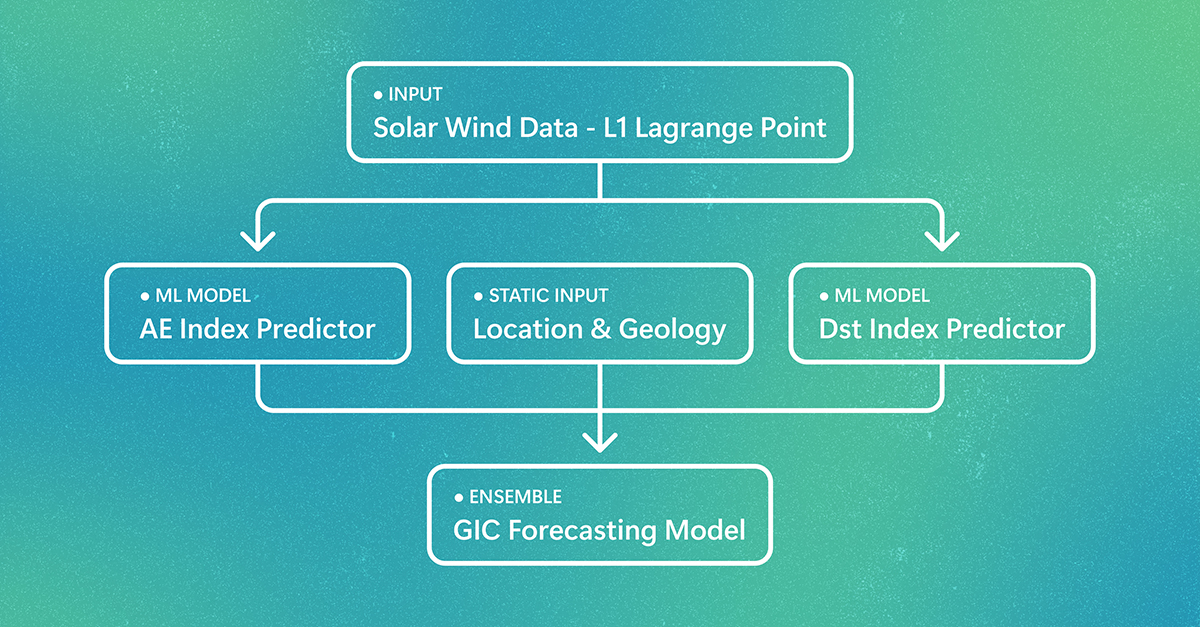
Extreme space-weather events can damage power systems on Earth and degrade GPS accuracy and satellite operations. A new machine learning system can predict where damage is likely to occur 30-60 minutes before a storm arrives. The post Forecasting space weather risks on power grids appeared first on Microsoft Research.
MIT News · Artificial Intelligence· news.mit.eduSep 29, 2026
Professor Sherry Turkle’s new book, “Artificial Intimacy,” offers a withering critique of chatbots and the antisocial dynamics she believes they encourage.
We use cookies to run the site and, with your consent, for analytics and to show ads.
See our Cookie Policy.