Mixture-of-Experts (MoE) models are a compelling architecture for scaling model capacity, making them especially attractive for deployment on resource-constrained, single-GPU systems. However, this benefit is difficult to realize because expert parameters dominate memory, and token-level routing is dynamic, unpredictable, and skewed. Prior work using offloading and caching remains fundamentally reactive, as systems wait for router outputs before moving experts, leading to inefficient cache utilization and an inability to overlap transfers with compute under tight VRAM budgets. To address these challenges, we propose Mira, an algorithm-system co-design that enables high-capacity MoE inference on a single GPU. Mira shifts from a reactive to a proactive stance by coupling predictive expert management with a tailored quantization format. It introduces lightweight per-layer predictors that anticipate expert usage two layers ahead, enabling proactive prefetching. These predictions feed a two-tier HOT+STAGE GPU cache managed by token-level routing telemetry to retain frequently used experts while staging predicted ones. To minimize transfer overhead, Mira implements a custom compression for expert parameters, which reduces metadata and improves packing efficiency, while minimally degrading accuracy. Mira is implemented as a fully integrated runtime that coordinates predictors, caching policies, and quantized transfers to maximize overlap between communication and compute. Our experiments show that Mira reduces expert-induced stalls. Compared against state-of-the-art baselines, Mira achieves a 5.71x speedup in average throughput on a memory-constrained GPU. It accelerates Time-to-First-Token by 11.71x and achieves a 3.84$x average speedup in beam search inference, demonstrating its effectiveness across diverse inference scenarios.
The results indicate that software engineering work practices are chosen opportunistically, adapted and configured to provide value under the constrains imposed by the startup context.
Nicolò Paternoster, Carmine Giardino, M. Unterkalmsteiner et al.· Information and Software Tec...· 394 citations· ⚡54
The possibility of inferring high-dimensional data inference in a model that consists of a prior and an auxiliary differentiable constraint given some additional information is considered, thereby allowing a range of potential applications in adapting models to new domains and tasks.
Alexandros Graikos, Esmeralda S. Whitammer, N. Jojic et al.· Neural Information Processin...· 316 citations· ⚡15
It is proved that any global minimizer of the trajectory balance objective can define a policy that samples exactly from the target distribution, and empirically demonstrate the benefits of the trajectories balance objective for GFlowNet convergence, diversity of generated samples, and robustness to long action sequenc...
Esmeralda S. Whitammer, Moksh Jain, Emmanuel Bengio et al.· Neural Information Processin...· 302 citations· ⚡60
This state-of-practice investigation was performed using a literature review followed by a multiple-case study approach and presents how inconsistency between managerial strategies and execution can lead to failure by means of a behavioral framework.
Carmine Giardino, Xiaofeng Wang, P. Abrahamsson· International Conference on...· 175 citations· ⚡19
This work investigates the possibilities of using LLMs in a resume screening setting via a document retrieval framework that simulates job candidate selection and finds that the MTEs are biased, significantly favoring White-associated names in 85% of cases and female-associated names in only 11.1% of cases.
This study conducts a case survey study based on the secondary data of the major pivots happened in 49 software startups, and demonstrates that customer need pivot is the most common among all pivot types.
Sohaib Shahid Bajwa, Xiaofeng Wang, Anh Nguyen-Duc et al.· Empirical Software Engineeri...· 127 citations· ⚡15
Related blog posts
MIT News · Artificial Intelligence· news.mit.eduOct 2, 2026
Martin Trust Center Managing Director Bill Aulet introduces Dear Dreamer, a free platform for middle and high school students who want to learn about entrepreneurship.
Microsoft Research Blog· microsoft.comSep 30, 2026
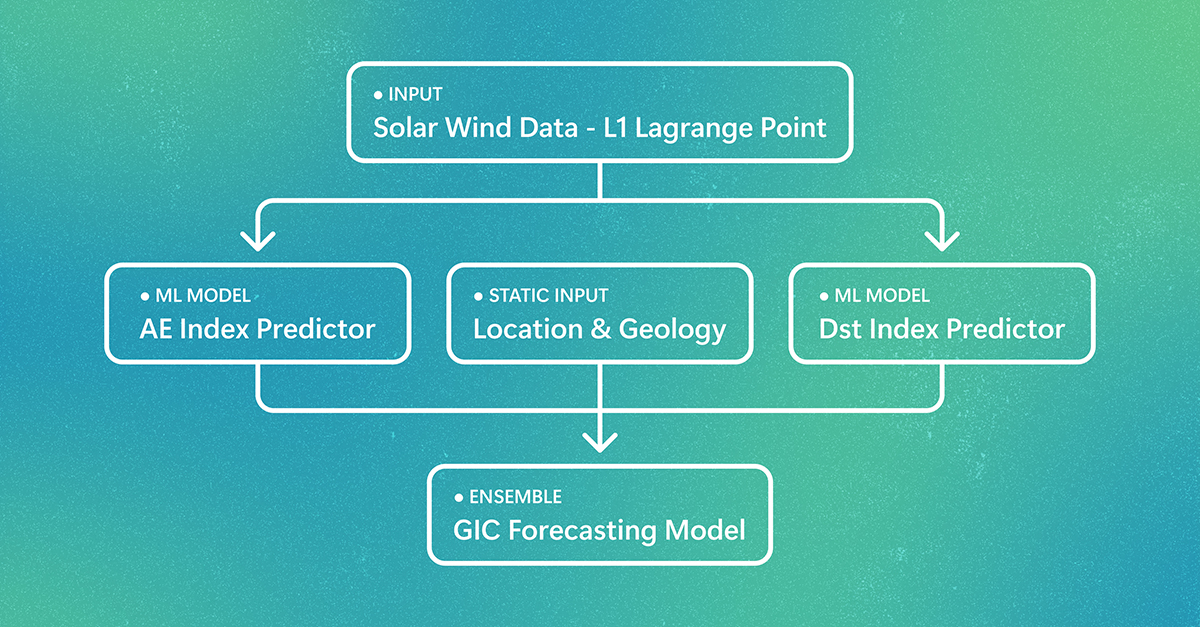
Extreme space-weather events can damage power systems on Earth and degrade GPS accuracy and satellite operations. A new machine learning system can predict where damage is likely to occur 30-60 minutes before a storm arrives. The post Forecasting space weather risks on power grids appeared first on Microsoft Research.
We use cookies to run the site and, with your consent, for analytics and to show ads.
See our Cookie Policy.