Skip to content
#software testing Open access

AquaTag: An Open-Source Wearable Platform Enabling Flexible Sensor Placement for Aquatic Sensing

Sep 2026 · Proceedings of the ACM on Interactive Mobile Wearable and Ubiquitous Technologies · Vol 10, pp. 1 - 37 · 1 citation · 46 references
Cardiovascular and Diving-Related Complications

TL;DR

A compact, robust sensing module with a documented, low-cost waterproof packaging workflow suitable for rapid in-house fabrication; and a placement-adaptive machine learning pipeline that delivers accurate swimming analytics from a single motion sensor at flexible body locations are presented.

Abstract

Commercial swim wearables increasingly provide performance feedback but remain restricted by fixed, single-placement designs. When worn outside their intended location, the accuracy of motion recognition and swimming analysis drops sharply. Moreover, most existing devices are closed-source, limiting access to raw sensor data and hindering reproducibility and innovation in aquatic HCI research. To address these limitations, we present AquaTag, an open-source aquatic wearable platform that enables flexible placement and consistent motion analysis across different locations. The AquaTag integrates a motion sensor, barometer, and temperature sensor. Using a documented epoxy-potting workflow adapted from established underwater electronics practices, it remains functional during a controlled pressure test equivalent to approximately 14 m water depth for 30 minutes. To support underwater use, AquaTag offers NOR flash or microSD storage for offline logging and Bluetooth for above-water data synchronization. Its power system provides up to 4.4 hours of offline logging or 7.8 hours of non-submerged streaming. The power control and charging mechanisms are designed to meet the waterproofing requirements of the device. The hardware can be manufactured at about $40 per unit. A companion software suite is also developed to annotate and analyze motion data. Specifically, our contributions include: (1) a compact, robust sensing module with a documented, low-cost waterproof packaging workflow suitable for rapid in-house fabrication; and (2) a placement-adaptive machine learning pipeline that delivers accurate swimming analytics from a single motion sensor at flexible body locations. By conditioning a deep learning backbone on the sensor's mounting position, our model learns to infer swimmer kinematics when worn on the head, wrist, or lower back. In leave-one-subject-out evaluation, AquaTag achieved mean macro-F1 scores of 91.7% for stroke-type classification and 90.6% for swim-state classification across the head, lower-back, and wrist placements; the corresponding best-placement scores were 96.5% and 92.2%, respectively. The AquaTag hardware designs, PCB files, bill of materials, firmware, enclosure CAD files, fabrication instructions, and companion application are released publicly.

Read PDF

Similar papers

Book Open access Oct 2026

Demo: Can Water Carry Your ECG? An Interactive Demonstration of SwimHR

Can cardiac electrical activity be captured through water without attaching a sensor to the body? We demonstrate SwimHR, a wearable-free heart-rate monitoring system that captures electrocardiogram (ECG) signals transmitted through water. The full SwimHR system uses lane-scale underwater electrodes and pool-deck electr...

Ji-Ting Liu, Yue Gong, Ze-Yu Luo et al. · 0 citations
Review Open access Oct 2026

From stretchable materials and functional fibers to intelligent textile sensing systems

Wearable sensors that offer significant adaptability and comfort demonstrate substantial potential for discrete, seamless integration into garments, enabling diverse applications for remote monitoring. The transformation of rigid electronic devices into flexible and stretchable sensors, achieved by integrating conducti...

Maria Papaefstathiou, M. Elgendi, C. Menon · 0 citations
Open access Oct 2026

Toward Motion Capture Textiles: A Batteryless IMU Array Powered and Networked Through a Conductive-Fabric Bus

Motion capture is increasingly important in healthcare, rehabilitation, and sports applications. However, conventional vision-based systems require camera infrastructure and line-of-sight conditions, limiting their use in daily environments. This letter proposes a location-independent platform for motion capture, based...

R. Miyakawa, Akihito Noda · 0 citations
Book Open access Oct 2026

SwimHR: Wearable-Free Heart Rate Monitoring for Swimmers via Water-Mediated ECG Sensing

Heart rate (HR) monitoring during swimming is crucial for athlete performance optimization and physiological assessment. Yet existing solutions remain unsatisfactory. ECG chest straps require tight skin contact and are often uncomfortable during swimming, while photoplethysmography (PPG) sensors suffer severe accuracy...

Ji-Ting Liu, Yue Gong, Ze-Yu Luo et al. · 0 citations
Open access Oct 2026

ChrisBox: An Open-Source 4-Channel Portable Charge Amplifier for Research and Education

Piezoelectric sensors convert electric charge in response to mechanical loading and are widely studied for their high sensitivity. In particular, ferroelectret sensors provide the flexibility and material system design that enable biocompatibility. Insole-based gait and pressure sensing remain active research topics, y...

Sven Suppelt, Dominik Werner, A. Altmann et al. · 0 citations

Related blog posts

Microsoft Research Blog Nov 12, 2026

Microsoft Research Focus – Edition #98

What's new in research at Microsoft? Host Anson Ho explores the latest, including AI-powered universal translation, a breakthrough in a 31-year-old mathematics challenge, and advances making AI coding agents faster and more efficient.  The post Microsoft Research Focus – Edition #98 appeared first on Microsoft Research.

Microsoft Research Blog Nov 5, 2026

Formally verifying agent-written full-stack web apps with PDD Kit

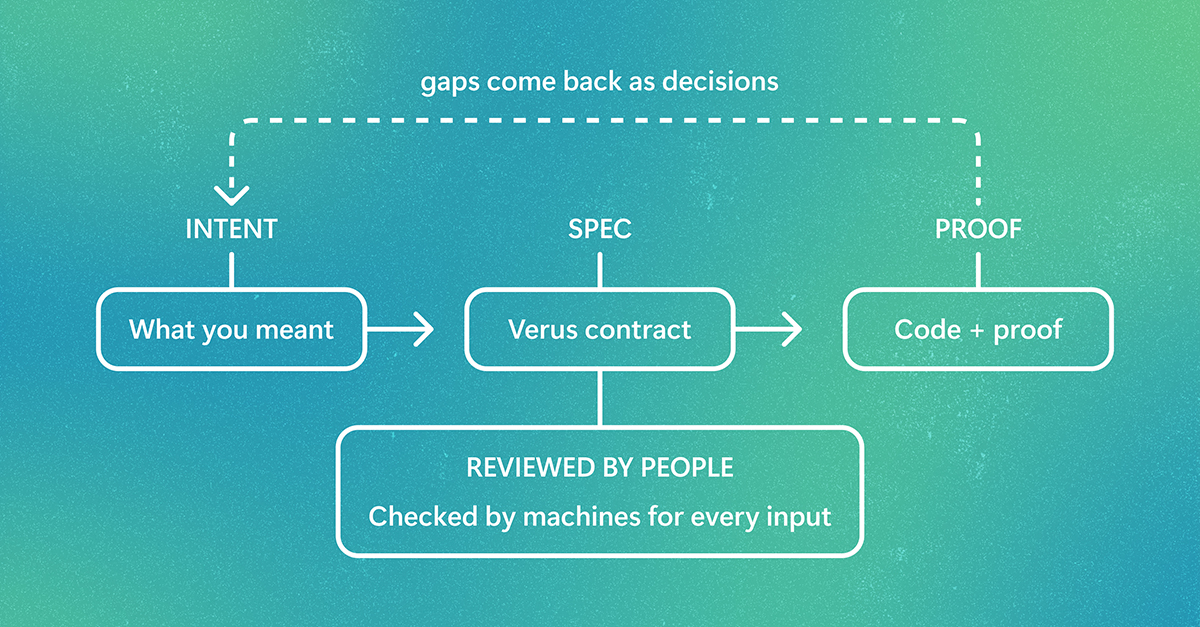
AI agents can generate code at a scale that’s hard for humans to review line-by-line. PDD Kit helps ensure the code is doing what the developer intended by creating formal specifications and testing against them. It converts developer intent into a Verus specification, proves AI-generated code meets it for every input, and uses tests where proofs aren't practical. Developers review intent, not every line. The post Formally verifying agent-written full-stack web apps with PDD Kit appeared first o…

We use cookies to run the site and, with your consent, for analytics and to show ads. See our Cookie Policy.