Quantum key distribution (QKD) links are provisioned from security analyses of stationary channels, whereas the devices that determine the channel drift between recalibrations. Whether an eavesdropper who cannot alter the channel's own noise gains by following that drift has not been quantified. Adaptive eavesdropping is posed here as a constrained Markov decision process in which the attacker selects one circuit per round while the noise level follows an Ornstein--Uhlenbeck process and the abort condition is a budget over each block of rounds. The value of adaptation is bounded by the best fixed circuit and a dynamic-programming upper bound. The actions are learnt attacks. Whereas Decker et al. trained a parametrised circuit on a fixed gate template against a fixed channel, here the gate structure and rotation angles are searched jointly. This yields circuits compact enough to form a discrete action set, extending the construction to noise models lacking a known template, including the amplitude damping channel. On device-independent E91 under bilateral depolarising noise, a reinforcement-learning attacker raises her Holevo information from $0.135$ for the best fixed circuit to $0.348$ at zero detection, $98\%$ of the upper bound. On BB84 under a drifting bit-flip channel, she exceeds a conservative noise-indexed rule by $0.024$ in fidelity, reaching $99\%$ of the upper bound. Under stationary noise, the attacker's gain from basis asymmetry changes sign between an averaged and a per-basis error-rate constraint. The search, started from random gate sequences, recovers the analytical cloners and the collective-attack key rate, and meets the lower bound of the Winick--L\"utkenhaus--Coles objective from above.

This publication proposes a definition and a classification of agile software development approaches and analyses ten software development methods that can be characterized as being "agile" against the defined criterion.
P. Abrahamsson, O. Salo, Jussi Ronkainen et al.· arXiv.org· 727 citations· ⚡54
The study shows that agile practices improve both informal and formal communication, but indicates that, in larger development situations involving multiple external stakeholders, a mismatch of adequate communication mechanisms can sometimes even hinder the communication.
M. Pikkarainen, Jukka Haikara, O. Salo et al.· Empirical Software Engineeri...· 401 citations· ⚡48
The results indicate that software engineering work practices are chosen opportunistically, adapted and configured to provide value under the constrains imposed by the startup context.
Nicolò Paternoster, Carmine Giardino, M. Unterkalmsteiner et al.· Information and Software Tec...· 394 citations· ⚡54
The possibility of inferring high-dimensional data inference in a model that consists of a prior and an auxiliary differentiable constraint given some additional information is considered, thereby allowing a range of potential applications in adapting models to new domains and tasks.
Alexandros Graikos, Esmeralda S. Whitammer, N. Jojic et al.· Neural Information Processin...· 316 citations· ⚡15
It is proved that any global minimizer of the trajectory balance objective can define a policy that samples exactly from the target distribution, and empirically demonstrate the benefits of the trajectories balance objective for GFlowNet convergence, diversity of generated samples, and robustness to long action sequenc...
Esmeralda S. Whitammer, Moksh Jain, Emmanuel Bengio et al.· Neural Information Processin...· 302 citations· ⚡60
Related blog posts
MIT News · Artificial Intelligence· news.mit.eduOct 2, 2026
A weeklong summer workshop brought higher education faculty to campus to explore how AI and machine learning materials can be adapted for their classrooms.
MIT News · Artificial Intelligence· news.mit.eduAug 27, 2026
A new machine-learning framework aims to improve the success rate of computational protein design while moving away from results that reproduce sequences found in nature.
Microsoft Research Blog· microsoft.comAug 20, 2026
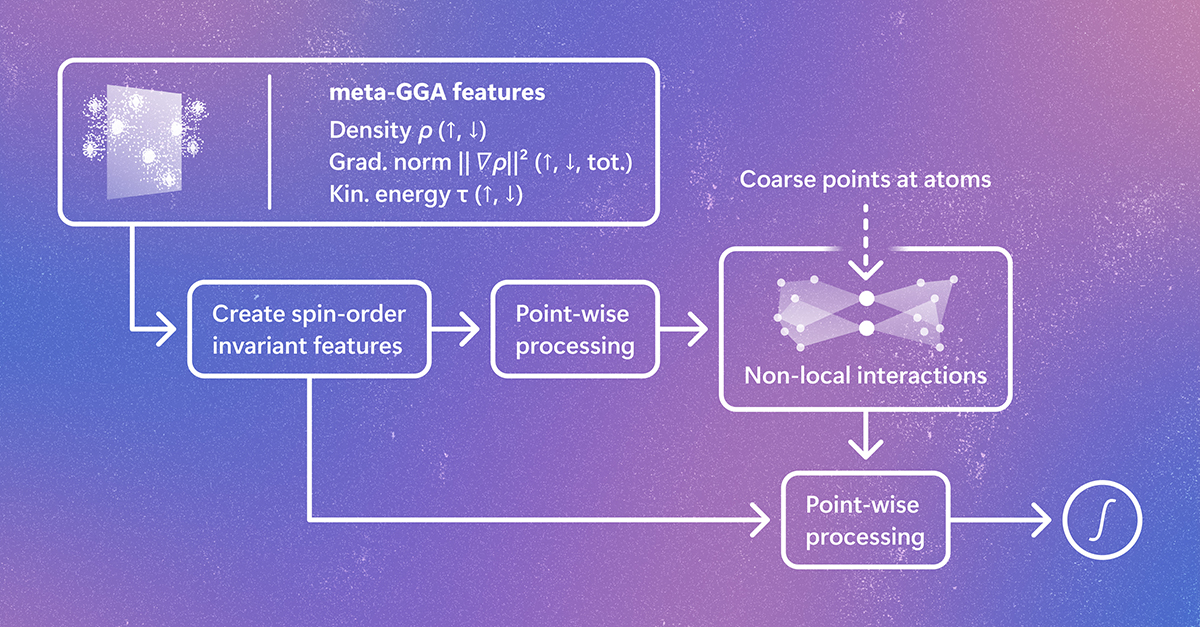
Skala 1.1, the updated deep-learning exchange-correlation functional from Microsoft Research, provides greater accuracy, expanded accessibility across the computational chemistry ecosystem, and a living benchmark to track computational performance. The post Broadening access to Skala creates a faster path to predictive DFT appeared first on Microsoft Research.
We use cookies to run the site and, with your consent, for analytics and to show ads.
See our Cookie Policy.