Skip to content

FedCKA: Representation-Guided Layer Personalization for Federated 3D Perception Across Driving Domains

Oct 2026 · 0 citations · 31 references
Computer Science

TL;DR

FedCKA is proposed, a Centered Kernel Alignment (CKA)-based strategy that dynamically handles the personalization-globalization trade-off, and outperforms established federated baselines, including FedBN, FedRep, and FedSelect, improving average NDS by 7 percentage points over the strongest baseline.

Abstract

Robust perception in intelligent vehicles demands 3D object detectors that remain dependable under domain shifts, such as changes in time of day, location, or weather. However, due to costly annotation and rare shifts, some environments lack sufficient data to train a standalone detector. Federated learning offers a privacy-preserving framework for collaborative model training, enabling clients to benefit from shared learning across diverse environments. Yet, this framework traditionally relies on a single global consensus model, which struggles to perform across heterogeneous local data distributions. Local conditions are better captured by adapting a subset of the model, but many personalization approaches rely on predefined layer partitions or fixed personalization ratios, thereby limiting adaptation to client-specific divergence. To reduce this rigidity, we propose FedCKA, a Centered Kernel Alignment (CKA)-based strategy that dynamically handles the personalization-globalization trade-off. Specifically, FedCKA computes layer-wise feature similarities between local client models and the global consensus model during training. By converting layer-wise similarity scores into client-specific aggregation masks, FedCKA selectively shares representation-consistent layers. Evaluation on a unified multi-domain benchmark based on nuScenes shows that FedCKA outperforms established federated baselines, including FedBN, FedRep, and FedSelect, improving average NDS by 7 percentage points over the strongest baseline. The findings offer both a comparative benchmark and a promising direction for robust federated 3D perception across shifts in location, weather, and illumination. Code is available at https://github.com/j-verhoog/FedCKA.
View source

Similar papers

#machine learning Review Open access Oct 2014

Software development in startup companies: A systematic mapping study

The results indicate that software engineering work practices are chosen opportunistically, adapted and configured to provide value under the constrains imposed by the startup context.

Nicolò Paternoster, Carmine Giardino, M. Unterkalmsteiner et al. · 394 citations · ⚡54
#machine learning Review Open access Jun 2014

Why Early-Stage Software Startups Fail: A Behavioral Framework

This state-of-practice investigation was performed using a literature review followed by a multiple-case study approach and presents how inconsistency between managerial strategies and execution can lead to failure by means of a behavioral framework.

Carmine Giardino, Xiaofeng Wang, P. Abrahamsson · 175 citations · ⚡19
#machine learning Review Open access Oct 2016

“Failures” to be celebrated: an analysis of major pivots of software startups

This study conducts a case survey study based on the secondary data of the major pivots happened in 49 software startups, and demonstrates that customer need pivot is the most common among all pivot types.

Sohaib Shahid Bajwa, Xiaofeng Wang, Anh Nguyen-Duc et al. · 127 citations · ⚡15
#machine learning Review Open access May 2016

Key Challenges in Software Startups Across Life Cycle Stages

It is found that what perceived as biggest challenges by software startups do vary across different life cycle stages, even though its significance decreases when the learning focuses of the startups move from problem to solution and their products mature.

Xiaofeng Wang, Henry Edison, Sohaib Shahid Bajwa et al. · 62 citations · ⚡6

Related blog posts

Microsoft Research Blog Sep 30, 2026

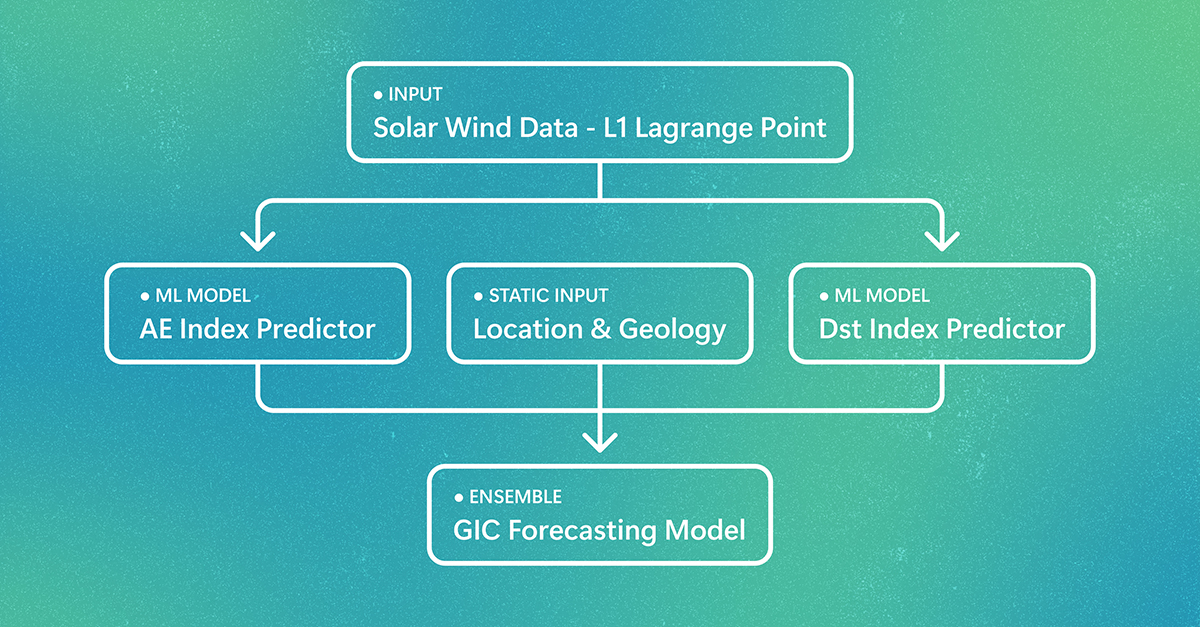
Forecasting space weather risks on power grids

Extreme space-weather events can damage power systems on Earth and degrade GPS accuracy and satellite operations. A new machine learning system can predict where damage is likely to occur 30-60 minutes before a storm arrives. The post Forecasting space weather risks on power grids appeared first on Microsoft Research.

We use cookies to run the site and, with your consent, for analytics and to show ads. See our Cookie Policy.