Skip to content

Security-Aware Adaptive Computation Offloading in Mobile Edge Computing Using Reinforcement Learning and Deep Q-Networks

Oct 2026 · Zenodo (CERN European Organization for Nuclear Research)

Abstract

Mobile Edge Computing (MEC) enables resource-constrained mobile devices to offload computation-intensive tasks to nearby edge servers. Existing computation offloading approaches primarily optimise latency, energy consumption, or resource allocation, but often do not consider security constraints and multi-user queue stability within a unified decision framework. This paper studies, in simulation, a security-aware adaptive offloading framework that combines an analytical bandwidth threshold, workload classification, reinforcement learning, Lyapunov drift-plus-penalty queue control, Object Dependency Graph (ODG)-based vulnerability scoring, and a Deep Q-Network (DQN) over a continuous state. The framework derives a break-even bandwidth of 13.71 Mbps for time-beneficial offloading. A drift-plus-penalty admission controller bounds the edge queue; in a deterministic illustration it holds the queue at 21 tasks against 297 for greedy admission. ODG gating keeps labelled sensitive objects on the device, although a ratio-based score is shown to let transitively dependent objects leak. Over 10 random seeds, a DQN behind hard gates reaches a reward of -1.91 per step, against -2.07 for local execution and -1.97 for a rule-based pipeline, while a Q-table at the same discount factor falls to -2.42. The study is simulation-only, uses N-Queens as a workload proxy, assumes a single edge server and a reward derived from its own cost model, and these limitations are discussed explicitly. Contents of this record: the preprint draft (PDF, not peer reviewed) and an archive of the simulation code, results, figures and cited open-access papers (MIT-licensed code). Source repository: https://github.com/brindeshwar/security-aware-mec-offloading

View source

Similar papers

#computer vision Review Sep 2017

Agile Software Development Methods: Review and Analysis

This publication proposes a definition and a classification of agile software development approaches and analyses ten software development methods that can be characterized as being "agile" against the defined criterion.

P. Abrahamsson, O. Salo, Jussi Ronkainen et al. · 727 citations · ⚡54
#computer vision Jun 2008

The impact of agile practices on communication in software development

The study shows that agile practices improve both informal and formal communication, but indicates that, in larger development situations involving multiple external stakeholders, a mismatch of adequate communication mechanisms can sometimes even hinder the communication.

M. Pikkarainen, Jukka Haikara, O. Salo et al. · 401 citations · ⚡48
#machine learning Review Open access Oct 2014

Software development in startup companies: A systematic mapping study

The results indicate that software engineering work practices are chosen opportunistically, adapted and configured to provide value under the constrains imposed by the startup context.

Nicolò Paternoster, Carmine Giardino, M. Unterkalmsteiner et al. · 394 citations · ⚡54

Related blog posts

MIT News · Artificial Intelligence Aug 27, 2026

Looking beyond natural sequences

A new machine-learning framework aims to improve the success rate of computational protein design while moving away from results that reproduce sequences found in nature.

Microsoft Research Blog Aug 20, 2026

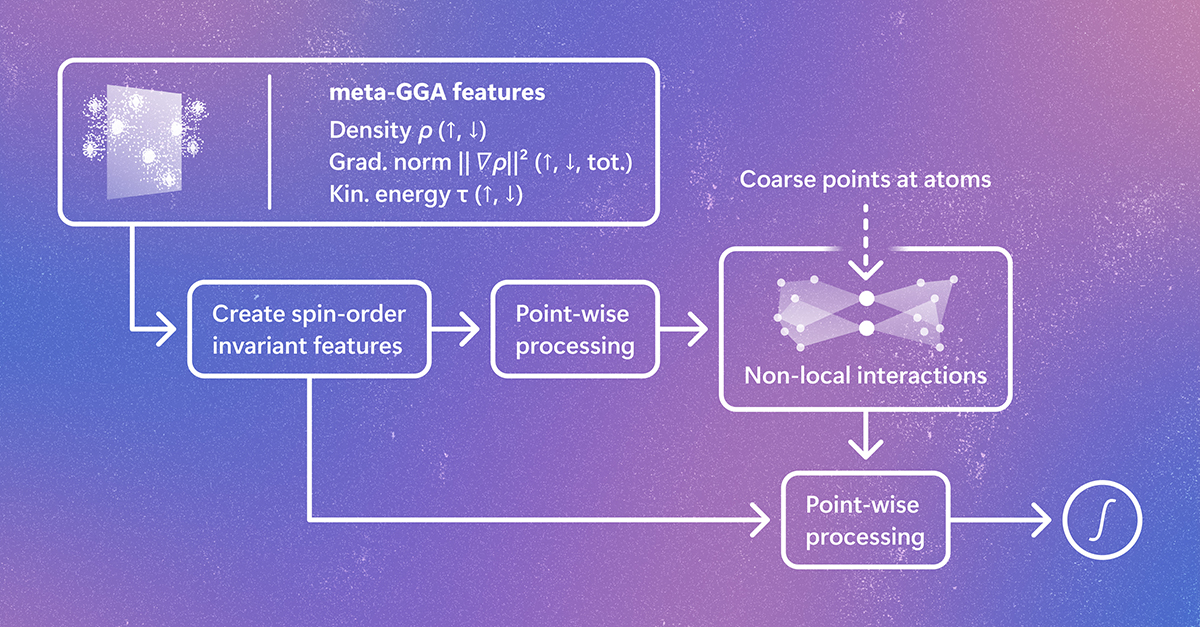
Broadening access to Skala creates a faster path to predictive DFT 

Skala 1.1, the updated deep-learning exchange-correlation functional from Microsoft Research, provides greater accuracy, expanded accessibility across the computational chemistry ecosystem, and a living benchmark to track computational performance. The post Broadening access to Skala creates a faster path to predictive DFT  appeared first on Microsoft Research.

We use cookies to run the site and, with your consent, for analytics and to show ads. See our Cookie Policy.