Skip to content

Fed-ADApt: Federated Anytime Depth Adaptation for Resource-Aware Medical Image Segmentation

Oct 2026 · 0 citations · 31 references
Computer Science

Abstract

Federated learning (FL) enables collaborative training of medical image segmentation models without sharing raw patient data, yet existing approaches assume a homogeneous compute budget across institutions, limiting participation of low-resource sites. We propose Fed-ADApt, a depth-adaptive federated framework for UNet-based segmentation that jointly addresses low-compute training and inference. Fed-ADApt integrates multi-depth supervision with hierarchical depth-wise aggregation, allowing each site to train according to its local compute budget while contributing to a global model that supports dynamic depth selection at deployment. We evaluated Fed-ADApt on multi-site 2D retinal fundus disc segmentation and 3D brain tumor segmentation. Across both tasks, federated collaboration substantially improves robustness under domain shift. Fed-ADApt matched the full-resource FedAvg performance in 3D and achieved competitive 2D performance with a 4.7% average Dice reduction, while reducing average inference cost by 19.5% in 3D and 34.5% in 2D and substantially reducing training cost by 98% at the most constrained sites. Importantly, Fed-ADApt enables low-resource institutions that cannot train full-capacity models to participate in federations while maintaining competitive global performance under a favorable accuracy to efficiency trade-off. By considering training and inference compute budgets, Fed-ADApt provides a practical and equitable solution for federated medical image segmentation across heterogeneous clinical and edge-enabled imaging environments.

View source

Similar papers

#computer vision Review Sep 2017

Agile Software Development Methods: Review and Analysis

This publication proposes a definition and a classification of agile software development approaches and analyses ten software development methods that can be characterized as being "agile" against the defined criterion.

P. Abrahamsson, O. Salo, Jussi Ronkainen et al. · 727 citations · ⚡54
#computer vision Jun 2008

The impact of agile practices on communication in software development

The study shows that agile practices improve both informal and formal communication, but indicates that, in larger development situations involving multiple external stakeholders, a mismatch of adequate communication mechanisms can sometimes even hinder the communication.

M. Pikkarainen, Jukka Haikara, O. Salo et al. · 401 citations · ⚡48
#machine learning Review Open access Oct 2014

Software development in startup companies: A systematic mapping study

The results indicate that software engineering work practices are chosen opportunistically, adapted and configured to provide value under the constrains imposed by the startup context.

Nicolò Paternoster, Carmine Giardino, M. Unterkalmsteiner et al. · 394 citations · ⚡54

Related blog posts

MIT News · Artificial Intelligence Aug 27, 2026

Looking beyond natural sequences

A new machine-learning framework aims to improve the success rate of computational protein design while moving away from results that reproduce sequences found in nature.

Microsoft Research Blog Aug 20, 2026

Broadening access to Skala creates a faster path to predictive DFT 

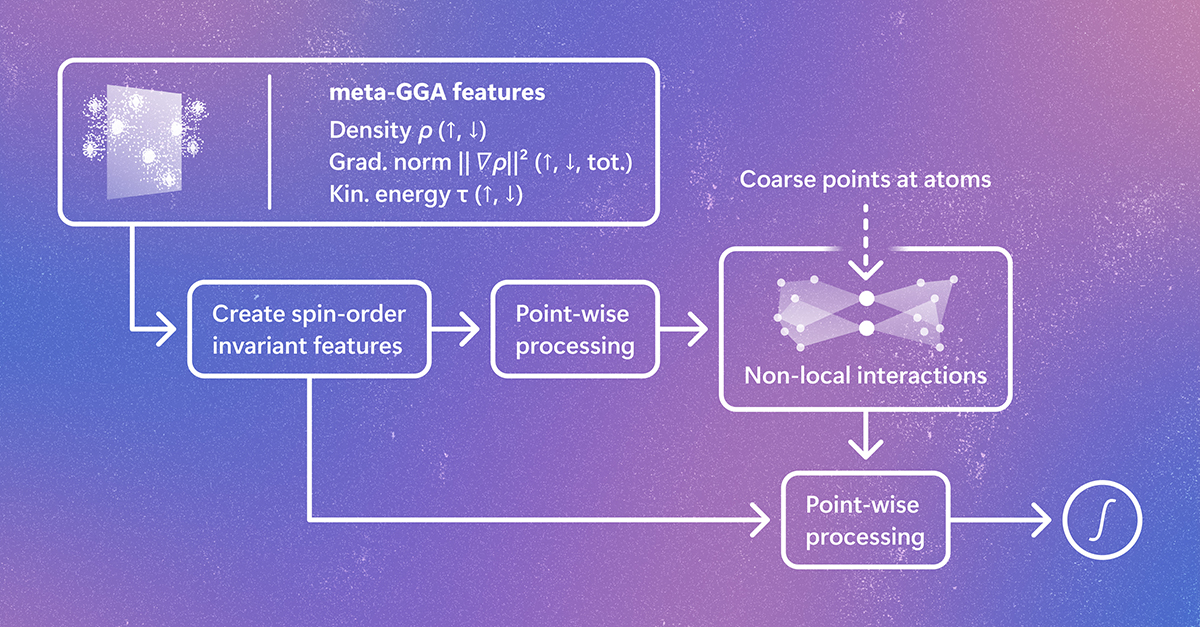
Skala 1.1, the updated deep-learning exchange-correlation functional from Microsoft Research, provides greater accuracy, expanded accessibility across the computational chemistry ecosystem, and a living benchmark to track computational performance. The post Broadening access to Skala creates a faster path to predictive DFT  appeared first on Microsoft Research.

We use cookies to run the site and, with your consent, for analytics and to show ads. See our Cookie Policy.