Skip to content

Structure-behavior integrated risk prediction of vehicle groups using Graph Neural Networks.

Jing Gan Yao Wu Da-Peng Zhang Hui Bi Lin-Heng Li Xu Qu B. Ran
Oct 2026 · Accident Analysis and Prevention · Vol 238, pp. 108791 · 0 citations · 57 references
Medicine

Abstract

Accurate identification of vehicle-group-level traffic risk is important for intelligent transportation safety management. Existing risk-prediction studies have mainly focused on individual vehicles, pairwise interactions, or aggregated surrogate safety indicators, while the role of group-level structure-behavior coupling remains insufficiently examined. To address this issue, this paper proposes a leakage-aware structure-behavior graph learning framework for Vehicle Group (VG) risk modeling. First, time-resolved VG graphs are constructed from high-frequency MAGIC trajectory data using an impact-induced grouping strategy with controlled supplementary spatial adjacency. Second, node-level surrogate risk states are defined using inverse Time-to-Collision (iTTC) and activated Post-Encroachment Time (PET), and then aggregated into VG-level surrogate risk labels through a group-risk ratio. Third, structural descriptors and behavioral features are integrated within a Graph Attention Network (GAT) for VG-level risk classification. To improve methodological transparency, the revised framework explicitly justifies the surrogate-labeling thresholds using empirical distributions, threshold tradeoff curves, and sensitivity analyses. It also includes leakage-audit experiments to examine whether model performance is driven by label-proximal surrogate quantities. Experiments on the MAGIC dataset show that the proposed model achieves strong and stable performance under repeated random seeds, with F1-score = 0.960 ± 0.002, ROC-AUC = 0.949 ± 0.008, PR-AUC = 0.991 ± 0.001, and Brier score = 0.058 ± 0.002. Compared with linear, neural, tree-based, and graph-based baselines, the proposed model provides competitive risk-identification performance, particularly in recall, false-negative control, and positive-class ranking. Additional robustness, prospective-prediction, and interpretability analyses indicate that the learned structure-behavior representation remains informative under temporal and sampling-frequency shifts and can highlight risk-relevant vehicles within VGs. The findings should be interpreted as evidence of structure-aware predictive association under a surrogate-labeling framework, rather than as proof that VG risk is inherently structural or that the model is deployment-ready. Overall, this study provides a more transparent and auditable graph-learning approach for VG-level surrogate risk modeling, offering decision-support insights for future CAV-oriented traffic safety management subject to external validation and deployment-oriented computational testing.
Read PDF

Similar papers

#computer vision Conference Aug 2008

Scrum in a Multiproject Environment: An Ethnographically-Inspired Case Study on the Adoption Challenges

Agile methods continue to gain popularity. In particular, the Scrum method appears to be on the verge of becoming a de-facto standard in the industry, leading the so called Agile movement. While there are success stories and recommendations, there is little scientifically valid evidence of the challenges in the adoptio...

A. Marchenko, P. Abrahamsson · 59 citations · ⚡11
#computer vision Open access Sep 2012

Making the leap to a software platform strategy: Issues and challenges

A comprehensive taxonomy of the challenges faced when a medium-scale organization decided to adopt software platforms is provided, namely: business challenges, organizational challenges, technical challenges, and people challenges.

Yaser Ghanam, F. Maurer, P. Abrahamsson · 41 citations · ⚡3
#machine learning Open access Mar 2024

Integration of molecular coarse-grained model into geometric representation learning framework for protein-protein complex property prediction

MCGLPPI, a novel geometric representation learning framework that combines graph neural networks (GNNs) with the MARTINI molecular coarse-grained (CG) model to predict overall PPI properties accurately and efficiently, offers an effective and efficient solution for PPI overall property predictions.

Yang Yue, Shu Li, Yihua Cheng et al. · 15 citations

PepPCBench is a Comprehensive Benchmarking Framework for Protein-Peptide Complex Structure Prediction

PepPCBench enables a robust evaluation of PFNN-based methods and supports their continued development for peptide-protein structure prediction, and highlights the influence of peptide length, conformational flexibility, and training set similarity on prediction accuracy.

Si-Long Zhai, Huifeng Zhao, Ji-Ke Wang et al. · 13 citations · ⚡1
#machine learning Open access Sep 2025

Unified and explainable molecular representation learning for imperfectly annotated data from the hypergraph view

OmniMol is presented, a framework using hypergraphs to improve predictions of molecular properties, addressing challenges of imperfect data annotation and enhancing model explainability, and achieves state-of-the-art performance in properties prediction.

Bowen Wang, Junyou Li, Donghao Zhou et al. · 11 citations

Related blog posts

Microsoft Research Blog Jul 13, 2026

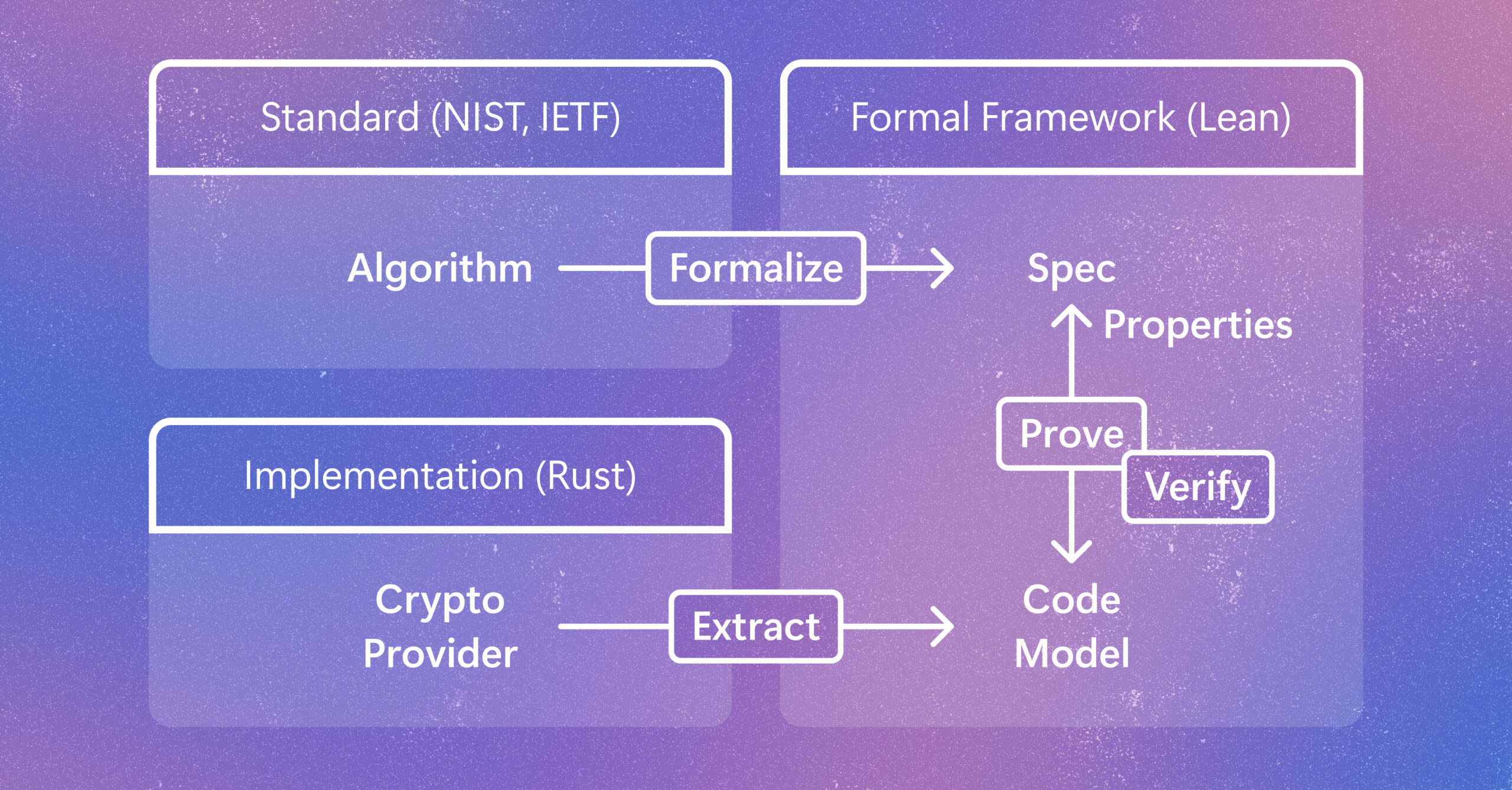
Verifying Rust cryptography in SymCrypt, from standards to code

Cryptographic code supports vital protections in modern computing systems. Learn how a new method helps verify code as developers write it while preserving speed and adaptability as it gets implemented and evolves. The post Verifying Rust cryptography in SymCrypt, from standards to code appeared first on Microsoft Research.

We use cookies to run the site and, with your consent, for analytics and to show ads. See our Cookie Policy.