This work shows that for a broad class of combinatorial optimization problems and commonly used rotational gate parameterizations, the measurement cost of DQAS can be significantly reduced without changing the optimization objective.
Abstract
Differentiable quantum architecture search (DQAS) is a promising framework for the automated design of quantum circuits, particularly for variational quantum optimization algorithms. However, its practical deployment on quantum hardware is limited by the large number of circuit measurements required during optimization, making hardware execution costly. In this work, we show that for a broad class of combinatorial optimization problems and commonly used rotational gate parameterizations, the measurement cost of DQAS can be significantly reduced without changing the optimization objective. We derive the proposed measurement reduction scheme theoretically and validate it experimentally on 3-SAT and MaxCut benchmark problems. Our approach reduces the requested gradient measurement cost by about 39 to 41% while introducing only negligible classical post-processing overhead, lowering the practical cost of executing DQAS on quantum hardware.
A Transformer-based intrinsic optimization framework for QAOA, in which the optimizer itself is learned and embedded directly into the hybrid quantum-classical loop, demonstrating that Transformer-based intrinsic optimization can provide a structured and transferable mechanism for improving the classical component of h...
Kuan-Cheng Chen, Xiao-Tian Xu, Hiromichi Matsuyama et al.· 0 citations
Feedback-based ALgorithm for Quantum OptimizatioN (FALQON) is a hybrid quantum-classical algorithm for solving combinatorial optimization problems, which circumvents classical parameter optimization but requires a deep quantum circuit. To reduce circuit depth, Arai et al. proposed second-order FALQON (SO-FALQON), achie...
Zi-Wen Huang, Jia-Cheng Fan, Xiao-Hui Ni et al.· 0 citations
Feedback-based quantum algorithms recently gained attention by demonstrating how quantum computers can be used to solve optimization problems without resorting to hybrid quantum-classical architectures. Recent progress made with Feedback-based Algorithm for Quantum Optimization (FALQON) variants significantly reduced t...
Letícia Bertuzzi, João P. Engster, Evandro C. R. da Rosa et al.· 0 citations
Significant efforts are currently being directed toward the implementation of large-scale quantum information processors, but realizing useful quantum advantage also requires the development of efficient quantum algorithms. While for many practical problems the dominant resource costs are associated with a small set of...
An-Di Gu, Alek H. Kemeny, S. Yelin et al.· 1 citation
The Color-of-Money (CoM) problem is a financial optimization challenge in which enterprises must determine how to allocate and route funds across multiple accounts, currencies, and time periods while satisfying regulatory, operational, and liquidity constraints. As the number of assets, obligations, and planning period...
Rahul Rana, Suman Kumar Roy, M. Chandra· 0 citations
This thesis investigates two central challenges for quantum computing: identifying when quantum annealing can offer a computational advantage, and developing effective methods to control realistic quantum systems. It establishes complexity bounds for an adiabatic algorithm for combinatorial optimization, showing a univ...
Aarón Villanueva· 0 citations
Related blog posts
MIT News · Artificial Intelligence· news.mit.eduOct 2, 2026
A weeklong summer workshop brought higher education faculty to campus to explore how AI and machine learning materials can be adapted for their classrooms.
MIT News · Artificial Intelligence· news.mit.eduAug 27, 2026
A new machine-learning framework aims to improve the success rate of computational protein design while moving away from results that reproduce sequences found in nature.
Microsoft Research Blog· microsoft.comAug 20, 2026
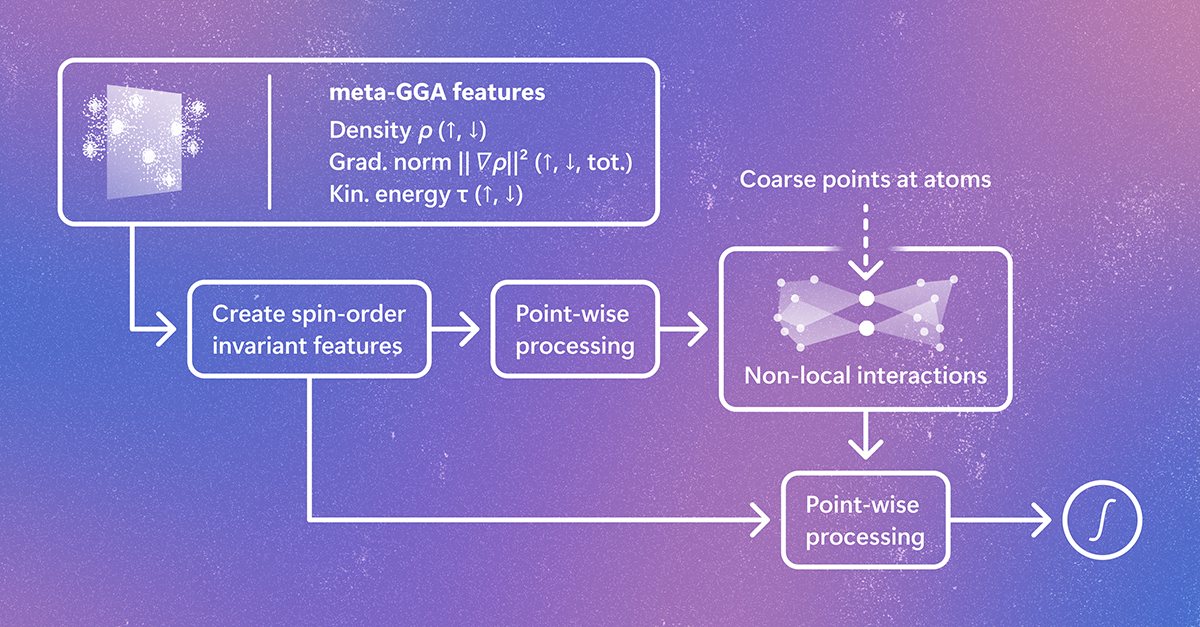
Skala 1.1, the updated deep-learning exchange-correlation functional from Microsoft Research, provides greater accuracy, expanded accessibility across the computational chemistry ecosystem, and a living benchmark to track computational performance. The post Broadening access to Skala creates a faster path to predictive DFT appeared first on Microsoft Research.
We use cookies to run the site and, with your consent, for analytics and to show ads.
See our Cookie Policy.