Oct 2025· Annual Meeting of the Association for Computational Linguistics· Vol abs/2510.26861· 0 citations· 35 references
Computer Science
TL;DR
This work introduces the Cross-Cultural, Cross-Modal, Cross-lingual Multimodal (3XCM) benchmark, and suggests that achieving equitable multimodal retrieval necessitates targeted strategies that explicitly decouple language from culture, rather than relying solely on broader data exposure.
Abstract
Multimodal retrieval systems are expected to operate in a semantic space, agnostic to the language or cultural origin of the query. In practice, however, retrieval outcomes systematically reflect perspectival biases: deviations shaped by linguistic prevalence and cultural associations. We introduce the Cross-Cultural, Cross-Modal, Cross-lingual Multimodal (3XCM) benchmark to isolate these effects. Results from our studies indicate that, for image-to-text retrieval, models tend to favor entries from prevalent languages over those that are semantically faithful. For text-to-image retrieval, we observe a consistent"tugging effect"in the joint embedding space between semantic alignment and language-conditioned cultural association. When semantic representations are insufficiently resolved, particularly in low-resource languages, similarity is increasingly governed by culturally familiar visual patterns, leading to systematic association bias in retrieval. Our findings suggest that achieving equitable multimodal retrieval necessitates targeted strategies that explicitly decouple language from culture, rather than relying solely on broader data exposure. This work highlights the need to treat linguistic and cultural biases as distinct, measurable challenges in multimodal representation learning.

CulturalMenuBench shows that near-perfect recognition can conceal an inability to apply cultural knowledge, motivating training that explicitly connects perception, procedure, and cultural context.
Bo Zeng, Lin-Feng Gao, Pei-Qing Lin et al.· 0 citations
WorldVIEW, a multilingual benchmark of 8,960 prompts across 15 languages and 31 language-context pairings, is introduced, and the revision layer itself is identified as a previously undocumented, causal source of this stereotyping.
Aleksandra Urman, Elsa Lichtenegger, Salima Jaoua et al.· 1 citation
Though absolute performance remains low, finetuning on NormViz-Train improves pair accuracy relatively by up to 125% and 36% Qwen3-VL 4B and 8B respectively, showing a path forward to teach models to connect visual perception to cultural significance.
Akhila Yerukola, Fabrice Y. Harel-Canada, Simran Khanuja et al.· 0 citations
Visual distinctions are often finer than those reflected in linguistic conceptualization. Vision-language models exhibit a similar asymmetry: a distinction can remain discriminable in frozen image geometry while being weakly addressable through the native text interface. We study this gap by separating visual discrimin...
Woosang Jeon, Jiwon Yang, Chung Soo et al.· 0 citations
Dense retrievers have made significant progress on text and image corpora, but whether these capabilities extend reliably to mixed corpora containing text, image, and fused text-image documents remains unclear. In this paper, we systematically examine retrievers across architectures and find that their performance is h...
Yu-Bo Sun, Chun-Yi Peng, Yu-Kun Yan et al.· 0 citations
This work compares differences in clues generated by human vs multimodal language models, based on a novel coding rubric for calibrated ambiguity, and finds that models consistently exhibit ambiguity collapse.
Cody Kommers, Ming-Rui Ye, Evelyn Gius et al.· 0 citations
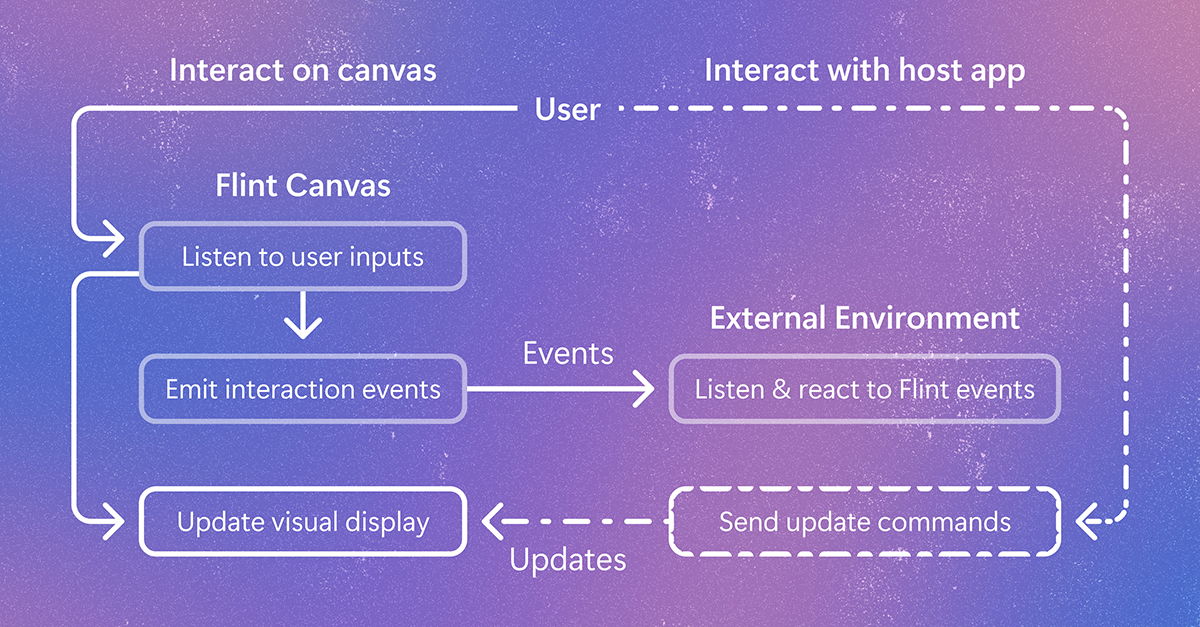
Flint-interactive gives AI agents a language for creating interactive visualizations. Click a chart, filter data, highlight related content, and explore beyond the view the author originally chose. The post Flint-interactive: A language for creating interactive data visualizations appeared first on Microsoft Research.