Feelium is a blimp-based telepresence platform that enables visual embodiment and touch interaction through its inflatable skin that turns the skin into a shared surface between remote and co-located partners.
Abstract
Floating things invite touch. We present Feelium, a blimp-based telepresence platform that enables visual embodiment and touch interaction through its inflatable skin. Through a VR headset, a remote person inhabits the blimp, looking out of it first-person, appearing on its skin as a face or avatar, and steering it through the room. Partners in the room pat it, press a palm against it, draw on it, or lean into it; the skin senses each contact, renders it into the wearer's view in VR spaces. Touch thus provides a physical interaction channel for remote presence, turning the skin into a shared surface between remote and co-located partners.
This work presents a vibrotactile texture rendering model implemented in Unity for integration with a portable haptic glove based on vibrating thimbles. Unlike binary haptic feedback, which is limited to indicating contact with virtual objects, the proposed approach generates variable stimuli associated with surface pr...
J. J. Yépez-Figueroa, E. Oña, Carlos Balaguer et al.· Jornadas de Automática· 0 citations
We present an exploratory study to evaluate Watch-Pointer (WP), a touchless gesture- and pointer-based interaction on a smartwatch, across six interactions and three conditions: standing, walking without, and walking with busy hands (i. e., carrying bags). Our results show that walking conditions negatively affected ta...
Fairouz Grioui, Maximilian Urs Wohlfarth, Tanja Blascheck· Proceedings of the 2026 ACM...· 0 citations
This paper presents MobileBiHap, a real-time interaction framework that transforms commodity smartphones into practical bidirectional haptic controllers for Unity3D-based virtual environments without requiring dedicated hardware. The proposed system captures multi-touch gestures, including pinch, drag, and rotation, an...
Existing haptic feedback on mobile phones, such as vibrotactile feedback, typically requires direct skin contact to ensure the notification receiving. In this paper, we present AirPalm, a phone-back mid-air haptic display that leverages this space between the phone back and the user's palm to provide contact-free tacti...
Yibin Huai, Li-Na Zhang, Ze-Shui Li et al.· Proceedings of the ACM on In...· 1 citation
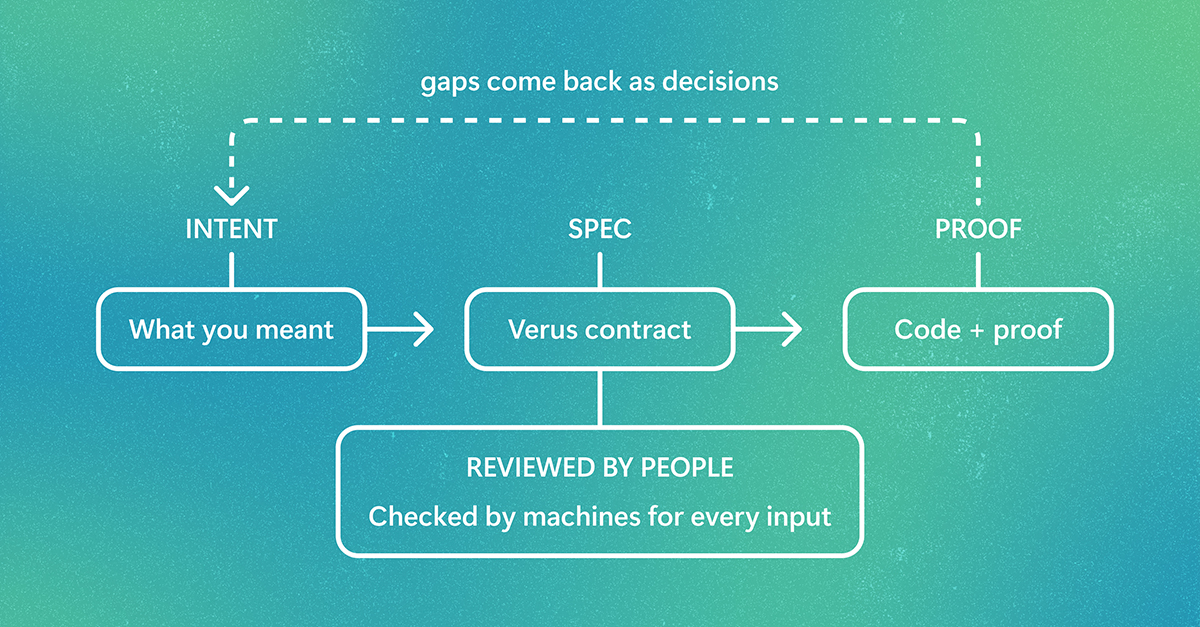
AI agents can generate code at a scale that’s hard for humans to review line-by-line. PDD Kit helps ensure the code is doing what the developer intended by creating formal specifications and testing against them. It converts developer intent into a Verus specification, proves AI-generated code meets it for every input, and uses tests where proofs aren't practical. Developers review intent, not every line. The post Formally verifying agent-written full-stack web apps with PDD Kit appeared first o…
MIT News · Artificial Intelligence· news.mit.eduNov 5, 2026
A new system identifies and corrects unreliable object descriptions stored in a robot’s memory, improving the robot’s ability to interact with its environment.