Oct 2026· Surface Topography Metrology and Properties
Industrial Vision Systems and Defect Detection
Abstract
Abstract Accurate wafer surface classification is essential for semiconductor process control, but its practical application is limited by the small number of labeled hyperspectral samples and the continuous emergence of previously unseen surface classes. To address these challenges, this study proposes a diffusion-model-enhanced incremental learning framework for hyperspectral wafer surface classification. A hyperspectral dataset containing eight representative wafer surface classes was constructed, covering normal material or structural states, process-related surface conditions, and potential defects. The diffusion model jointly learns the spatial structures and spectral correlations of hyperspectral data and generates supplementary samples for classifier training. During incremental updates, generated samples from previously learned classes are further used as rehearsal data to preserve historical knowledge, while the classification head is expanded to accommodate newly introduced classes. Experimental results show that diffusion-based augmentation improves the accuracy and Macro F1 score of the convolutional neural network by more than three percentage points compared with the non-augmented setting. In the continual-learning comparison, the proposed method achieves an accuracy of 95.98 percent and a Macro F1 score of 95.97 percent on the diffusion-enhanced dataset. The forgetting rate decreases from 6.79 percent to 4.64 percent, corresponding to a relative reduction of 31.66 percent. These results demonstrate that diffusion-generated rehearsal can improve hyperspectral wafer surface classification while effectively mitigating catastrophic forgetting during incremental updates.

The results are packaged in the Greenfield Startup Model (GSM), which explains the priority of startups to release the product as quickly as possible, and the need to shorten time-to-market, by speeding up the development through low-precision engineering activities.
Carmine Giardino, Nicolò Paternoster, M. Unterkalmsteiner et al.· IEEE Transactions on Softwar...· 178 citations· ⚡14
Software startup companies develop innovative, software-intensive products within limited timeframes and with few resources, searching for sustainable and scalable business models.
M. Unterkalmsteiner, P. Abrahamsson, Xiaofeng Wang et al.· e-Informatica Software Engin...· 157 citations· ⚡17
This study conducts a case survey study based on the secondary data of the major pivots happened in 49 software startups, and demonstrates that customer need pivot is the most common among all pivot types.
Sohaib Shahid Bajwa, Xiaofeng Wang, Anh Nguyen-Duc et al.· Empirical Software Engineeri...· 127 citations· ⚡15
The comparison of adopter and non-adopter sample reveals three potential adoption inhibitor, security, data privacy, and portability, which underlines the importance of the technical and security perspectives for research investigating the adoption of technology.
Nattakarn Phaphoom, Xiaofeng Wang, S. Samuel et al.· Journal of Systems and Softw...· 111 citations· ⚡8
This study investigates how Lean internal startup facilitates software product innovation in large companies and identifies its enablers and inhibitors, and shows the potential of the method-in-action framework to investigate the Lean startup approach in non-startup context.
Henry Edison, Nina M. Smørsgård, Xiaofeng Wang et al.· Journal of Systems and Softw...· 78 citations· ⚡6
The application of agile software methods and more recently the integration of Lean practices contribute to the trend of continuous improvement in the software industry. One such area warranting proper empirical evidence is a project’s operational efficiency when using the Kanban method. This short paper takes a new an...
Marko Ikonen, Petri Kettunen, Nilay V. Oza et al.· EUROMICRO Conference on Soft...· 67 citations· ⚡9
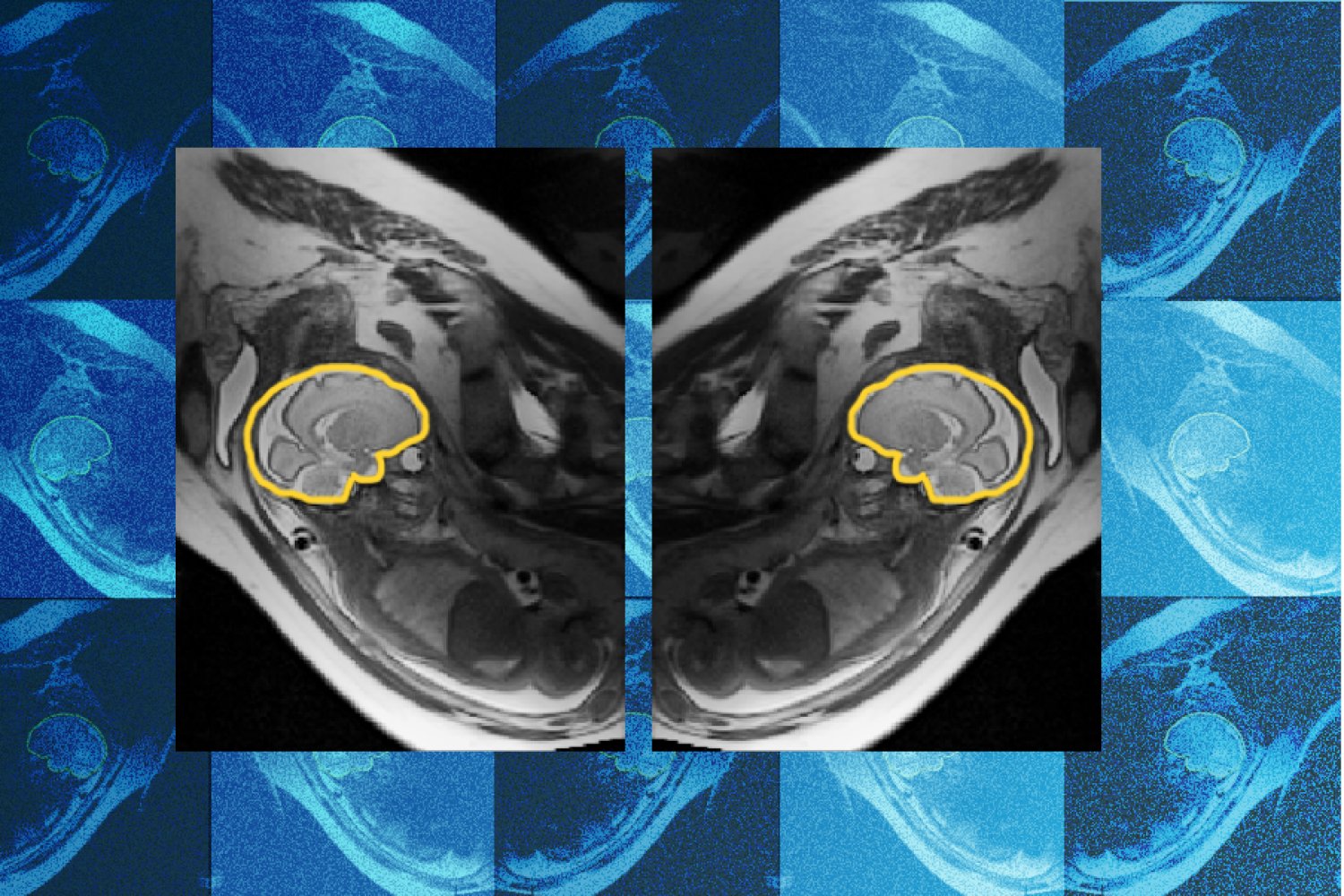
A model developed by researchers at MIT and Boston Children's Hospital adjusts scans on the fly to track fetal movement, potentially sparing families repeat hospital visits.