Skip to content

Artificial Intelligence for Net-Zero and Climate-Resilient Sustainable Cities: Technologies, Challenges, and Future Perspectives

Oct 2026 · Artificial Intelligence for Sustainable Cities · 0 citations · 92 references
Smart Cities and Technologies

Abstract

Urbanization, climate change, increasing energy demand, and rapid infrastructure development have created significant challenges for achieving sustainable and resilient cities. Artificial intelligence (AI) has emerged as a transformative technology that enables data-driven decision-making, intelligent automation, and efficient resource management, making it an important enabler of net-zero and climate-resilient urban systems. This narrative review examines AI applications relevant to urban climate mitigation and adaptation, drawing on literature identified through Google Scholar and ScienceDirect. The review examines the role of machine learning, deep learning, Internet of Things (IoT), big data analytics, cloud computing, digital twins, and generative AI in improving urban energy systems, sustainable transportation, environmental monitoring, infrastructure management, and smart governance. The study also discusses how these technologies contribute to carbon emission reduction, renewable energy integration, climate adaptation, disaster preparedness, and efficient urban planning. In addition, major challenges associated with AI implementation are critically analyzed, including data privacy, cybersecurity, algorithmic bias, lack of interoperability, high energy consumption of AI systems, digital inequality, and governance issues. Emerging research trends such as explainable AI, green AI, AI-enabled digital twins, federated learning, and human-centered smart governance are highlighted as important directions for future research. Based on the reviewed literature, the study proposes future research priorities that emphasize interdisciplinary collaboration, responsible AI governance, standardized urban data frameworks, and sustainable policy development. Overall, AI has the potential to accelerate the transition toward intelligent, low-carbon, and climate-resilient cities. The synthesis is qualitative and non-exhaustive, with limitations arising from unavailable original search and screening records and differences between study settings and outcome measures. However, the successful implementation of AI will depend on integrating technological innovation with ethical governance, public participation, and long-term sustainability planning to achieve the United Nations Sustainable Development Goals.


Read PDF

Similar papers

#machine learning Review Open access Oct 2014

Software development in startup companies: A systematic mapping study

The results indicate that software engineering work practices are chosen opportunistically, adapted and configured to provide value under the constrains imposed by the startup context.

Nicolò Paternoster, Carmine Giardino, M. Unterkalmsteiner et al. · 394 citations · ⚡54
#machine learning Review Open access Jun 2014

Why Early-Stage Software Startups Fail: A Behavioral Framework

This state-of-practice investigation was performed using a literature review followed by a multiple-case study approach and presents how inconsistency between managerial strategies and execution can lead to failure by means of a behavioral framework.

Carmine Giardino, Xiaofeng Wang, P. Abrahamsson · 175 citations · ⚡19
#machine learning Review Open access Oct 2016

“Failures” to be celebrated: an analysis of major pivots of software startups

This study conducts a case survey study based on the secondary data of the major pivots happened in 49 software startups, and demonstrates that customer need pivot is the most common among all pivot types.

Sohaib Shahid Bajwa, Xiaofeng Wang, Anh Nguyen-Duc et al. · 127 citations · ⚡15
#artificial intelligence Conference Open access Apr 2020

ECCOLA - a Method for Implementing Ethically Aligned AI Systems

The method, ECCOLA, is presented, which aims at making the high-level AI ethics principles more practical, making it possible for developers to more easily implement them in practice.

Ville Vakkuri, Kai-Kristian Kemell, P. Abrahamsson · 64 citations · ⚡6
#machine learning Review Open access May 2016

Key Challenges in Software Startups Across Life Cycle Stages

It is found that what perceived as biggest challenges by software startups do vary across different life cycle stages, even though its significance decreases when the learning focuses of the startups move from problem to solution and their products mature.

Xiaofeng Wang, Henry Edison, Sohaib Shahid Bajwa et al. · 62 citations · ⚡6

Related blog posts

MIT News · Artificial Intelligence Oct 23, 2026

Q&A: How AI came to model the “messy” human mind

Assistant Professor Benjamin Lindquist studies how engineers deliberately injected randomness into early AI, giving rise to deep-learning models that sometimes hallucinate.

Microsoft Research Blog Oct 12, 2026

Simulating student learning for better AI tutoring

StudentSim is a research system for evaluating and improving AI tutoring tools before they are tested with learners. It models how individuals may engage with tutors, giving feedback to improve tutor performance across subjects like chess, writing, and mathematics. The post Simulating student learning for better AI tutoring appeared first on Microsoft Research.

Microsoft Research Blog Oct 7, 2026

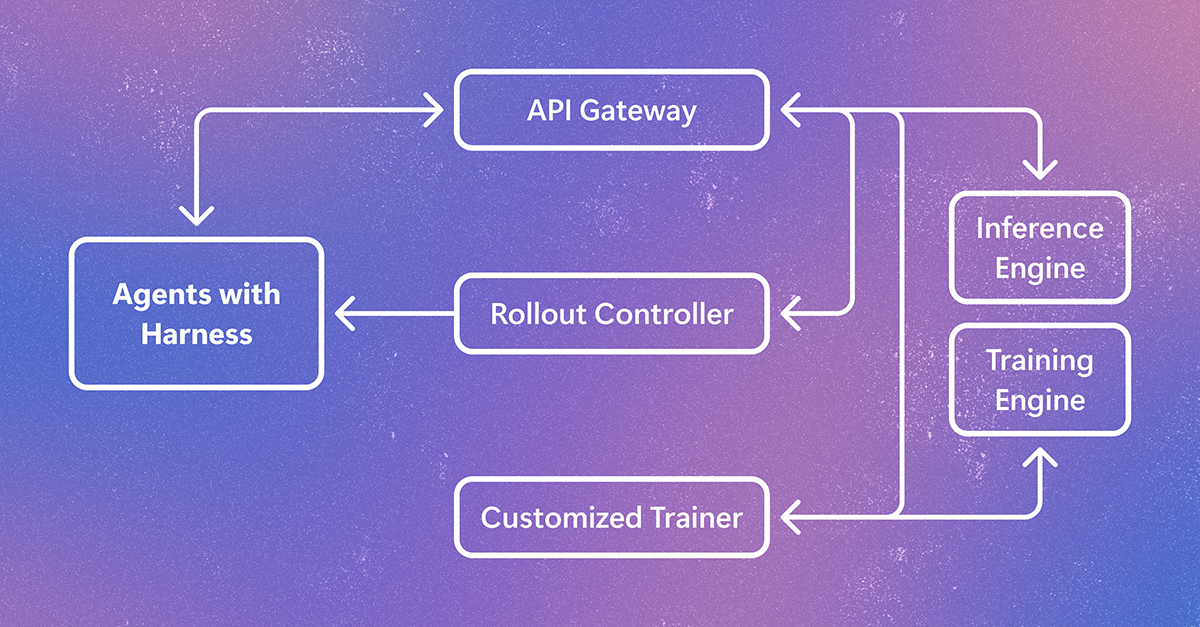
Agent Lightning v1.0: A 3,500-Line Lightweight Agentic RL Framework for Training Agents with Real Harnesses

Training AI agents with reinforcement learning can be challenging because their tools, context, and decision-making are managed by complex frameworks. Agent Lightning connects existing agents to RL training, making it easier to improve them without rebuilding them. The post Agent Lightning v1.0: A 3,500-Line Lightweight Agentic RL Framework for Training Agents with Real Harnesses appeared first on Microsoft Research.

We use cookies to run the site and, with your consent, for analytics and to show ads. See our Cookie Policy.