Oct 2026· Bioinformatics· 0 citations· 36 references
Medicine
TL;DR
Ryder is presented, a flexible and robust Python package for the normalization of epigenomic signal tracks that leverages stable internal reference regions, such as invariant CTCF binding sites, to correct for technical artifacts genome-wide.
Abstract
MOTIVATION
Sequencing-based epigenomic profiling methods are powerful but suffer from technical variability that complicates cross-sample comparisons and can obscure true biological signals. While existing normalization methods using spike-in controls or computational approaches have been proposed, they often rely on assumptions that may not hold across diverse experimental conditions or require additional data types.
RESULTS
We present Ryder, a flexible and robust Python package for the normalization of epigenomic signal tracks. Ryder leverages stable internal reference regions, such as invariant CTCF binding sites, to correct for technical artifacts genome-wide. Our results show that it effectively adjusts both background noise and signal intensity, ensuring accurate signal alignment across samples while preserving genuine biological differences. We demonstrate that Ryder performs robustly across diverse assays including DNase-seq, CUT&RUN, ATAC-seq, MNase-seq, and ChIP-seq, with or without spike-in controls. By reducing technical noise, Ryder improves the detection of genuine biological changes, such as quantitative reduction of chromatin accessibility at key enhancer elements by depletion of BRG1, a key subunit of the chromatin remodeling BAF complexes.
AVAILABILITY AND IMPLEMENTATION
The Ryder source code, documentation and test data are freely available at: https://github.com/YaqiangCao/ryder. The software version used in this study is archived at Zenodo: https://zenodo.org/records/21267457.
SUPPLEMENTARY INFORMATION
Supplementary data are available at Bioinformatics online.

This publication proposes a definition and a classification of agile software development approaches and analyses ten software development methods that can be characterized as being "agile" against the defined criterion.
P. Abrahamsson, O. Salo, Jussi Ronkainen et al.· arXiv.org· 727 citations· ⚡54
The study shows that agile practices improve both informal and formal communication, but indicates that, in larger development situations involving multiple external stakeholders, a mismatch of adequate communication mechanisms can sometimes even hinder the communication.
M. Pikkarainen, Jukka Haikara, O. Salo et al.· Empirical Software Engineeri...· 401 citations· ⚡48
The results indicate that software engineering work practices are chosen opportunistically, adapted and configured to provide value under the constrains imposed by the startup context.
Nicolò Paternoster, Carmine Giardino, M. Unterkalmsteiner et al.· Information and Software Tec...· 394 citations· ⚡54
The results show that the embedded industry has been able to apply agile methods in its development processes and that the appreciation of the agile methods and their individual practices appears to increase once adopted and applied in practice.
O. Salo, P. Abrahamsson· IET Software· 238 citations· ⚡9
Consequences of happiness and unhappiness that are beneficial and detrimental for developers' mental well-being, the software development process, and the produced artifacts are found.
D. Graziotin, Fabian Fagerholm, Xiaofeng Wang et al.· Journal of Systems and Softw...· 236 citations· ⚡13
The Mobile-D approach is briefly outlined here and the experiences gained from four case studies are discussed, which helped develop an agile development approach for mobile application development.
P. Abrahamsson, Antti Hanhineva, H. Hulkko et al.· Conference on Object-Oriente...· 225 citations· ⚡18
StudentSim is a research system for evaluating and improving AI tutoring tools before they are tested with learners. It models how individuals may engage with tutors, giving feedback to improve tutor performance across subjects like chess, writing, and mathematics. The post Simulating student learning for better AI tutoring appeared first on Microsoft Research.
MIT News · Artificial Intelligence· news.mit.eduOct 6, 2026
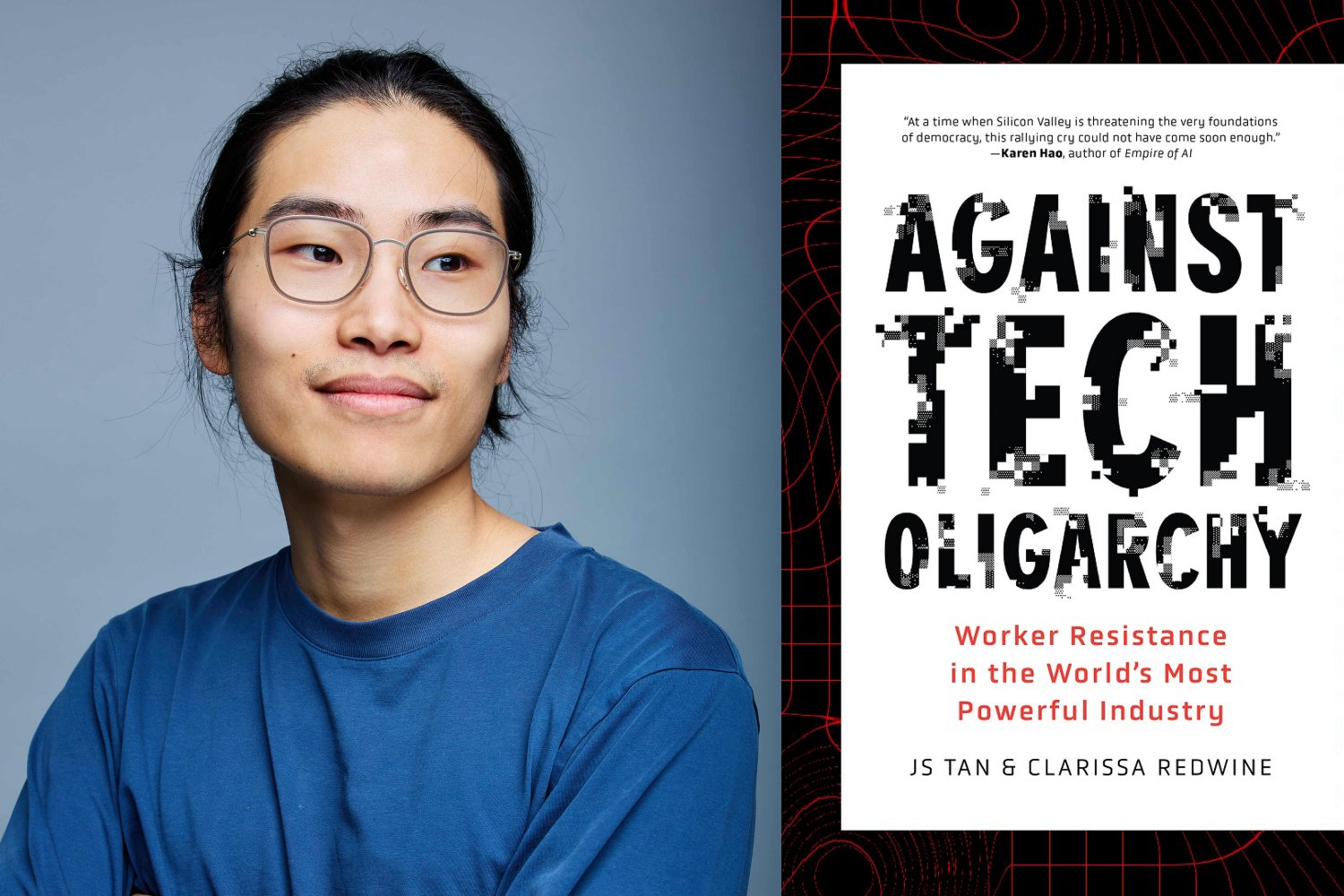
Writing as a participant and researcher, PhD student JS Tan SM ’22 has co-authored a new book about the rise of tech worker protests and the employer backlash that followed.
We use cookies to run the site and, with your consent, for analytics and to show ads.
See our Cookie Policy.