Skip to content
#software testing Open access

Beyond Workshops: RSE-Led Hackathons as Experiential Learning for Software Practice in the AI Era

Oct 2026 · Zenodo (CERN European Organization for Nuclear Research)
Biomedical and Engineering Education

Abstract

Research software development is becoming increasingly decentralized. Domain scientists, data analysts, and research staff who are self- or semi-taught programmers are writing more code than ever, and the rise of AI coding assistants has dramatically lowered the barrier to producing software artifacts. But the fundamentals of good software engineering (like version control, testing, modular design, documentation, collaborative workflows) have not changed. AI tools, when used without guidance, will generate mountains of plausible-looking but poorly structured, untested, and unmaintainable code. The challenge for the research computing community is no longer just producing software but helping their community produce software that is reliable, reproducible, and sustainable. Research Software Engineers are uniquely positioned to address this challenge. RSEs inhabit the intersection of research practice and software craftsmanship. They understand both the domain pressures that drive researchers to "just get it working" and the engineering disciplines that make software trustworthy over time. But traditional approaches to spreading good practice like workshops, tutorials, learning materials or documentation can only go so far. They convey knowledge, but they rarely produce the kind of durable learning that comes from hands-on experience under real constraints. We argue that the hackathon format, when deliberately designed around inclusion and learning rather than competition, offers RSEs a powerful vehicle for experiential software engineering education. We present a case study from Dartmouth College, where the RSE team organized an internal hackathon that brought together staff from across Research Computing & Data, including systems administrators, research facilitators, data scientists, and software engineers, to collaboratively build Stepify, a functional AI-powered video-to-tutorial converter, in a single day. Three design principles guided the event. First, a job for every role: the project scope included UI/UX sketching, test case curation, output evaluation, and documentation alongside code, so that non-coders contributed meaningfully. Second, a sprint, not a race: we removed prizes, judging, and pressure to ship, framing the day as focused collaboration. Third, a prepared mind: RSE arrived with a preliminary architecture but presented it as a starting point, not a specification, leaving room for the team to reshape the design. The results were more impactful than just the working prototype. Staff who do not identify as software engineers reported feeling more confident engaging with development workflows. The event seeded ongoing conversations about code review, collaborative development, and software quality within the organization. As one participant reflected: "People consistently surprise themselves when they are trusted to try." This talk will share the hackathon design, its outcomes, and practical guidance for RSE teams looking to catalyze software engineering culture within their organizations by creating structured opportunities to apply best practices instead of lecturing about them.


View source

Similar papers

#computer vision Review Sep 2017

Agile Software Development Methods: Review and Analysis

This publication proposes a definition and a classification of agile software development approaches and analyses ten software development methods that can be characterized as being "agile" against the defined criterion.

P. Abrahamsson, O. Salo, Jussi Ronkainen et al. · 727 citations · ⚡54
#computer vision Jun 2008

The impact of agile practices on communication in software development

The study shows that agile practices improve both informal and formal communication, but indicates that, in larger development situations involving multiple external stakeholders, a mismatch of adequate communication mechanisms can sometimes even hinder the communication.

M. Pikkarainen, Jukka Haikara, O. Salo et al. · 401 citations · ⚡48
#machine learning Review Open access Oct 2014

Software development in startup companies: A systematic mapping study

The results indicate that software engineering work practices are chosen opportunistically, adapted and configured to provide value under the constrains imposed by the startup context.

Nicolò Paternoster, Carmine Giardino, M. Unterkalmsteiner et al. · 394 citations · ⚡54
#computer vision Review Mar 2008

Agile methods in European embedded software development organisations: a survey on the actual use and usefulness of Extreme Programming and Scrum

The results show that the embedded industry has been able to apply agile methods in its development processes and that the appreciation of the agile methods and their individual practices appears to increase once adopted and applied in practice.

O. Salo, P. Abrahamsson · 238 citations · ⚡9
#computer vision Open access Jul 2017

What happens when software developers are (un)happy

Consequences of happiness and unhappiness that are beneficial and detrimental for developers' mental well-being, the software development process, and the produced artifacts are found.

D. Graziotin, Fabian Fagerholm, Xiaofeng Wang et al. · 236 citations · ⚡13
#computer vision Open access Oct 2004

Mobile-D: an agile approach for mobile application development

The Mobile-D approach is briefly outlined here and the experiences gained from four case studies are discussed, which helped develop an agile development approach for mobile application development.

P. Abrahamsson, Antti Hanhineva, H. Hulkko et al. · 225 citations · ⚡18

Related blog posts

Microsoft Research Blog Oct 12, 2026

Simulating student learning for better AI tutoring

StudentSim is a research system for evaluating and improving AI tutoring tools before they are tested with learners. It models how individuals may engage with tutors, giving feedback to improve tutor performance across subjects like chess, writing, and mathematics. The post Simulating student learning for better AI tutoring appeared first on Microsoft Research.

MIT News · Artificial Intelligence Oct 2, 2026

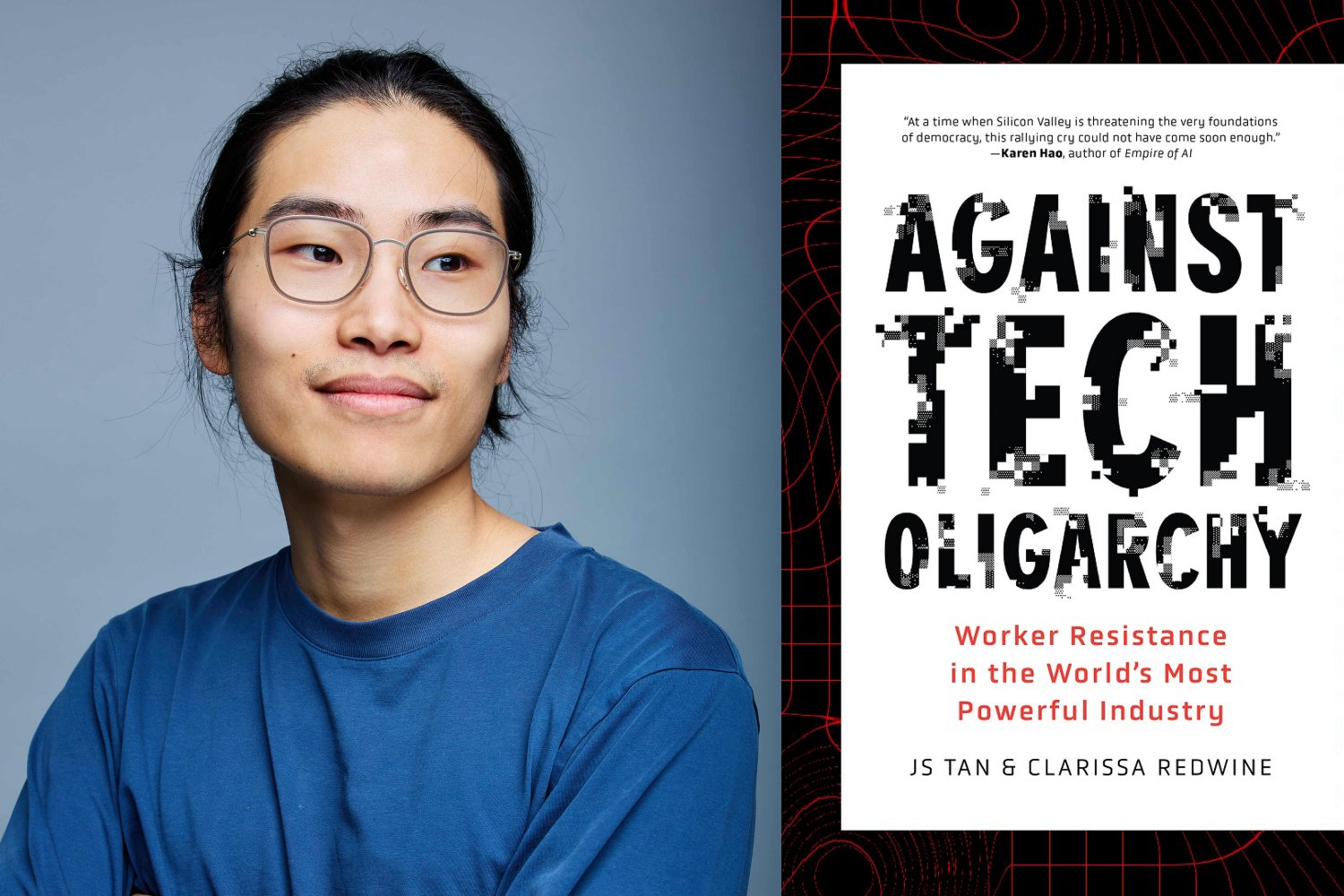
Documenting the tech worker movement

Writing as a participant and researcher, PhD student JS Tan SM ’22 has co-authored a new book about the rise of tech worker protests and the employer backlash that followed.

We use cookies to run the site and, with your consent, for analytics and to show ads. See our Cookie Policy.