Skip to content
#software testing Open access

Cryopreservation protocol and antioxidant supplementation determine post-thaw functional quality of goat sperm.

Oct 2026 · Cryobiology · Vol 125, pp. 105723 · 0 citations
Medicine

TL;DR

Optimization of the cryopreservation protocol had a greater impact on post-thaw sperm functional quality than glycine supplementation, highlighting the importance of optimizing cryopreservation procedures before evaluating antioxidants as complementary strategies.


Abstract

Goat sperm cryopreservation remains a major challenge because freeze-thaw procedures induce structural and functional damage that compromises post-thaw sperm quality. Although antioxidant supplementation has been widely investigated to reduce oxidative stress, its effectiveness remains inconsistent and may depend on the cryopreservation protocol. This study was conducted in two phases. In Phase 1, three antioxidants-ascorbic acid (2.5, 5.0 and 10.0 mg/mL), cysteamine (50, 100 and 200 μM), and glycine (5, 10 and 20 mM)-were screened using semen from six bucks (three Alpine-French and three Murciano-Granadina). Post-thaw assessments via the AndroVision® CASA system (Minitube, Germany; software version 0.26), viability (eosin-nigrosine staining), plasma membrane integrity (HOST), and thermoresistance test (TTR) revealed no statistically significant effects of antioxidant treatment on motility and kinematic parameters (P > 0.05). However, numerical differences favored glycine at 20 mM, which yielded the highest estimated marginal means for total motility (60.35 ± 3.51%), progressive motility (59.97 ± 3.55%), and fast motility (47.74 ± 3.98%), surpassing the control group. The TTR proved more discriminative: ascorbic acid at 10.0 mg/mL produced the most severe decline, whereas cysteamine at 100 μM achieved the highest values among treated groups. In Phase 2, glycine at 20 mM-selected for its numerically favorable kinematic profile-was validated in an independent experiment comparing two cryopreservation protocols: Programmable and Manual. Evaluations included CASA motility and kinematic parameters, plasma membrane integrity, acrosome integrity, mitochondrial activity, thermoresistance test, cold shock resistance test, and gene expression analysis (SOD1, HSP70, CAT). Results demonstrated that the cryopreservation protocol exerted a significantly greater effect than antioxidant supplementation. The manual protocol consistently produced superior values for total motility, progressive motility, fast motility, kinematic parameters (VCL, VAP, VSL, BCF, ALH, HAC), acrosome integrity, and cold shock resistance (P < 0.05). In contrast, glycine supplementation at 20 mM did not significantly affect any evaluated parameter (P > 0.05), nor did the Protocol × Antioxidant interaction. Relative expression of SOD1, HSP70, and CAT did not differ between protocols, treatments, or their interaction (P > 0.26). Overall, these findings indicate that, under the conditions evaluated, optimization of the cryopreservation protocol had a greater impact on post-thaw sperm functional quality than glycine supplementation, highlighting the importance of optimizing cryopreservation procedures before evaluating antioxidants as complementary strategies.
Read PDF

Similar papers

#computer vision Review Sep 2017

Agile Software Development Methods: Review and Analysis

This publication proposes a definition and a classification of agile software development approaches and analyses ten software development methods that can be characterized as being "agile" against the defined criterion.

P. Abrahamsson, O. Salo, Jussi Ronkainen et al. · 727 citations · ⚡54
#computer vision Jun 2008

The impact of agile practices on communication in software development

The study shows that agile practices improve both informal and formal communication, but indicates that, in larger development situations involving multiple external stakeholders, a mismatch of adequate communication mechanisms can sometimes even hinder the communication.

M. Pikkarainen, Jukka Haikara, O. Salo et al. · 401 citations · ⚡48
#machine learning Review Open access Oct 2014

Software development in startup companies: A systematic mapping study

The results indicate that software engineering work practices are chosen opportunistically, adapted and configured to provide value under the constrains imposed by the startup context.

Nicolò Paternoster, Carmine Giardino, M. Unterkalmsteiner et al. · 394 citations · ⚡54
#computer vision Review Mar 2008

Agile methods in European embedded software development organisations: a survey on the actual use and usefulness of Extreme Programming and Scrum

The results show that the embedded industry has been able to apply agile methods in its development processes and that the appreciation of the agile methods and their individual practices appears to increase once adopted and applied in practice.

O. Salo, P. Abrahamsson · 238 citations · ⚡9
#computer vision Open access Jul 2017

What happens when software developers are (un)happy

Consequences of happiness and unhappiness that are beneficial and detrimental for developers' mental well-being, the software development process, and the produced artifacts are found.

D. Graziotin, Fabian Fagerholm, Xiaofeng Wang et al. · 236 citations · ⚡13
#computer vision Open access Oct 2004

Mobile-D: an agile approach for mobile application development

The Mobile-D approach is briefly outlined here and the experiences gained from four case studies are discussed, which helped develop an agile development approach for mobile application development.

P. Abrahamsson, Antti Hanhineva, H. Hulkko et al. · 225 citations · ⚡18

Related blog posts

Microsoft Research Blog Oct 12, 2026

Simulating student learning for better AI tutoring

StudentSim is a research system for evaluating and improving AI tutoring tools before they are tested with learners. It models how individuals may engage with tutors, giving feedback to improve tutor performance across subjects like chess, writing, and mathematics. The post Simulating student learning for better AI tutoring appeared first on Microsoft Research.

MIT News · Artificial Intelligence Oct 2, 2026

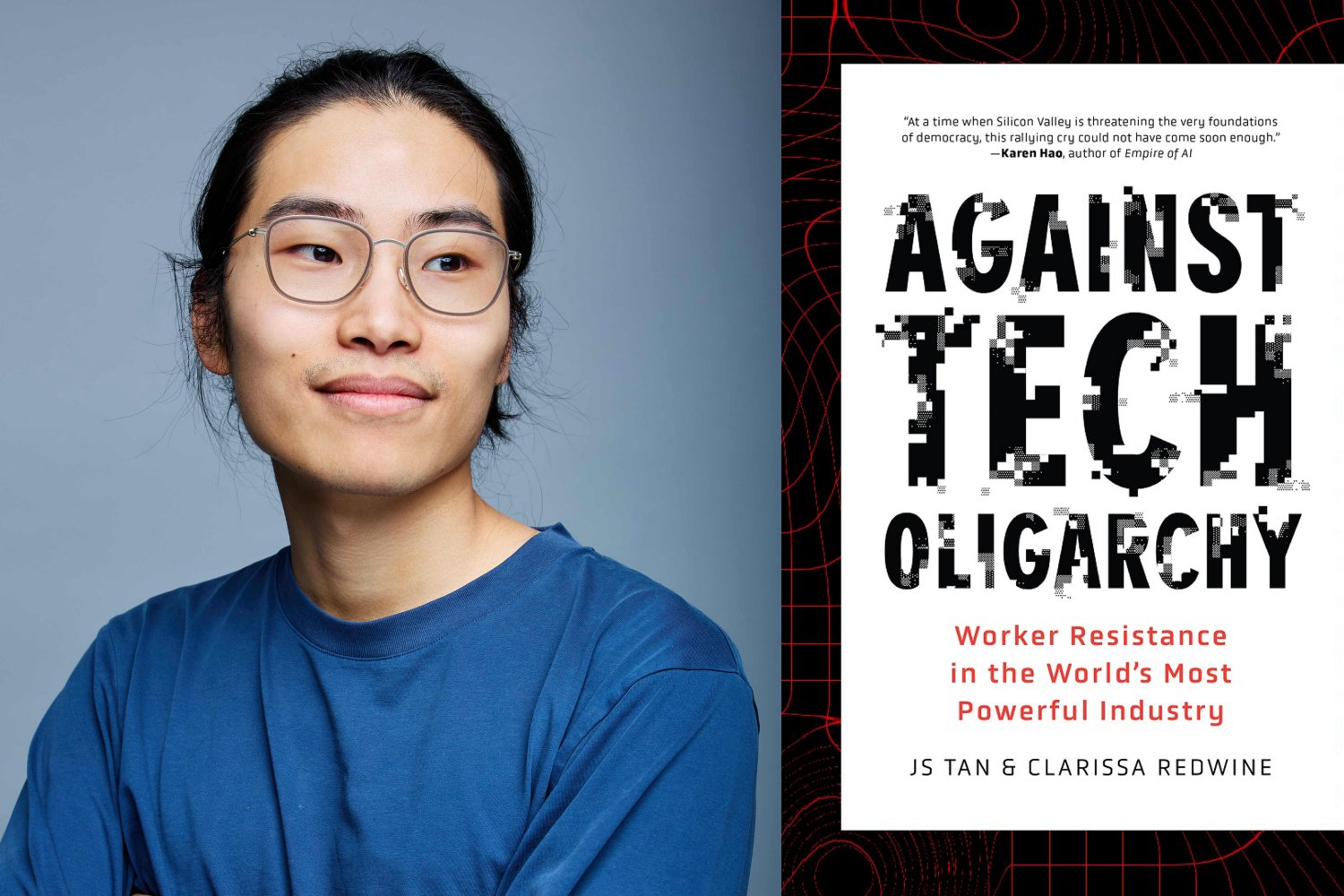
Documenting the tech worker movement

Writing as a participant and researcher, PhD student JS Tan SM ’22 has co-authored a new book about the rise of tech worker protests and the employer backlash that followed.

We use cookies to run the site and, with your consent, for analytics and to show ads. See our Cookie Policy.