Skip to content

Cloud Computing: Architecture, Intelligent Applications, Security, and Open-Source Case Studies

Oct 2026 · International Journal of Computer & Organization Trends
Cloud Computing and Resource Management

Abstract

Cloud computing has become a fundamental computing paradigm for delivering scalable computing, storage, networking, and software services. Its flexibility and resource-sharing capabilities have enabled applications in Artificial Intelligence (AI), Machine Learning (ML), cybersecurity, intelligent transportation, energy systems, and distributed computing. This paper presents a concise review of cloud computing architecture, service requirements, intelligent applications, security requirements, and emerging cloud-edge technologies, grounded in twenty-six references spanning foundational cloud computing literature and applied AI/systems research. The paper relates cloud computing to research involving face recognition, electronic toll collection, peer-to-peer energy trading, human-bot detection, federated intrusion detection, intelligent automation, graph algorithms, honeypot-based cybersecurity, and pedestrian trajectory prediction. Two open-source cloud platforms, OpenStack and Apache CloudStack, are examined through real-world case studies. Reported results demonstrate that open-source cloud platforms can operate at substantial scale: OpenStack reports deployments involving more than 40 million cores globally, while its Walmart case study reports more than 170,000 cores across over 30 regions; Apache CloudStack's IKOULA case reports more than 100 hosts across eight zones and more than 6,600 customers. The paper concludes that future cloud systems will increasingly integrate cloud, edge computing, AI, and privacy-preserving distributed learning.

Read PDF

Similar papers

#computer vision Review Sep 2017

Agile Software Development Methods: Review and Analysis

This publication proposes a definition and a classification of agile software development approaches and analyses ten software development methods that can be characterized as being "agile" against the defined criterion.

P. Abrahamsson, O. Salo, Jussi Ronkainen et al. · 727 citations · ⚡54
#computer vision Jun 2008

The impact of agile practices on communication in software development

The study shows that agile practices improve both informal and formal communication, but indicates that, in larger development situations involving multiple external stakeholders, a mismatch of adequate communication mechanisms can sometimes even hinder the communication.

M. Pikkarainen, Jukka Haikara, O. Salo et al. · 401 citations · ⚡48
#machine learning Review Open access Oct 2014

Software development in startup companies: A systematic mapping study

The results indicate that software engineering work practices are chosen opportunistically, adapted and configured to provide value under the constrains imposed by the startup context.

Nicolò Paternoster, Carmine Giardino, M. Unterkalmsteiner et al. · 394 citations · ⚡54

Related blog posts

MIT News · Artificial Intelligence Aug 27, 2026

Looking beyond natural sequences

A new machine-learning framework aims to improve the success rate of computational protein design while moving away from results that reproduce sequences found in nature.

Microsoft Research Blog Aug 20, 2026

Broadening access to Skala creates a faster path to predictive DFT 

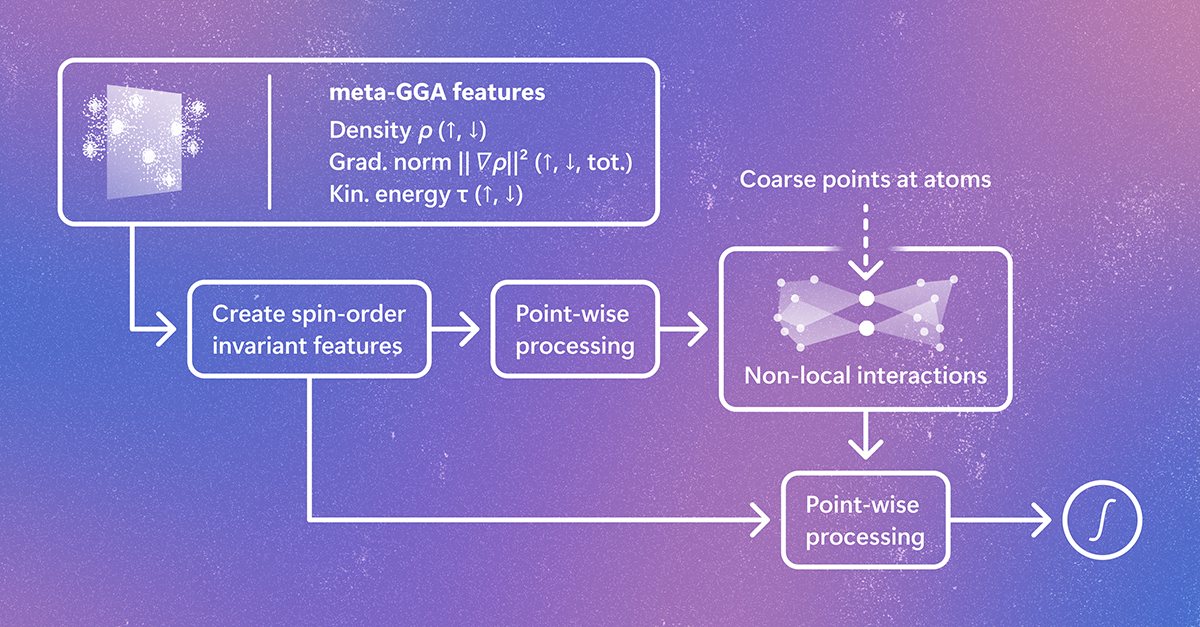
Skala 1.1, the updated deep-learning exchange-correlation functional from Microsoft Research, provides greater accuracy, expanded accessibility across the computational chemistry ecosystem, and a living benchmark to track computational performance. The post Broadening access to Skala creates a faster path to predictive DFT  appeared first on Microsoft Research.

We use cookies to run the site and, with your consent, for analytics and to show ads. See our Cookie Policy.