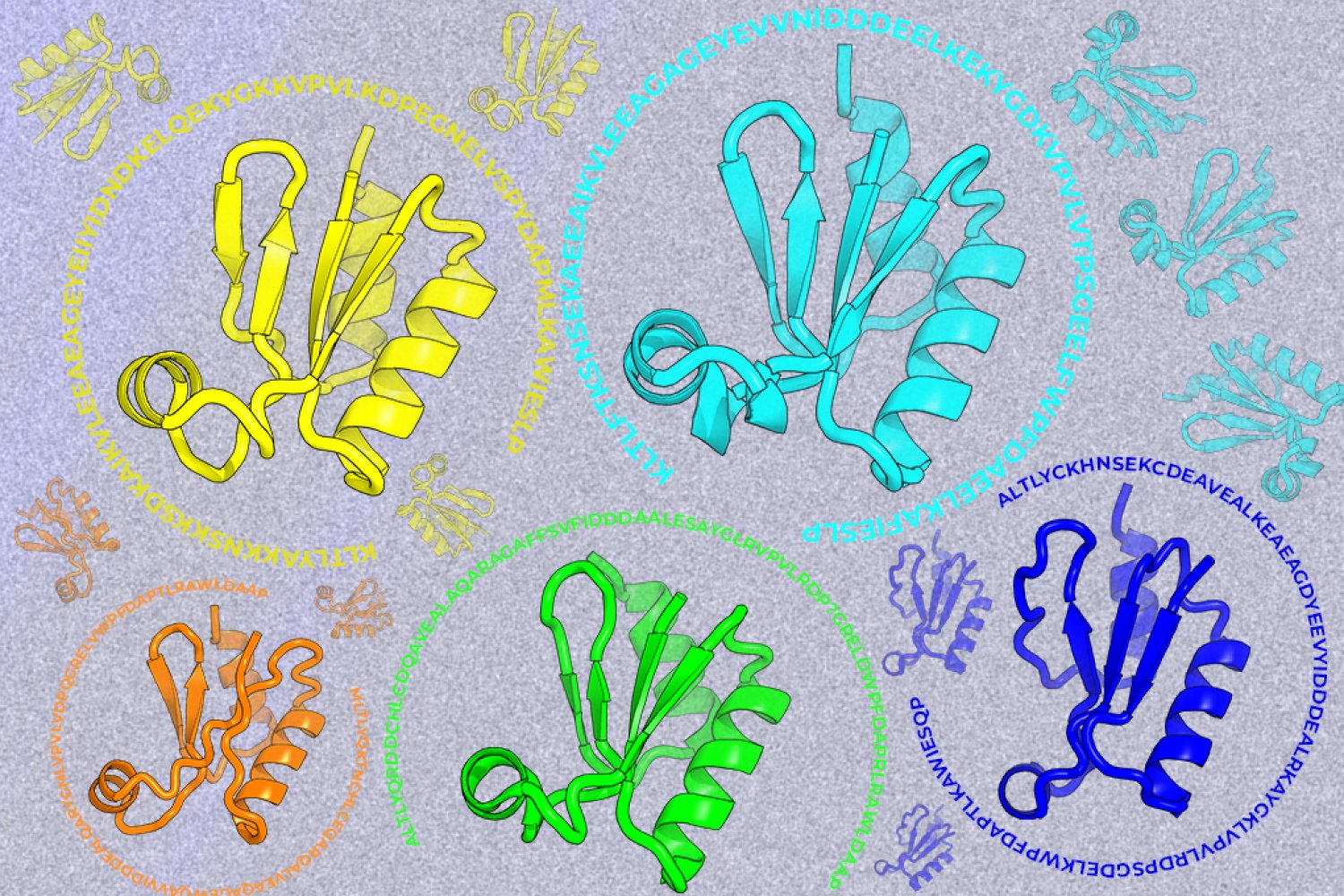
Results support AMARO v2.0 as a shared heavy-atom potential for biomolecular complex dynamics, which preserves folded proteins and captures key features of protein conformational free-energy landscapes.
Abstract
The behavior of biomolecular complexes is governed by chemically specific interactions and often involves rare events that atomistic molecular dynamics struggle to capture within accessible timescales. Here we introduce AMARO v2.0, a coarse-grained neural network potential that retains all heavy atoms and treats solvent implicitly. Hydrogen-aware bead types and total-charge conditioning provide a shared representation for proteins, drug-like molecules, and their complexes, including ternary protein-protein-ligand systems. The model preserves folded proteins and captures key features of protein conformational free-energy landscapes. Across 262 complexes spanning 11 targets, the learned potential retains most ligand poses, although quaternary structure reorientation is observed for the HIF2A ternary complex. In targeted case studies, AMARO v2.0 distinguishes the two protonation states of trypsin-benzamidine and reaches the crystal binding pose in 3.3-fold more trajectories than all-atom molecular mechanics at a fixed estimated GPU-time budget. The same framework also recovers a reference binding pose in TYK2 and supports binding free-energy estimation for both trypsin-benzamidine and TYK2-EJM31, although the resulting values are more energetically favorable than the experimental references. SHP2 and CDK8 systems expose remaining limitations in binding-pose recovery and site specificity, respectively. Together, these results support AMARO v2.0 as a shared heavy-atom potential for biomolecular complex dynamics.

Biomolecular interactions trigger structural changes of protein complexes essential for cellular signaling, regulation, and drug action [1–4]. Modern co-folding models can now generate detailed structures of multi-component complexes directly from sequence [5–9]. However, recent evaluations reveal that they frequently...
Protein dynamics is fundamental to understand mechanisms. Although atomistic Molecular Dynamics (MD) remains the gold standard for predicting protein motions, its computational cost limits applications at large scales. Here, we present a coarse-grained (CG) simulation framework that combines Elastic Network Models (ENM...
Biomolecular condensates, formed through phase separation of multivalent biomolecules, are central to cellular organization and function. Here, we present a unified, physics-based intermediate-resolution framework for efficient and quantitative simulation of biomolecular phase separation at near-cellular complexity. Th...
Protein-small molecule association involves multiple recognition stages governed by distinct physical interactions, yet resolving their kinetic contributions remains computationally challenging. Here, we develop a multiscale Monte Carlo framework that combines an atomistic, conformationally flexible ligand with a coars...
Proteins interact with a wide range of biomolecular partners, yet identifying the interaction sites that mediate these events remains a major challenge for understanding cellular function and guiding drug discovery. Existing computational methods are typically designed for specific interaction classes and often rely on...
Viet Thanh Duy Nguyen, John K. Johnstone, T. Hy· bioRxiv· 0 citations
This approach provides a blueprint for adapting foundation models as new structural and mechanistic data emerge, enabling co-folding networks to capture ligand-induced conformational switches and binding poses absent from their training data but central to biological regulation and therapeutic intervention.
R. Gorantla, C. Schleberger, F. Sesterhenn· bioRxiv· 0 citations
Related blog posts
MIT News · Artificial Intelligence· news.mit.eduNov 9, 2026
A new machine-learning framework aims to improve the success rate of computational protein design while moving away from results that reproduce sequences found in nature.