Skip to content
#protein folding Open access

BacMap 3.0: a comprehensive knowledgebase of annotated bacterial genomes.

Oct 2026 · Nucleic Acids Research · 0 citations · 39 references
Medicine

TL;DR

Building on earlier releases devoted primarily to genome visualization, BacMap 3.0 increases organismal coverage by >13-fold and transforms BacMap into an integrated bacterial knowledgebase for genome-to-function investigation across multiple biological scales.

Abstract

BacMap 3.0 (https://bacmap.ca) is a comprehensive, freely accessible resource integrating 23 524 bacterial and archaeal species, 32 866 genomes, >100 million genes, 1756 primary metabolic pathways, and 45 284 metabolites within one interactive platform. Despite the extraordinary growth of bacterial and archaeal genome sequencing, relevant data remain distributed across numerous specialized databases, impeding comprehensive genome-to-function analysis. While existing microbial resources generally emphasize genome annotation, taxonomy, metabolic pathways, or phenotypes separately, BacMap 3.0 unifies these complementary information layers within an organism-centred framework. It resolves this fragmentation by consolidating genomic, functional, structural, metabolic, phenotypic, ecological, and phylogenetic information into richly detailed, organism-specific "BacCards". Each BacCard combines an interactive genome map with extensive annotations covering bacterium-specific taxonomy, physiology, morphology, metabolism, protein structures, pathways, and metabolites. To facilitate data exploration, BacMap 3.0 supports taxonomic and phenotype-based browsing, chemical structure searches, interactive genome visualization, as well as gene, genome, 16S RNA, and protein BLAST searches. Building on earlier releases devoted primarily to genome visualization, BacMap 3.0 increases organismal coverage by >13-fold and transforms BacMap into an integrated bacterial knowledgebase for genome-to-function investigation across multiple biological scales. By bringing diverse biological information together in a single searchable environment, BacMap 3.0 offers a powerful platform for comparative genomics, microbiome research, infectious disease investigation, and biotechnology with a goal of accelerating the interpretation of microbial diversity, biology, and function.
Read PDF

Similar papers

Open access Oct 2026

AnnelidaDB: a comprehensive platform of taxonomic and multi-omic resources across annelids.

AnnelidaDB is a species-centred database built on an updated phylogenetic framework that integrates genomes, mitochondrial genomes, transcriptomes, proteomes, epigenomes, single-cell datasets, host-associated symbiont genomes, and comparative synteny for Annelida.

Yun-Long Li, Hao-Kun Liu, Maeva Perez et al. · 0 citations
Open access Oct 2026

Carbon-A: Unified Genome Annotation across Eukaryotic Diversity

Structural genome annotation remains a bottleneck in eukaryotic genomics as conventional methods depend on external evidence that is unevenly available across the tree of life, and existing ab initio predictors are typically specialized for particular taxonomic groups. We introduce Carbon-Annotator (Carbon-A), a 1.2-bi...

Georgia Channing, Zheng Shi, Xiao-Xi Zhang et al. · 0 citations
Open access Oct 2026

BGC Atlas v2: biosynthetic gene clusters with taxonomic and environmental context at scale

The new release of BGC Atlas v2 provides taxonomic assignments for nearly all BGCs, harmonized environmental metadata, nested searches across biosynthetic, taxonomic, environmental and geographic properties, and protein-sequence searches against BGC-encoded genes.

Caner Bağcı, Alec Talamas-Tanner, N. Ziemert · 0 citations
Open access Sep 2026

The automated eukaryotic pangenome pipeline EukPan reveals accessory genome differentiation beyond core-gene phylogeny in Aspergillus oryzae

Pangenome analysis reveals recurrent gene-content variation beyond a single reference genome, but its application to eukaryotes is constrained by inconsistent gene annotation. ANNEVO predicts gene models from genome FASTA assemblies without RNA-seq data. We developed EukPan, an automated post-annotation pipeline that s...

K. Seki, Masatoshi Goto, Taiki Futagami et al. · 0 citations
Open access Sep 2026

Scaling Functional Annotation Across Proteomes, Pangenomes and Metagenomes with Sma3s v3

The results establish Sma3s v3 as a scalable and interpretable tool for functional annotation and re-annotation of proteomes, pangenomes, and metagenomic protein catalogues.

Alejandro Rubio, Jesús L. García-Junco Alcalá, Elisa Luque-Jiménez et al. · 0 citations
Open access Oct 2026

BGC-XPLORER: Exploring Biosynthetic Gene Clusters with Gene-Level Functional Annotation and AI-Assisted Summarization

Turning one newly sequenced bacterial genome into a view of its biosynthetic potential still means running several cluster detectors and annotation tools and comparing their output by hand. We present BGC-XPLORER, a containerized Snakemake workflow for a single assembled bacterial genome, deployed locally with Docker a...

V. Baev, E. Apostolova, M. Gozmanova et al. · 0 citations

Related blog posts

Google DeepMind Blog Sep 30, 2026

Introducing SynthID Bio

Proof of concept for watermarking AI-generated proteins while preserving biological function.

MIT News · Artificial Intelligence Aug 27, 2026

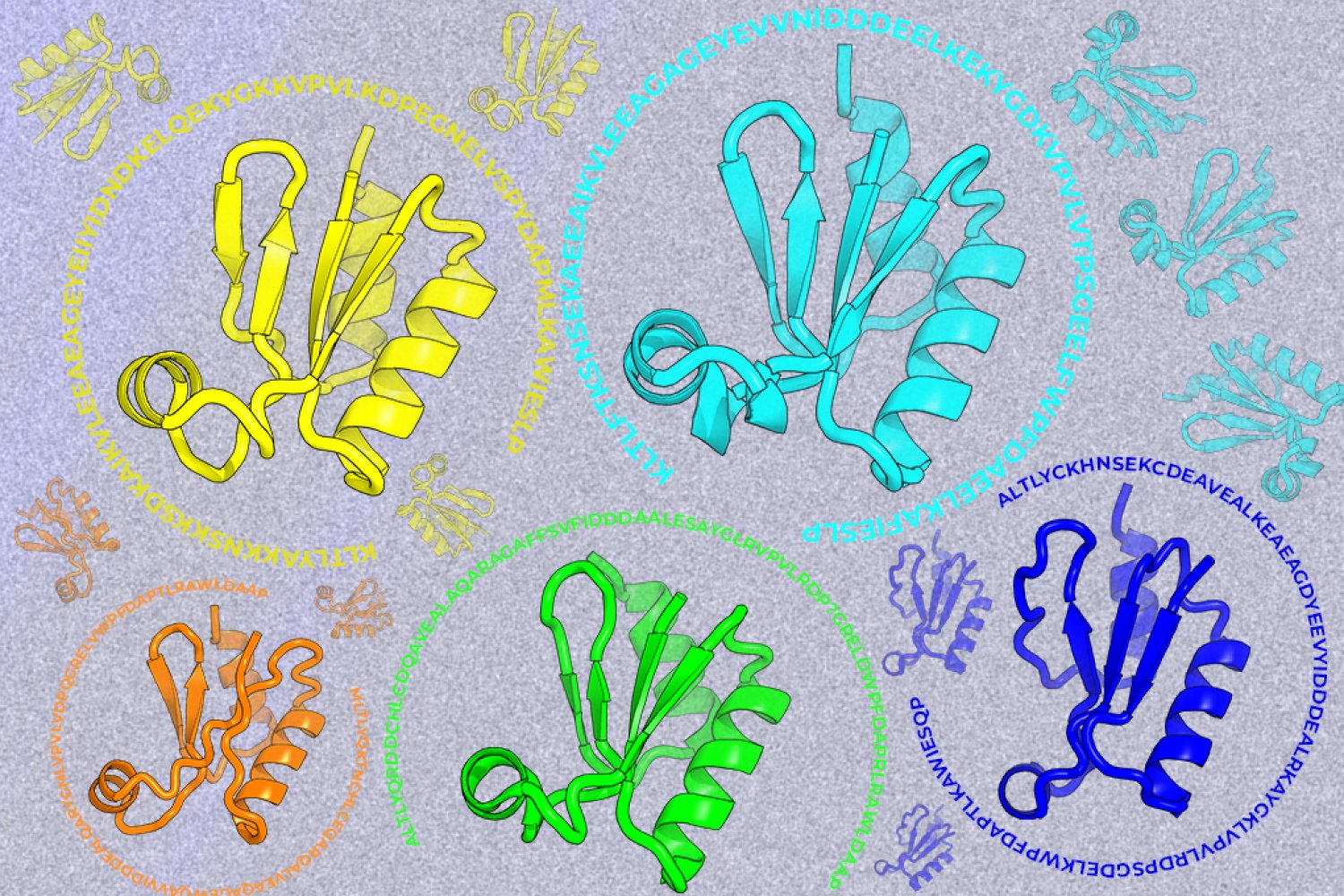
Looking beyond natural sequences

A new machine-learning framework aims to improve the success rate of computational protein design while moving away from results that reproduce sequences found in nature.

We use cookies to run the site and, with your consent, for analytics and to show ads. See our Cookie Policy.