Whether a language model was trained on a document matters for copyright, privacy, and benchmark contamination. Yet most membership-inference (MI) evaluations on language models collect members and non-members after the fact, so success may reflect distribution shift and failure is inconclusive. We re-ran OLMo 2 1B's official 50-billion-token mid-training stage, replacing selected training chunks with documents from 7,814 pairs matched on domain and difficulty. For each pair, a coin flip determined which document was inserted and which was held out. The run released by the Allen Institute for AI (AI2) from the same seed saw identical data everywhere else and serves as the counterfactual. One exposure raises a previously unseen document's likelihood on average but rarely identifies it. Using the counterfactual as reference, the reference ratio has an area under the ROC curve (AUC) of 0.767 but, with one threshold across domains, catches 3.8% of members at a 1% false-positive rate (FPR). In contrast, 13 matched pairs give a paired test 80% power at the 5% level to detect training on a collection, given same-domain non-members and a close reference. A reference trained with another seed recovers 92% of the counterfactual's AUC advantage over chance, whereas reference-free attacks stay within 0.07 of chance when pooled over domains. The full official post-training recipe, re-run on both models, leaves 89% of the average effect. Even with a closely matched reference, substantial document-level variability limits individual membership inference. We will release the checkpoints, per-token log-probabilities, and the evaluation documents; the code is available at https://github.com/ali-bana/OLMo-Twin.

This paper investigates developing real-world perception for active agents, proposes Gibson Environment for this purpose, and showcases a set of perceptual tasks learned therein.
F. Xia, Amir Zamir, Zhi-Yang He et al.· 2018 IEEE/CVF Conference on...· 1,069 citations· ⚡112
This publication proposes a definition and a classification of agile software development approaches and analyses ten software development methods that can be characterized as being "agile" against the defined criterion.
P. Abrahamsson, O. Salo, Jussi Ronkainen et al.· arXiv.org· 727 citations· ⚡54
The results indicate that software engineering work practices are chosen opportunistically, adapted and configured to provide value under the constrains imposed by the startup context.
Nicolò Paternoster, Carmine Giardino, M. Unterkalmsteiner et al.· Information and Software Tec...· 394 citations· ⚡54
The possibility of inferring high-dimensional data inference in a model that consists of a prior and an auxiliary differentiable constraint given some additional information is considered, thereby allowing a range of potential applications in adapting models to new domains and tasks.
Alexandros Graikos, Esmeralda S. Whitammer, N. Jojic et al.· Neural Information Processin...· 316 citations· ⚡15
It is proved that any global minimizer of the trajectory balance objective can define a policy that samples exactly from the target distribution, and empirically demonstrate the benefits of the trajectories balance objective for GFlowNet convergence, diversity of generated samples, and robustness to long action sequenc...
Esmeralda S. Whitammer, Moksh Jain, Emmanuel Bengio et al.· Neural Information Processin...· 302 citations· ⚡60
Consequences of happiness and unhappiness that are beneficial and detrimental for developers' mental well-being, the software development process, and the produced artifacts are found.
D. Graziotin, Fabian Fagerholm, Xiaofeng Wang et al.· Journal of Systems and Softw...· 236 citations· ⚡13
Research Manager Mike Walker reflects on a career spanning hacker culture, cybersecurity, and AI, sharing lessons about trust, teamwork, leadership, and why solving difficult problems requires curiosity, judgment, agility—and an understanding of the rules. The post Learn the rules: The hacker mindset appeared first on Microsoft Research.
MIT News · Artificial Intelligence· news.mit.eduAug 27, 2026
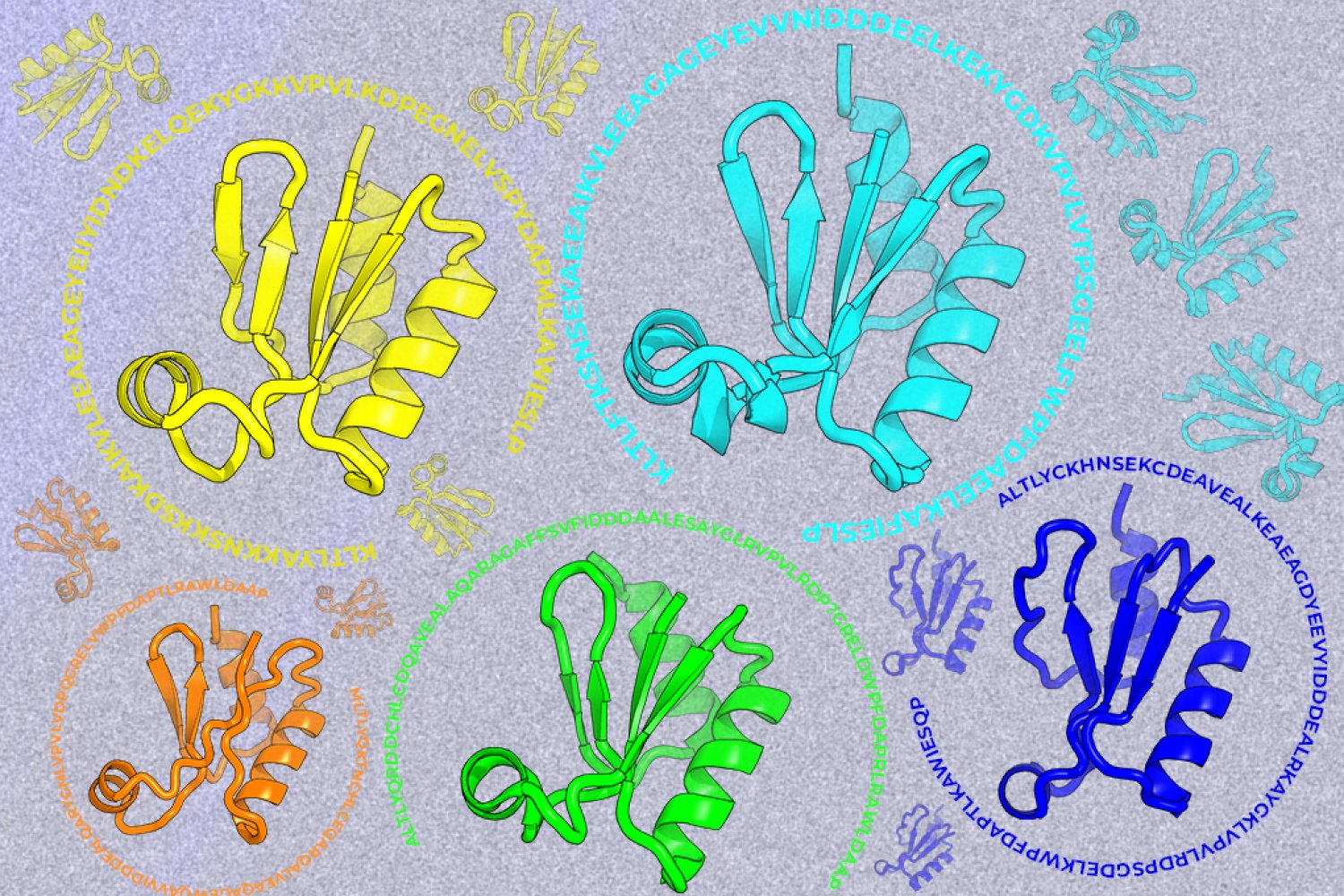
A new machine-learning framework aims to improve the success rate of computational protein design while moving away from results that reproduce sequences found in nature.