Nov 2026· Environmental Science &
Technology· 0 citations· 70 references
Abstract
Microplastics have created an expanding anthropogenic microbial niche known as the plastisphere, yet the mechanisms by which plastic additives influence these microbial assemblies remain poorly understood. Here, we show that UV328, a ubiquitous benzotriazole stabilizer recently listed in the Stockholm Convention, may be associated with quorum sensing signaling that accelerates plastisphere formation, biomass accumulation, and extracellular polymeric substance production on microplastics. In UV328-exposed polystyrene and polylactic acid plastisphere, the total expression levels of biofilm formation genes are upregulated by 1.38- to 2.94-fold compared to the control and quorum quenching manipulations. Molecular dynamics simulations predict that UV328 structurally mimics N-acyl-homoserine lactone (AHL) and may plausibly occupy ligand-binding domains of the quorum sensing receptor SdiA and CciR with favorable energetics. UV328 exposure was further associated with the upregulation of genes involved in bacterial chemotaxis, flagellar assembly, and central carbon metabolism. This physiological reprogramming alters community assembly trajectories and leads to a protein-rich plastisphere phenotype that was reversible by enzymatic quorum quenching, potentially supporting the involvement of AHL-sensitive processes. Our findings suggest that UV328 can alter plastisphere development through signaling-associated ecological processes, raising the possibility that microplastics may function as chemically active interfaces and highlighting microbial signaling interference as an overlooked dimension of the ecological risks associated with plastic additives in aquatic ecosystems.

The evidence identifies N. sphaeroides as a promising organism for studying how cyanobacterial developmental multicellularity promotes persistence in variable environments and may inform cultivation practices.
Jin-Long Shang, Lu Shi, Jun-Ying Lv et al.· Plants· 0 citations
This resistome expansion independent of antibiotic selective pressure reveals the potential ecological hazards of biodegradable plastics, substantiating the need for a systematic reassessment of their widespread use within the "One Health" framework.
Xiao-Kang He, Zhen-Ling Li, Zhen-Yao Shen et al.· Journal of Hazardous Materia...· 0 citations
Quorum sensing (QS) represents a sophisticated cell density-dependent communication mechanism that enables bacterial populations in plant-associated environments to coordinate collective behaviors and optimize survival strategies. This review examines the molecular architecture of major quorum sensing systems, includin...
Arpitha Balakrishnan, A. Shukla, Devansh Arora et al.· Biotech Today· 0 citations
It is shown that both biodegradable and nondegradable MPs significantly increased ARG abundance and transcriptional activity, differing in the drive mechanisms, underscoring the importance of considering phage-mediated processes in assessing the risks of MPs and ARG dissemination.
Li-Hong Xie, Lu Wang, Li-Juan Ma et al.· The ISME Journal· 0 citations
It is demonstrated that quorum sensing molecules can regulate detoxification-related metabolic responses and enhance cellular Cd handling in microalgae, providing new insights into microbe-mediated metal detoxification and highlighting the potential relevance of quorum sensing in microalgae-based biotechnological appli...
Qing-Nan Yu, Si-Ting Wang, Meng-Ting Chang et al.· World Journal of Microbiolog...· 0 citations
Related blog posts
MIT News · Artificial Intelligence· news.mit.eduNov 9, 2026
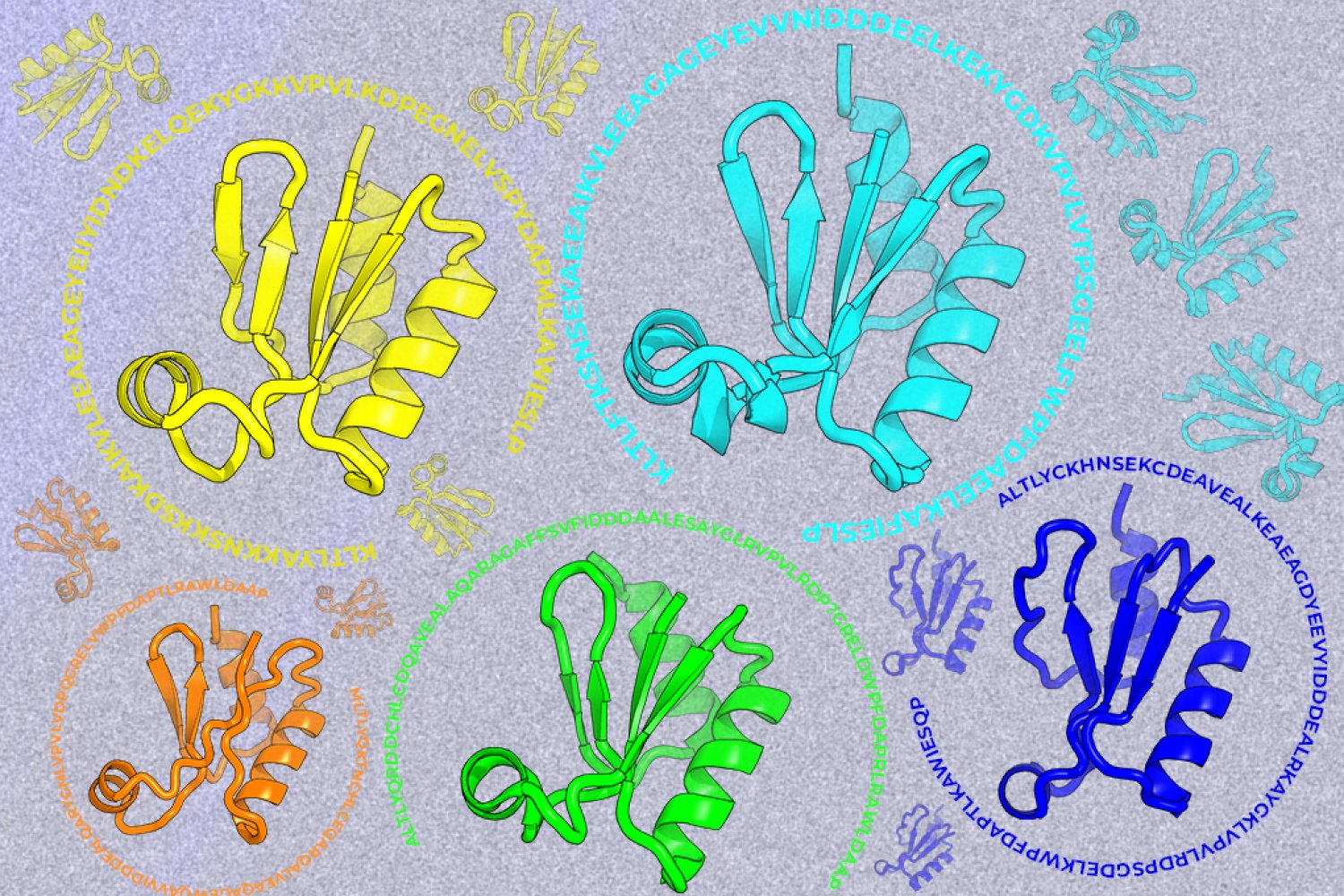
A new machine-learning framework aims to improve the success rate of computational protein design while moving away from results that reproduce sequences found in nature.