Aug 2026· Current Opinion in Biotechnology· Vol 101, pp.
103571
· 0 citations· 80 references
Medicine
TL;DR
Evidence on health-promoting properties, including lipid metabolism, glycemic control, muscle protein synthesis, and gut microbiota modulation, and gut microbiota modulation are summarized, supporting the potential of mycoprotein as a sustainable alternative protein source.
Abstract
Mycoprotein has emerged as a sustainable alternative protein source in response to increasing global demand for sustainable and nutritionally adequate protein. It is a fungal biomass produced through fermentation, characterized by high protein, dietary fiber, and a favorable amino acid profile. This review summarizes recent advances in fungal strain selection, including gene-editing approaches, as well as fermentation optimization strategies. We also summarize evidence on health-promoting properties, including lipid metabolism, glycemic control, muscle protein synthesis, and gut microbiota modulation, with emphasis on mechanisms. In addition, sustainability aspects are discussed in the context of resource efficiency and the utilization of agro-industrial by-products. Overall, this review highlights recent advances and future perspectives, supporting the potential of mycoprotein as a sustainable alternative protein source.
The escalating global population and the environmentally inefficient nature of livestock-based protein production are intensifying demand for sustainable and scalable protein alternatives. Microbial biosynthesis, employing engineered cell factories, represents a pivotal strategy for producing functional proteins with a...
Zewei Lu, Zhuoer Chen, Dianqi Yang et al.· Comprehensive Reviews in Foo...· 0 citations
The growing demand for sustainable protein sources has intensified interest in plant-based food systems. Pulses are well established and recognized as nutritious, sustainable protein sources (~15–30% dry weight), rich in lysine and limited in cysteine, methionine, and tryptophan amino acids. In contrast, Spirulina is c...
Plant based protein possesses significant potential in the food sector due to its economic, nutritional, and sustainability benefits. However, the presence of limiting factors in terms of digestibility, off flavors, and techno functionality reduces the appeal of plant proteins. Fermentation is a biological modifica...
Disha, M. Madhumita, Dharmender Kumar et al.· Food Bioengineering· 0 citations
Overall, alternative proteins represent a promising pathway toward sustainable food system transformation, but their successful integration will depend on evidence-based development, improved processing strategies, standardized evaluation, and supportive policy frameworks.
Muhammad Salabat Khan· International Journal of Foo...· 0 citations
A strain-process-structure-function (SPSF) framework is proposed that integrates upstream strain selection and engineering, fermentation-process optimization, continuous-production robustness, downstream processing, and food-structure design into a unified, product-oriented perspective for sustainable mycoprotein produ...
Zhuoyu Han, Qing Kong, Jia Xu et al.· Food Research International· 0 citations
This work explores the development of animal-free proteins produced in laboratory settings using innovative technologies such as precision fermentation, submerged fermentation, plant cell culture, and molecular engineering, which enable the production of high-quality proteins without relying on animal farming or large-...
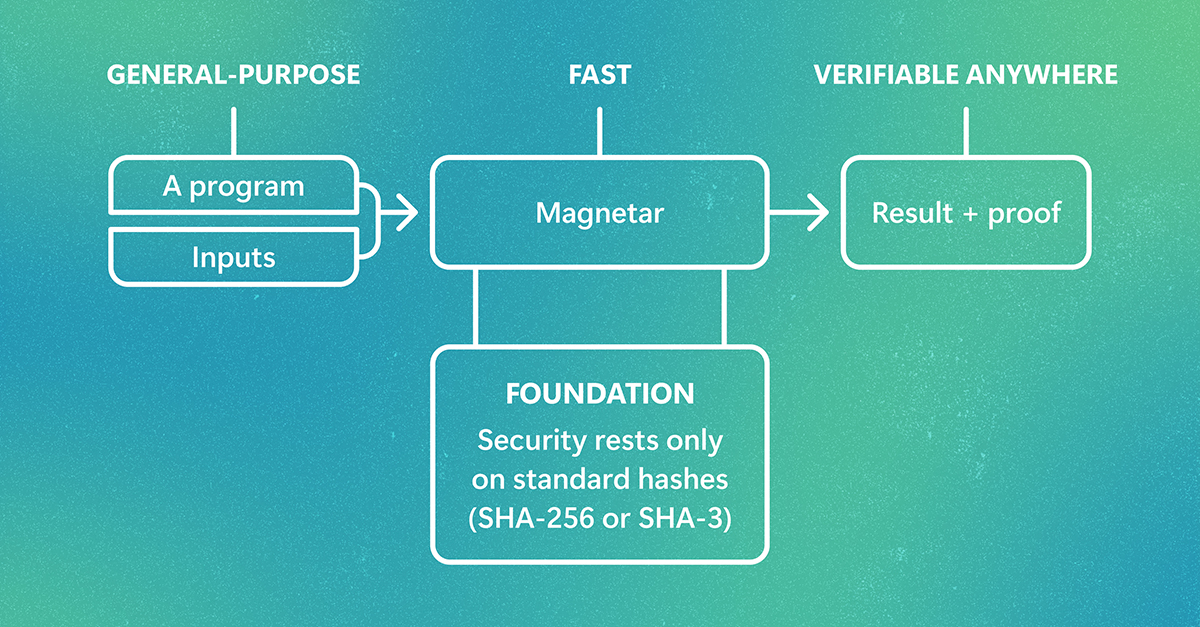
Zero-knowledge proofs can verify computing results without rerunning workloads or exposing sensitive data. Magnetar helps bring them into the mainstream with support for standard programming languages, major speed gains, and quantum-resistant security. The post Proof-based general-purpose computing with Magnetar appeared first on Microsoft Research.