Nov 2026· Proceedings of the 34th ACM International Conference on Multimedia· pp. 7273-7282· 0 citations· 14 references
Privacy-Preserving Technologies in Data
TL;DR
A novel data-centric federated learning framework called FedGAT is proposed, to address severe data heterogeneity under limited communication budgets and improve the quality and diversity of condensed knowledge by preserving local geometric structure and prioritizing insufficiently learned yet non-redundant samples.
Abstract
Federated learning has emerged as a promising paradigm for privacy-preserving collaborative learning across distributed clients. However, the data owned by different clients are usually highly heterogeneous and severely Non-Independent and Identically Distributed (Non-IID), which leads to client drift and unsatisfactory global model performance. Although existing federated learning methods have attempted to alleviate the Non-IID problem, most of them mainly operate at the model level and still rely on frequent communication. In this paper, we propose a novel data-centric federated learning framework called FedGAT, to address severe data heterogeneity under limited communication budgets. On the client side, we improve the quality and diversity of condensed knowledge by preserving local geometric structure and prioritizing insufficiently learned yet non-redundant samples. On the server side, we further enhance global discrimination under heterogeneous data distributions by adaptively aligning class prototypes. Extensive experiments on eight medical and natural image datasets against ten state-of-the-art methods demonstrate that FedGAT achieves superior accuracy, outperforming the strongest baseline by up to 16.48 percentage points.

FL-HeteroSecure consistently outperforms state-of-the-art baselines, including FedGAN, FMDS-FL, and HFMDS-FL, improving accuracy, accelerating convergence, and reducing communication costs.
S. Bhardwaj, Dong-Seong Kim· Journal of Supercomputing· 0 citations
Federated learning (FL) is a promising paradigm of machine learning, which preserves user privacy by enabling learning without sharing raw data with a cloud server. Straggling clients have been a problem for FL as they introduce delays in aggregating the local models and hence, the convergence of the global model. Ther...
Correlation-Guided Latent Sharing is proposed, a federated learning framework that selectively augments client training using latent information received from statistically aligned peers and improves accuracy and macro-F1 over FedAvg and FedProx, with the largest gains appearing in the strongest heterogeneity settings.
Mahran Jazi, Sharva Gogawale, I. Ben-gal· Proceedings of the 35th ACM...· 0 citations
FedLTLib, a comprehensive benchmark tailored for FL-LT, establishes a standardized evaluation framework and can perform fair and reproducible evaluations of algorithm robustness and generalization capabilities under a unified experimental protocol, ultimately advancing the deployment of robust intelligence in mobile co...
By studying the computational foundations of language learning, Associate Professor Jacob Andreas builds intelligent systems that can communicate effectively with humans.
MIT News · Artificial Intelligence· news.mit.eduNov 17, 2026
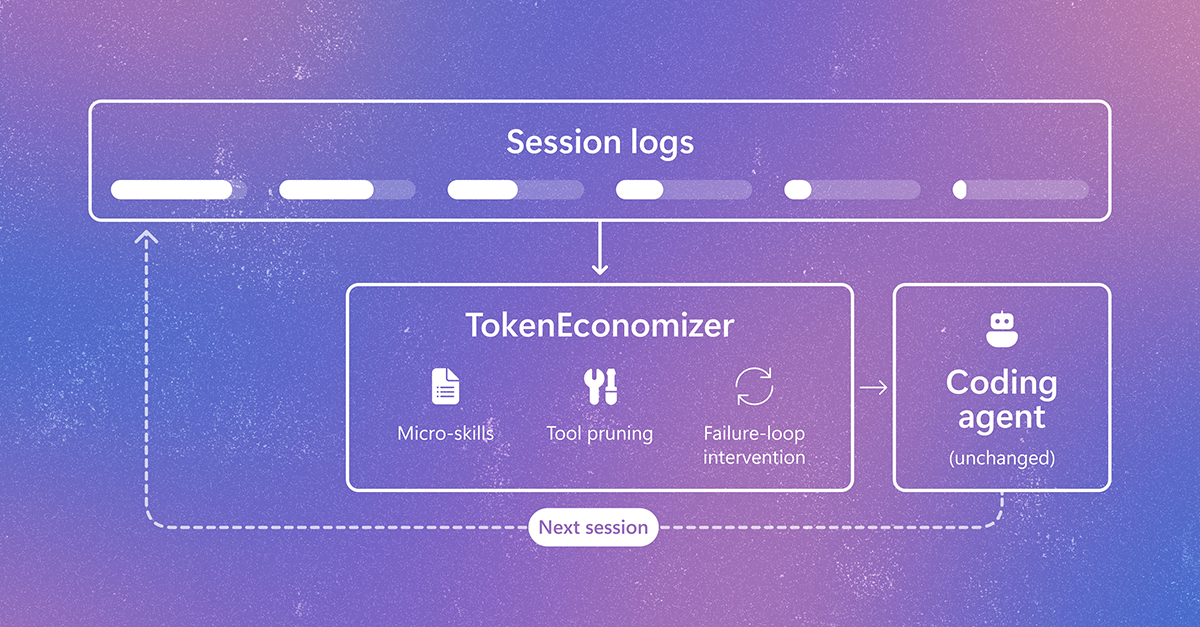
AI coding agents are increasingly help developers fix bugs and build features largely on their own, but every interaction with their models consumes tokens. In each session, an agent sends instructions, tool descriptions, and session history to its model. Most efforts to reduce this cost focus on individual tasks. Yet developers return to the same […] The post TokenEconomizer: Learning from Experience to Make AI Coding Agents More Efficient appeared first on Microsoft Research.
MIT News · Artificial Intelligence· news.mit.eduNov 9, 2026