Skip to content
#federated learning Open access

Calibrating Federated Models for Reliable Mobile Edge Deployment

Dec 2026 · IEEE Transactions on Mobile Computing · Vol 25, pp. 23648-23665 · 1 citation · 56 references

TL;DR

Assembled Projection Heads (APH) is proposed, a plug-and-play and communication-free head-ensemble framework that improves calibration by introducing controllable diversity while incurring negligible training and inference overhead, and Low-Rank Adaptation (LoRA)-based APH is developed, which replaces full projection heads with low-rank counterparts, effectively reducing storage overhead for large-scale distributed clients while further enhancing uncertainty reliability.

Abstract

Despite the rapid progress of federated learning (FL) for mobile and edge intelligence, the reliability of on-device federated models remains largely underexplored. This gap becomes critical in distributed mobile systems where clients are resource- and bandwidth-constrained, data are highly non-IID, and training suffers from intermittent participation and stragglers. In such settings, we systematically revisit FL from a reliability standpoint and identify an underappreciated failure mode: federated models often become poorly calibrated and unreliable in uncertainty estimation, which directly compromises risk-sensitive edge decisions. Through theoretical analysis, we further reveal that this degradation mainly arises from the classifier head, where biased local priors distort the global prediction confidence. To address this issue, we first propose Assembled Projection Heads (APH), a plug-and-play and communication-free head-ensemble framework that improves calibration by introducing controllable diversity while incurring negligible training and inference overhead. Building upon this, we develop Low-Rank Adaptation (LoRA)-based APH (LoRAPH), which replaces full projection heads with low-rank counterparts, effectively reducing storage overhead for large-scale distributed clients while further enhancing uncertainty reliability. Extensive evaluations across multiple benchmarks and FL frameworks demonstrate that APH and LoRAPH consistently improve calibration and robustness under non-IID data and partial participation, with minimal computation and communication overhead, making them practical for reliability-critical federated learning in distributed mobile systems. Notably, LoRAPH delivers reliable uncertainty estimation with only 0.34% extra training cost, near-zero inference overhead after pre-aggregation, and 4.37% footprint increase, making it well-suited for bandwidth- and memory-constrained mobile deployments.


Read PDF

Similar papers

#federated learning Review Open access Sep 2026

Communication-Efficient Federated Learning under Non-IID Data: Aggregation and Compression Strategies

This paper proposes a selection strategy according to data heterogeneity, bandwidth and system constraints, and recommends the unified reporting of accuracy, communication volume, communication rounds, time, and energy consumption.

Chang Ma · 0 citations
Book Open access Nov 2026

Backdoor Poisoning Mitigation for Federated LoRA via Structural Adaptive Control

Large pre-trained models are increasingly adapted on user devices, but direct fine-tuning in federated settings is constrained by computation, memory, and communication limits. These constraints have motivated the use of parameter-efficient fine-tuning methods, among which LoRA is widely adopted by concentrating adapta...

Wen-Han Hu, Zhe Wang, Gang Yan · 0 citations

FedLTLib: A Comprehensive Benchmark for Federated Long-Tail Learning

FedLTLib, a comprehensive benchmark tailored for FL-LT, establishes a standardized evaluation framework and can perform fair and reproducible evaluations of algorithm robustness and generalization capabilities under a unified experimental protocol, ultimately advancing the deployment of robust intelligence in mobile co...

Chang-Kun Lin, Jun-Xiao Wang · 0 citations
Preprint Oct 2026

Communication-Efficient Clustered Federated Learning in Non-IID Wireless Networks

Current and emerging mobile networks face increasing privacy, scalability, and performance challenges as distributed learning becomes essential for advanced 6G services. These challenges are amplified by the presence of non-IID data, naturally arising in heterogeneous wireless environments, that degrade the performance...

Martin Isaksson, R. Coster, Sarunas Girdzijauskas et al. · 0 citations
Open access Sep 2025

Adaptive Dual-Mode Distillation for Robust and Communication-Efficient Federated Learning Under Statistical and Model Heterogeneity

The growing volume of data from smart devices offers significant potential for machine learning, yet privacy concerns hinder centralized use. Federated Learning (FL) has emerged as a promising decentralized learning (DL) approach enabling the use of distributed data without compromising privacy. However, practical depl...

Zahid Iqbal, Fatima N. al-Aswadi, Haziqah Shamsudin et al. · 2 citations
Preprint Oct 2026

FedSwitch: Federated Region Classification From Wireless Channel Measurements

Wireless Internet-of-Things (IoT) networks can leverage locally observed channel state information (CSI) at base-stations (BSs) to perform region classification, i.e., infer the region of origin of a transmitter (TX), thereby enabling channel-based authentication. However, centralizing these measurements incurs substan...

Mattia Piana, Stefano Rini, S. Tomasin · 0 citations

Related blog posts

MIT News · Artificial Intelligence Nov 17, 2026

Learning the language of machine learning

By studying the computational foundations of language learning, Associate Professor Jacob Andreas builds intelligent systems that can communicate effectively with humans.

Microsoft Research Blog Nov 16, 2026

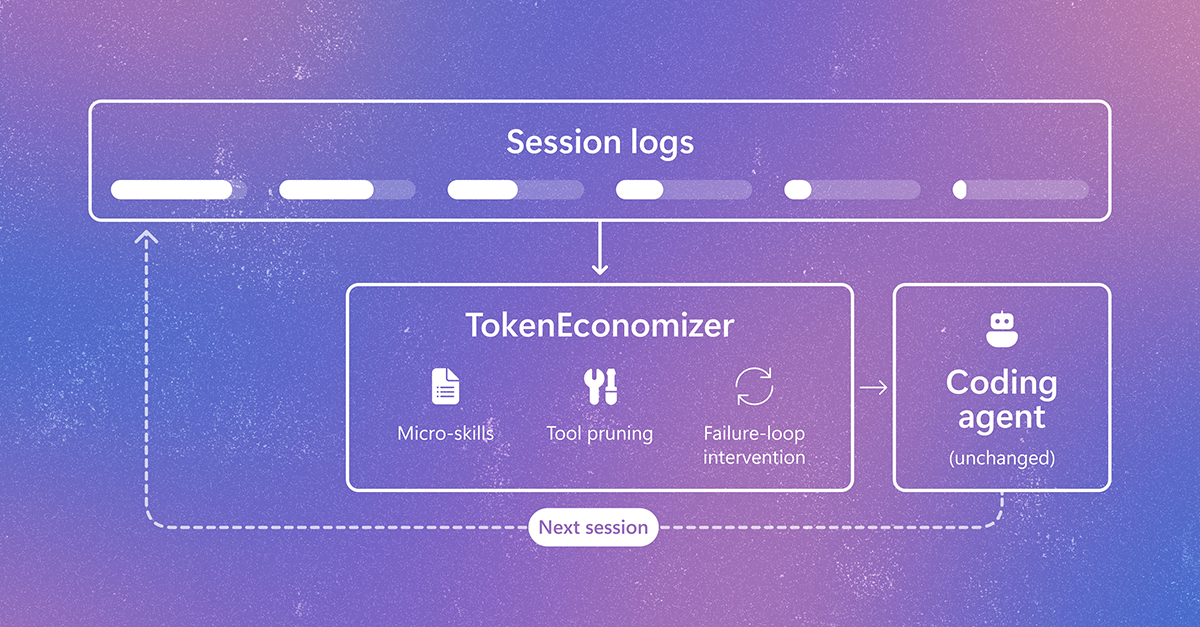
TokenEconomizer: Learning from Experience to Make AI Coding Agents More Efficient

AI coding agents are increasingly help developers fix bugs and build features largely on their own, but every interaction with their models consumes tokens. In each session, an agent sends instructions, tool descriptions, and session history to its model. Most efforts to reduce this cost focus on individual tasks. Yet developers return to the same […] The post TokenEconomizer: Learning from Experience to Make AI Coding Agents More Efficient appeared first on Microsoft Research.

We use cookies to run the site and, with your consent, for analytics and to show ads. See our Cookie Policy.