Early successes on agentic robotics point to a potential paradigm shift toward using coding agents to control robots. Existing robotics benchmarks are built around visuomotor policy learning, leaving it open whether coding agents can reliably control diverse robots under physical-world constraints. We therefore introduce the Embodied First Exam, a unified, comprehensive, and agent-native evaluation framework where coding agents can choose their own control approach: direct control, code to control, or train a policy to control. We hope it serves as a first exam for coding agents before they enter the physical world, with 1,156 tasks in 35 suites on 47 robots, including 9 new suites that go beyond pick-and-place to spatial puzzles, dexterous manipulation, multi-robot interaction, dynamic whole-body control, and sim-to-sim engineering. Each task can be run in up to three evaluation settings. The Standard Setting mimics the real world: the agent receives only sensor observations and, by default, cannot reset the environment. Its Realtime variant keeps the environment running while the agent reasons. The Privileged Setting gives the agent access to the full simulator state and unlimited resets, allowing it to search for an oracle solution for training purposes. Success rates in this setting serve as an approximate upper bound. On the 456 core tasks, the strongest of eight agents, GPT-6 Astra in Codex, achieves a success rate of 34% in the Standard Setting, leaving much room for improvement. To see where agents fail, we label the stage at which failed attempts go wrong and compare failures across agents, settings, and stage categories.

It is found that Llama 3 delivers comparable quality to leading language models such as GPT-4 on a plethora of tasks, and performs competitively with the state-of-the-art on image, video, and speech recognition tasks.
This paper investigates developing real-world perception for active agents, proposes Gibson Environment for this purpose, and showcases a set of perceptual tasks learned therein.
F. Xia, Amir Zamir, Zhi-Yang He et al.· 2018 IEEE/CVF Conference on...· 1,069 citations· ⚡112
GAOKAO-Bench is introduced, an intuitive benchmark that employs questions from the Chinese GAOKAO examination as test samples, including both subjective and objective questions that contribute a robust evaluation benchmark for future large language models and offers valuable insights into the advantages and limitations...
Xiaotian Zhang, Chun-yan Li, Yi Zong et al.· arXiv.org· 216 citations· ⚡17
An algorithm is proposed which leverages disentangled semantic factors to generate adversarial perturbation by altering controlled semantic attributes to fool the learner towards various "adversarial" targets.
Haonan Qiu, Chaowei Xiao, Lei Yang et al.· arXiv.org· 208 citations· ⚡17
This work proposes a HALO that directly maximizes the utility of generations instead of maximizing the log-likelihood of preferences, and suggests that the best loss depends on the inductive biases most appropriate for a given setting, an oft-overlooked consideration.
This work investigates the possibilities of using LLMs in a resume screening setting via a document retrieval framework that simulates job candidate selection and finds that the MTEs are biased, significantly favoring White-associated names in 85% of cases and female-associated names in only 11.1% of cases.
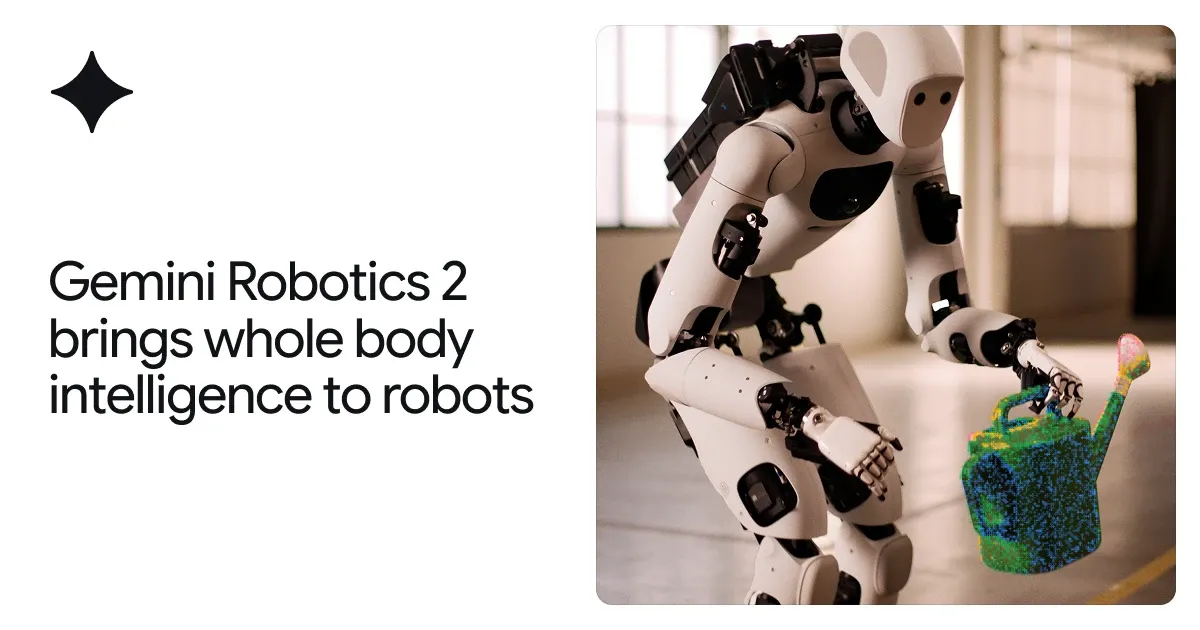
From feet to fingertips — we are teaching robots intelligent whole-body control, fine dexterity, and teamwork to complete a broad range of complex tasks.
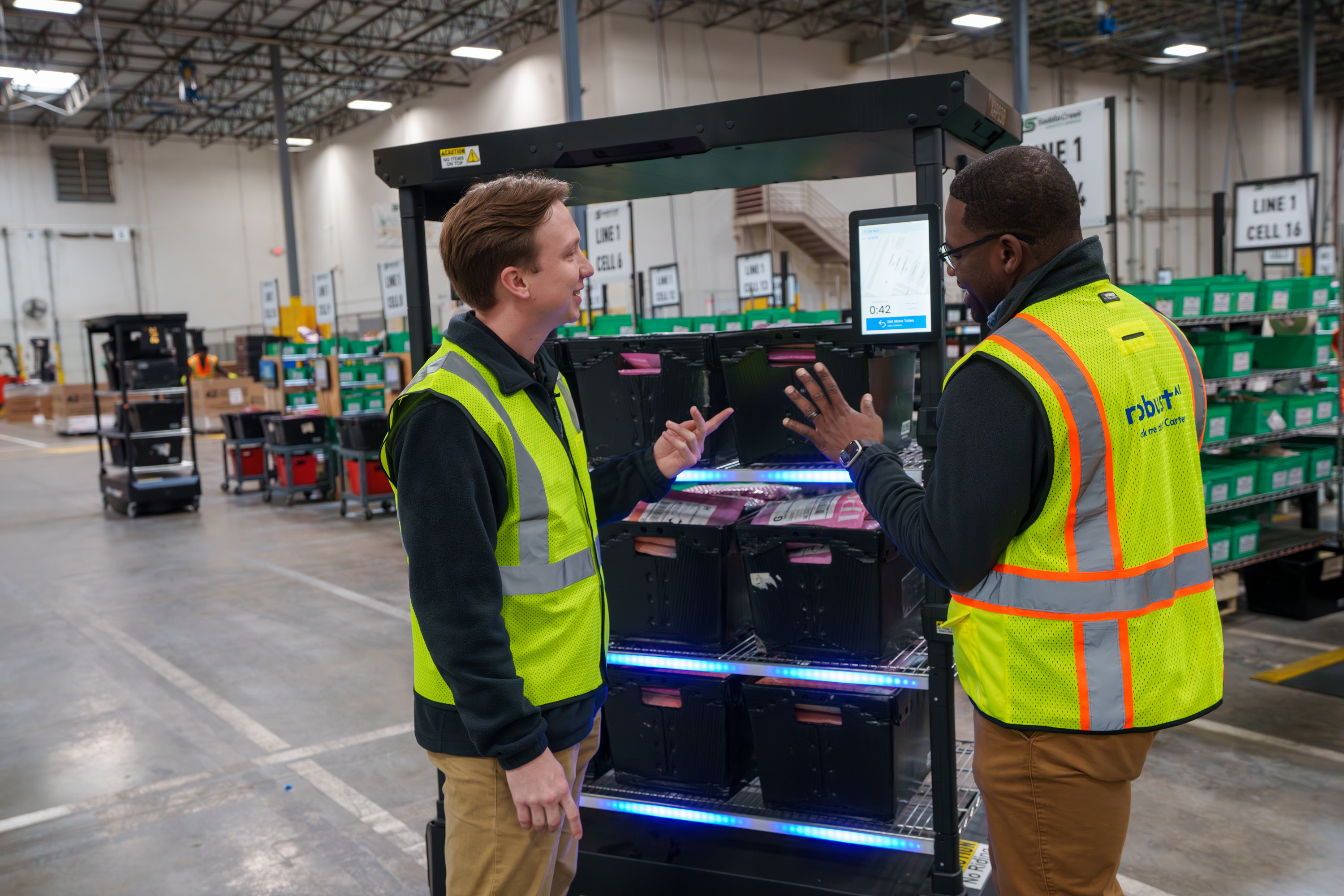
Founded by Anthony Jules ’92, SM ’92 and Professor Emeritus Rodney Brooks, Robust AI’s robots are designed to collaborate with humans in factories and warehouses.
We use cookies to run the site and, with your consent, for analytics and to show ads.
See our Cookie Policy.