Skip to content

Trustworthy Reinforcement Learning for AI-Driven Urban Decision-Making: Sustainable Dynamic Pricing and Resource Optimization for Smart City Operations

Sep 2026 · Sustainability · 0 citations · 20 references

TL;DR

Reinforcement learning can support sustainable and resilient urban decision-making when optimization objectives are combined with trustworthy AI principles, and the proposed framework provides a practical basis for accountable AI-based decision-support systems in smart city operations.

Abstract

Rapid urbanization, increasing demand variability, and digitalisation of urban infrastructure require intelligent decision-support systems that can improve sustainability, resilience, and operational efficiency in smart city operations. Artificial intelligence (AI) and data-driven optimization offer strong potential for adaptive urban services, including dynamic pricing, demand response, resource allocation, and energy-aware management. However, many reinforcement learning applications still focus mainly on short-term performance while giving limited attention to transparency, fairness, stability, and accountability. This study proposes a trustworthy reinforcement learning framework for AI-driven urban decision-making, using sustainable dynamic pricing and resource optimization as mechanisms for adaptive and responsible decision-making. A custom reinforcement learning environment was developed using historical e-commerce transactional data as a methodological proxy to simulate interactions among demand, resource or inventory availability, service categories, price elasticity, and changing market conditions. Three reinforcement learning algorithms, namely Deep Q-Network, Proximal Policy Optimization, and Advantage Actor–Critic, were evaluated under comparable experimental conditions. Performance was assessed using profitability, decision stability, fairness-oriented pricing behavior, decision consistency, and interpretability. To improve transparency, trajectory-based policy audits and SHapley Additive exPlanations were applied to identify the main factors influencing pricing decisions. The results show that the Deep Q-Network agent achieved the most balanced performance, increasing total profit by 12.58% while recording no unethical price increases under low-demand conditions. Explainability analysis showed that stock or resource levels, demand shifts, and price elasticity were the strongest positive drivers of pricing actions, whereas inventory hoarding and unfavorable price increases reduced decision quality. The findings indicate that reinforcement learning can support sustainable and resilient urban decision-making when optimization objectives are combined with trustworthy AI principles. The proposed framework provides a practical basis for accountable AI-based decision-support systems in smart city operations, including demand-responsive services, resource optimization, sustainable dynamic pricing, and energy-aware management.


Read PDF

Similar papers

Conference Aug 2026

Energy-Efficient Resource Allocation in Vehicular Edge Networks Using Reinforcement Learning: A Framework for Sustainable Urban Mobility

The proliferation of Connected and Autonomous Vehicles (CAVs) has led to an increased demand for efficient computation offloading strategies in Vehicular Edge Computing (VEC) networks with the goal of reducing latency and energy consumption. This need is further stressed by the essential function played by such strateg...

Mary Joy Kinol A · 0 citations
Open access Sep 2026

Design management for smart urban traffic: an IoV-Based multi-agent AI framework for adaptive signal control

An adaptive multi-agent traffic-management framework that responds to real-time urban traffic conditions using Internet of Vehicles traffic-state information and artificial intelligence provides an adaptive AI-based approach for coordinated traffic-signal control and supports traffic-efficiency-related sustainability o...

Yuan-Yuan Fei, Yan Zhang · 0 citations
Aug 2026

Hybrid Fuzzy-Bayesian Demand Modeling and Simulation-Driven Policy Co-Optimization for Dynamic IoT Data Streams

DFB-PCO is proposed, a demand-aware fuzzy-Bayesian policy co-optimization method for IoT data streams that extracts online stream features, uses fuzzy membership and rule aggregation to represent ambiguous demand boundaries, and applies Bayesian posterior updating to capture temporal demand uncertainty.

Li-Da Chai, Dan Gan, Guang-Xu Yan et al. · 0 citations
Review Open access Sep 2026

Artificial Intelligence-Based Supply Chain Optimization Models Challenges and Future Directions

Artificial Intelligence (AI) is becoming a key driver of change in the supply chain, particularly in its ability to predict, adapt and optimise in complex, uncertain environments. The review covers AI-based supply chain optimization models, applications, performance, challenges and future research directions. The study...

Deepak Mehta · 0 citations

Related blog posts

MIT News · Artificial Intelligence Oct 23, 2026

Q&A: How AI came to model the “messy” human mind

Assistant Professor Benjamin Lindquist studies how engineers deliberately injected randomness into early AI, giving rise to deep-learning models that sometimes hallucinate.

Microsoft Research Blog Oct 12, 2026

Simulating student learning for better AI tutoring

StudentSim is a research system for evaluating and improving AI tutoring tools before they are tested with learners. It models how individuals may engage with tutors, giving feedback to improve tutor performance across subjects like chess, writing, and mathematics. The post Simulating student learning for better AI tutoring appeared first on Microsoft Research.

Microsoft Research Blog Oct 7, 2026

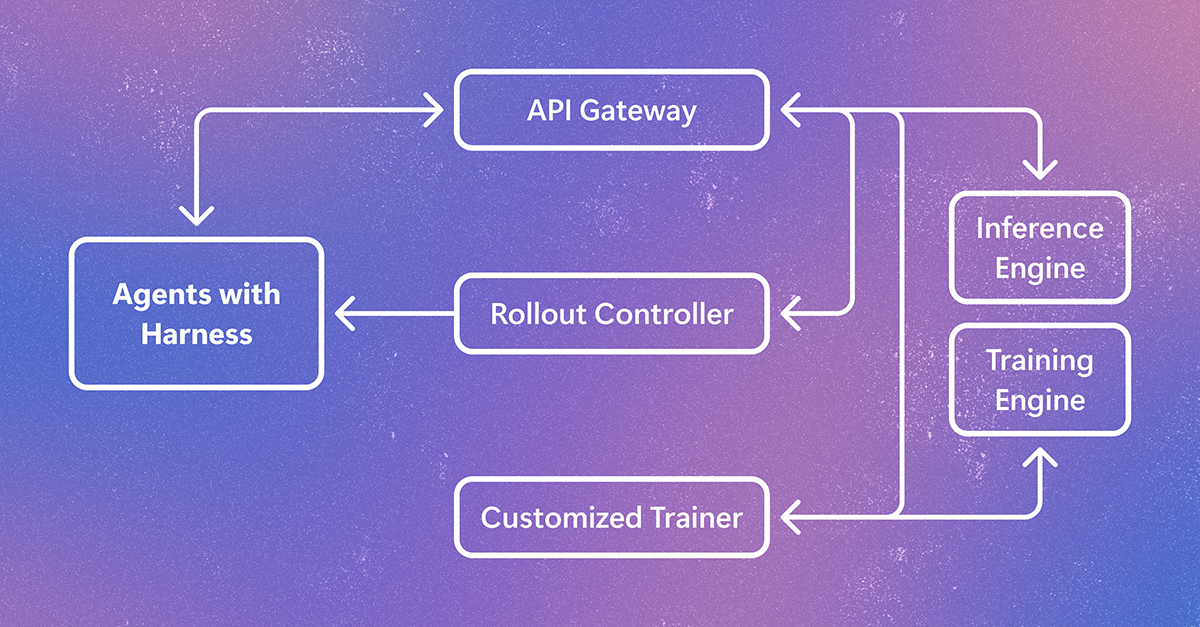
Agent Lightning v1.0: A 3,500-Line Lightweight Agentic RL Framework for Training Agents with Real Harnesses

Training AI agents with reinforcement learning can be challenging because their tools, context, and decision-making are managed by complex frameworks. Agent Lightning connects existing agents to RL training, making it easier to improve them without rebuilding them. The post Agent Lightning v1.0: A 3,500-Line Lightweight Agentic RL Framework for Training Agents with Real Harnesses appeared first on Microsoft Research.

We use cookies to run the site and, with your consent, for analytics and to show ads. See our Cookie Policy.