Jun 2026· arXiv.org· Vol abs/2606.15517· 0 citations· 88 references
Computer Science
TL;DR
SHARD is introduced, a self-reframing distillation method to improve safe-helpfulness in large language models that first rewrites sensitive prompts to surface benign intent using philosophical guidelines, then reframes its original responses into safe, more helpful ones, and finally fine-tunes the model on its self-reframed responses.
Abstract
Large language models often struggle with sensitive prompts. They may refuse outright, provide generic safety boilerplate, or fail to address the user's legitimate informational needs that can be answered safely. We introduce SHARD, a self-reframing distillation method to improve safe-helpfulness. It first rewrites sensitive prompts to surface benign intent using philosophical guidelines, then reframes its original responses into safe, more helpful ones, and finally fine-tunes the model on its self-reframed responses. Across DNA and the English subset of LINGUASAFE, SHARD improves helpfulness for most model families while preserving safety. It also remains competitive with distillation from a larger teacher model, suggesting that models can internalize safe and helpful behavior elicited from their own. Warning: This paper contains content that may be offensive or harmful.
This paper decomposes a response in the safety-tuning dataset into two distinct components: a boilerplate refusal statement and a rationale explaining the refusal, and shows that refusal statements impede accurate discrimination between harmful and benign queries by inducing reliance on superficial cues.
This work proposes aligning cross-lingual thoughts and responses (ACTR), a framework that improves multilingual safety alignment by strengthening the use of existing safety reasoning, and devise neuron-selective consistency optimization (NSCO), which uses a frozen judge model to reward agreement between the safety cate...
Xian-Hui Zhang, Jian Yu, Cheng-Yu Xie et al.· 0 citations
Experiments across three instruction-tuned models show that HiRoute achieves high safety rates across multiple safety benchmarks while preserving safe-response helpfulness, reducing over-refusal, and maintaining competitive performance on general-purpose tasks.
Fang-Zhou Chen, Shiji Zhao, Mengyan Wang et al.· 0 citations
System prompts are the primary lever practitioners use to control language model behavior, yet what they actually do to the computation inside the transformer remains poorly understood. Across 17 instruction-tuned models spanning 8 architecture families and 1.5B to 72B parameters, we use Centered Kernel Alignment (CKA)...
Tool-using language-model agents are vulnerable to indirect prompt injection because they must act on untrusted external content. Existing training-time defenses can reduce attack success rates, but often at the cost of general capabilities. We show that training-based defenses induce substantial drift in the model's o...
Mohamed Dhouib, Clément Elliker, Alexi Canesse et al.· 1 citation
ReFrame is a training-free multimodal input reframing framework where two agents share a lightweight locally deployed MLLM: the evidence-generation agent constructs complementary risk and utility evidence, and the rewrite-and-routing agent converts it into a safe proxy prompt and image-routing decision before calling t...
Wenzheng Jiang, Xuan-Kun Rong, Yuan-Zhao Zhai et al.· 0 citations
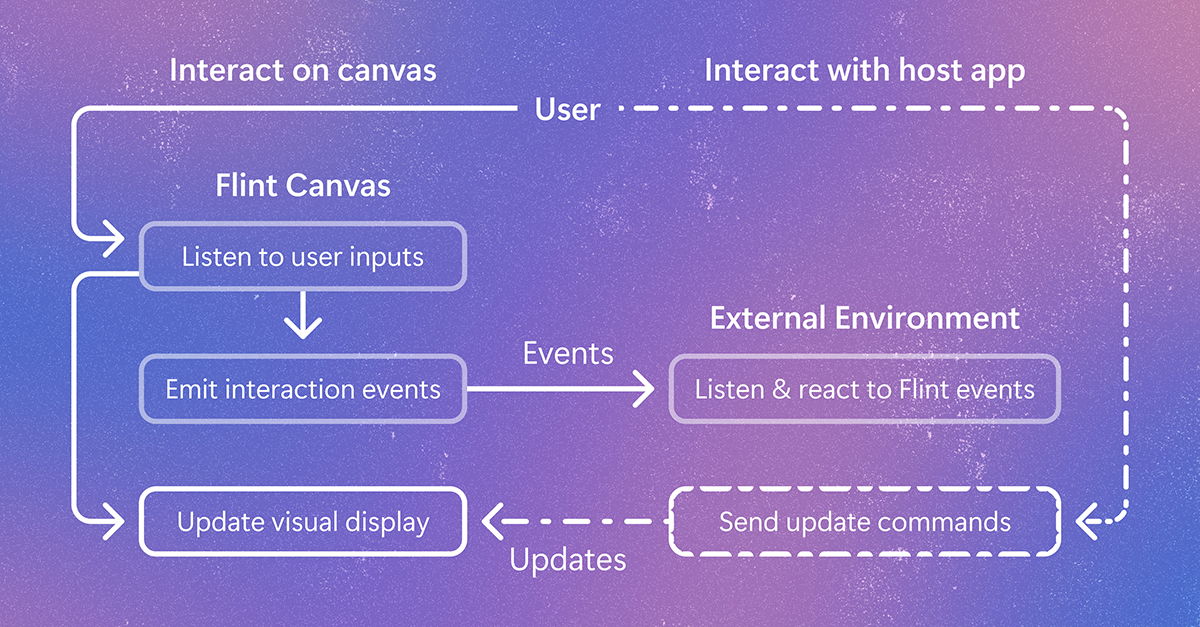
Flint-interactive gives AI agents a language for creating interactive visualizations. Click a chart, filter data, highlight related content, and explore beyond the view the author originally chose. The post Flint-interactive: A language for creating interactive data visualizations appeared first on Microsoft Research.