Skip to content

Privacy-preserving intrusion detection in IoT smart homes using a federated hybrid 1D-CNN–LSTM model with explainable AI

Sep 2026 · Scientific Reports · Vol 16 · 0 citations · 20 references
Medicine

TL;DR

FedShield-IDS is proposed, a novel federated intrusion detection framework that integrates a hybrid one-dimensional Convolutional Neural Network with Long Short-Term Memory units to simultaneously capture spatial traffic fingerprints and long-range temporal attack dynamics across IoT edge devices.

Abstract

The proliferation of Internet of Things (IoT) devices in smart home environments has dramatically expanded the attack surface for cyber threats, particularly botnet-driven Distributed Denial of Service (DDoS) attacks. Centralized Intrusion Detection Systems (IDS) are ill-suited to this domain because they violate user privacy, introduce single points of failure, and incur prohibitive communication overhead. Federated Learning (FL) offers a compelling privacy-preserving alternative, yet existing FL-based IDS solutions either deploy convolutional or recurrent models in isolation, lack human-interpretable outputs, or neglect real-world deployability constraints. This paper proposes FedShield-IDS, a novel federated intrusion detection framework that integrates a hybrid one-dimensional Convolutional Neural Network with Long Short-Term Memory units to simultaneously capture spatial traffic fingerprints and long-range temporal attack dynamics across IoT edge devices. Model interpretability is addressed through the integration of SHapley Additive exPlanations (SHAP), enabling administrators to receive human-readable justifications for every detected anomaly. The system is trained and evaluated on the large-scale CICIoT2023 dataset, comprising 712,311 flow records spanning eight attack families including DDoS, DoS, Mirai, Reconnaissance, Spoofing, Injection, and Malware. A multi-stage preprocessing pipeline combining infinite-value imputation, logarithmic feature scaling, Min-Max normalization, temporal windowing, and localized SMOTE oversampling is applied within each federated client to address non-IID data and extreme class imbalance. Federated Averaging aggregates encrypted model updates across seven virtual IoT client nodes over five communication rounds without exchanging raw traffic data, under a formal threat model characterizing the system’s adversarial assumptions and data-confidentiality guarantees. Experimental results demonstrate a Mirai F1-score of 0.99, a DDoS precision of 0.97, and a global weighted F1-score of 0.76 across all eight classes. Comprehensive kernel-size, architecture, and preprocessing ablations confirm the necessity of each design choice, and independent cross-dataset evaluation on the Edge-IIoTset benchmark achieves 98.58% accuracy, demonstrating strong generalization beyond CICIoT2023. The framework achieves sub-500 ms threat mitigation, empirically confirmed via a mitigation-gate threshold sensitivity analysis, and generates SHAP-gated explanations for every alert, bridging the gap between high-accuracy detection and the transparency required for trustworthy smart-home security.


Read PDF

Similar papers

#federated learning Open access Aug 2026

Privacy-Enhancing Federated Learning Models for Cybersecurity in IoT Networks

Federated Learning is investigated as a decentralized approach to intrusion detection that enables local model training on IoT edge devices while transmitting only encrypted model updates to a central server, thereby preserving data privacy and reducing communication overhead.

Mohammed Ajuji, Y. M. Malgwi, A. Ahmadu et al. · 0 citations
Open access Aug 2026

A Privacy-Preserving Federated Learning Framework for Intrusion Detection in Healthcare IoT Environments

PPFL-IDS combines federated model aggregation with differential privacy noise injection and secure aggregation protocols to train a lightweight gradient-boosted ensemble IDS without exposing local device data, demonstrating that strong privacy guarantees and high detection accuracy can be achieved simultaneously in fed...

Nutan Gusain, J. Alzubi · 0 citations
Open access Aug 2026

XP-IDS: an explainable hybrid CNN–XGBoost framework for IoT intrusion detection

The proposed accurate and interpretable framework shows strong potential as an edge-deployable security solution for safeguarding IoT devices and improving cyber resilience.

Prabhav Jain, Aashima Sharma, A. Noonia et al. · 0 citations
Review Open access Sep 2026

Deep Learning-Based Intrusion Detection in IoT: A Comprehensive Review of Architectures, Attacks, Challenges, and Future Directions

In a comparative review of forty peer-reviewed studies, it is demonstrated that hybrid DL models provide excellent detection performance (99-100% classification accuracy on benchmark datasets) as well as practical viability for deployment with privacy-preserving Federated Learning for large-scale data.

Mohammed Gharkan, Mustafa I. Hussien Al-Janabi, Obaid Salim · 0 citations
Review Open access Aug 2026

AI-ENHANCED INFORMATION SECURITY FRAMEWORKS FOR CLOUD-ENABLED IOT NETWORKS: A COMPREHENSIVE REVIEW

This review paper critically examines the integration of Artificial Intelligence (AI) and Machine Learning (ML) techniques to enhance information security within Cloud-IoT networks, focusing on hybrid Deep Learning models (CNN-LSTM), predictive analytics, and automated threat response mechanisms.

R. Saravanakumar, V.Anuratha, M.Elamparithi · 0 citations
#federated learning Open access Sep 2026

Fed fusion-IDS: a privacy-preserving federated intrusion detection system with multi-objective feature optimization and explainable deep learning

FedFusion-IDS is a new privacy-preserving federated framework for intrusion detection based on federated learning, multi-objective feature selection with NSGA-II and SHAP second-level filter, hybrid deep learning architecture with CNN, BiLSTM, and Attention mechanisms, explainability through SHAP and LIME, and zero-day...

S.SaiKishore Reddy, S. S. Santhosh Kumar · 0 citations

Related blog posts

MIT News · Artificial Intelligence Oct 23, 2026

Q&A: How AI came to model the “messy” human mind

Assistant Professor Benjamin Lindquist studies how engineers deliberately injected randomness into early AI, giving rise to deep-learning models that sometimes hallucinate.

Microsoft Research Blog Oct 12, 2026

Simulating student learning for better AI tutoring

StudentSim is a research system for evaluating and improving AI tutoring tools before they are tested with learners. It models how individuals may engage with tutors, giving feedback to improve tutor performance across subjects like chess, writing, and mathematics. The post Simulating student learning for better AI tutoring appeared first on Microsoft Research.

Microsoft Research Blog Oct 7, 2026

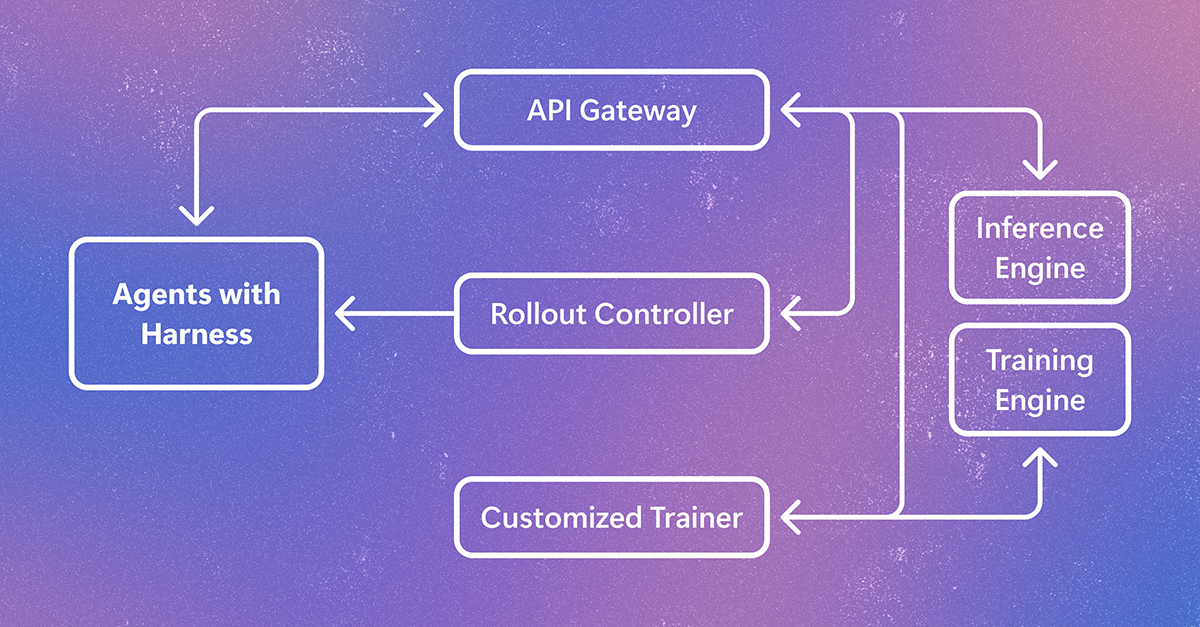
Agent Lightning v1.0: A 3,500-Line Lightweight Agentic RL Framework for Training Agents with Real Harnesses

Training AI agents with reinforcement learning can be challenging because their tools, context, and decision-making are managed by complex frameworks. Agent Lightning connects existing agents to RL training, making it easier to improve them without rebuilding them. The post Agent Lightning v1.0: A 3,500-Line Lightweight Agentic RL Framework for Training Agents with Real Harnesses appeared first on Microsoft Research.

We use cookies to run the site and, with your consent, for analytics and to show ads. See our Cookie Policy.