Skip to content

SAFM-Net: a dual-branch CNN–GNN network with synergistic attention and frequency-domain modulation for ultrasound thyroid nodule segmentation

Sep 2026 · Journal of Electronic Imaging (JEI) · Vol 35, pp. 1-31 · 0 citations
Thyroid Cancer Diagnosis and Treatment

TL;DR

SA-Net, a dual-branch CNN–GNN Network that integrates synergistic attention and frequency-domain modulation, provides accurate and robust segmentation performance under challenging ultrasound imaging conditions.
Abstract

Accurate segmentation of thyroid nodules in ultrasound images is essential for thyroid cancer risk assessment and computer-aided diagnosis, yet remains challenging due to ambiguous boundaries and significant shape variations. Existing convolutional neural network (CNN)-based methods effectively capture local features but are limited in modeling long-range dependencies and complex boundary structures. To address these limitations, we propose SAFM-Net, a dual-branch CNN–GNN Network that integrates synergistic attention and frequency-domain modulation. The network adopts a dual-branch encoder, where a graph-based branch leverages a synergistic-attention dynamic graph convolution (SA-DGC) module to adaptively model global relationships among feature nodes, enhancing structural and boundary representation. In parallel, a CNN branch captures local textures and fine-grained details. To fuse complementary features, a frequency-domain modulation (FDM) module is introduced to enable cross-branch interaction and hierarchical integration, improving feature representation capability. Extensive experiments on the DDTI and TN3K datasets demonstrate the effectiveness of the proposed method. Compared with GED-Net, SAFM-Net achieves improvements of 0.54%, 1.00%, 1.68%, and 0.73% in terms of Accuracy, Dice, IoU, and Precision, respectively, on the DDTI dataset, and improvements of 0.17%, 0.43%, 0.67%, and 1.48% in terms of Accuracy, Dice, IoU, and Precision, respectively, on the TN3K dataset. These results indicate that SAFM-Net provides accurate and robust segmentation performance under challenging ultrasound imaging conditions.

View source

Similar papers

Open access Aug 2026

MGT–UNet: a hybrid CNN–transformer network with multi-scale feature learning and global context modeling for breast ultrasound segmentation

This work proposes MGT–UNet, a hybrid CNN–Transformer segmentation network that integrates multi-scale feature learning with global context modeling for breast ultrasound image segmentation and suggests that combining multi-scale feature learning with transformer-based global context modeling is beneficial for breast u...

H. Le, H. T. Huynh · 0 citations
Conference Aug 2026

GPG-Net: graph-prior-guided breast ultrasound image segmentation network

Convolutional Neural Networks (CNNs) have demonstrated strong performance in breast ultrasound image segmentation. However, constrained by their inherent local receptive fields, they struggle to effectively capture global contextual information. Although existing studies have attempted to incorporate global feature ext...

Jiajie Duan, Shunfang Wang · 0 citations
Open access Aug 2026

DCLA-Net: dual-encoder cross-level alignment network for ultrasound-based ectopic pregnancy mass segmentation

Introduction Benefiting from its real-time imaging capability and non-invasive nature, ultrasound imaging has become an important modality for the diagnosis of ectopic pregnancy. However, the segmentation of ectopic pregnancy masses in ultrasound images remains a challenging task due to low image contrast, indistinct b...

Yan Cheng, Xiao-Kang Ding, Wei-Wei Zhu · 0 citations
Open access Sep 2026

PDSA-DBUNet: dual-branch U-Net for abdominal medical image segmentation driven by polynomial dynamic sparse attention

Abdominal medical image segmentation is essential for computer-aided diagnosis, lesion localization, quantitative organ analysis, and treatment planning. However, abdominal computed tomography (CT) images often contain large anatomical variations, complex tissue structures, low contrast, blurred boundaries, and small t...

Jia-Tong Shang, Guo-Lin He, Xu-Yan Li · 0 citations
Open access Sep 2026

Prior-Enhanced Axial TransUNet: integrating MedSAM priors and sparse region-aware attention for kidney-tumor segmentation

Accurate kidney and renal-tumor segmentation is challenging because lesion size, location, morphology, and boundary contrast vary substantially across abdominal CT scans. Most existing methods rely on a single form of local evidence and struggle to recover the boundaries of small lesions while maintaining global anat...

Si-Yuan Liang, Cheng-Chuan Xu, Chao Lu et al. · 0 citations
Open access Sep 2026

DT-MSMamba: dual-teacher consensus with multi-scale Mamba-CNN interaction for semi-supervised 3D medical image segmentation

Although accurate semi-supervised 3D medical image segmentation is vital for clinical diagnostics, existing approaches face two critical bottlenecks. On the one hand, most traditional networks struggle to simultaneously capture global contextual information and preserve fine-grained edge details in their architecture....

Chao Zhang, Bi-Yuan Li, Jin-Ying Ma et al. · 0 citations

Related blog posts

Microsoft Research Blog Jul 13, 2026

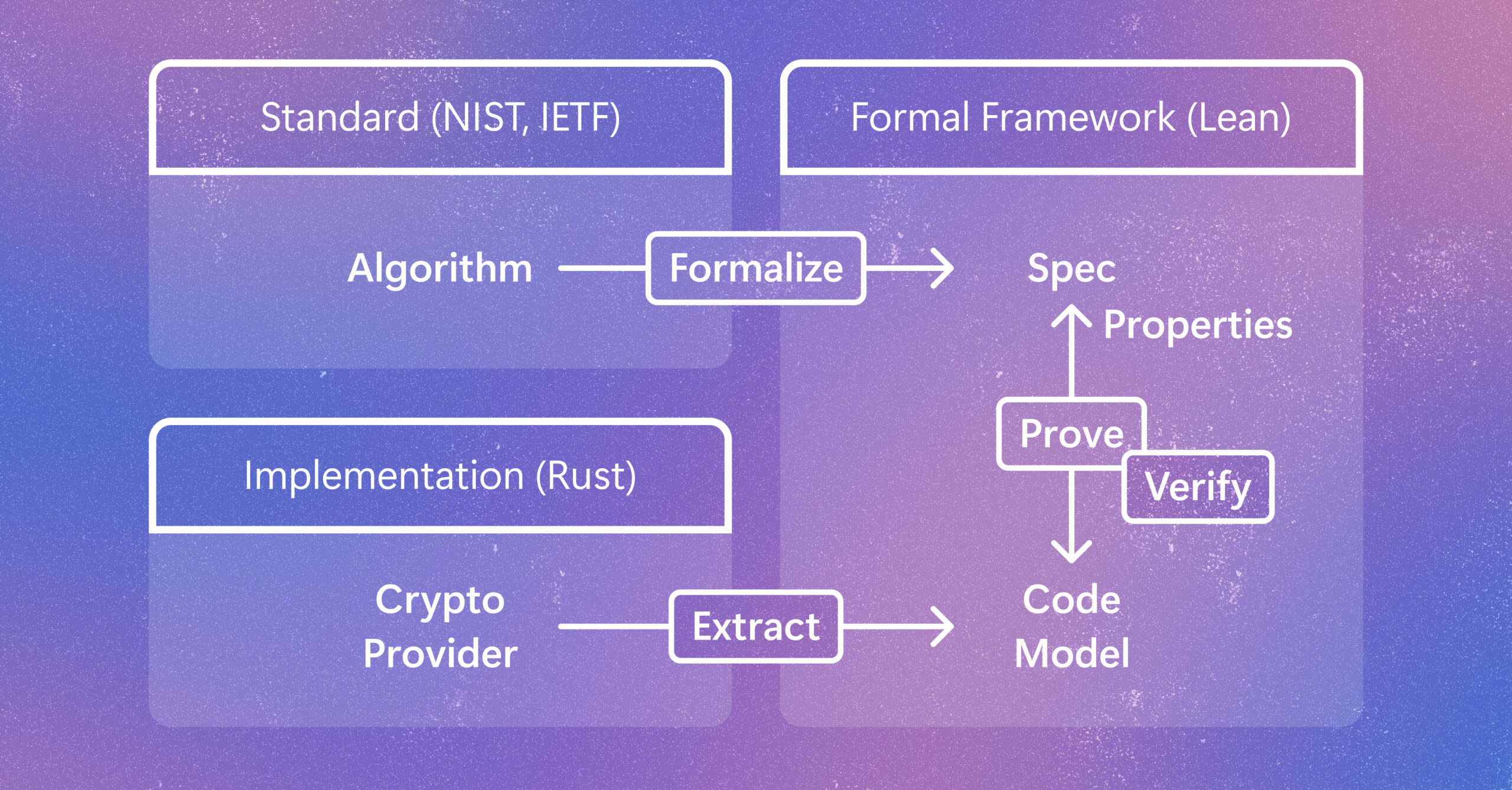
Verifying Rust cryptography in SymCrypt, from standards to code

Cryptographic code supports vital protections in modern computing systems. Learn how a new method helps verify code as developers write it while preserving speed and adaptability as it gets implemented and evolves. The post Verifying Rust cryptography in SymCrypt, from standards to code appeared first on Microsoft Research.

We use cookies to run the site and, with your consent, for analytics and to show ads. See our Cookie Policy.