Sep 2026· International journal for electronic crime investigation· 0 citations
TL;DR
This survey critically examines significant research contributions highlighting AI applications across intrusion detection, malware analysis, phishing detection, ransomware mitigation, distributed denial-of-service prevention, and network security and outlines prospective directions to advance the development of intelligent, resilient and legally cyber security systems.

Abstract
The increasing complexity and frequency of cyber-attacks have exposed the critical limitations of traditional signature-based security systems.Artificial Intelligence (AI) encompassing machine learning, deep learning, large language models federated learning, and reinforcement learning has emerged as a transformative paradigm for modern cyber defense. This survey critically examines significant research contributions highlighting AI applications across intrusion detection, malware analysis, phishing detection, ransomware mitigation, distributed denial-of-service prevention, and network security. A structured taxonomy of AI-driven cyber security techniques is presented, supported by analysis of widely adopted evaluation datasets including NSL-KDD, UNSW-NB15, CIC-IDS2017, and CICIoMT2024 which are assessed in terms of their scope, attack coverage and applicability to real-world deployment scenarios. Selected Pakistani criminal investigations are examined to demonstrate the operational role of AI-assisted digital forensics in judicial proceedings. The survey further identifies unresolved research challenges, including adversarial robustness, dataset generalizability, and the absence of explainability standards for court-admissible AI evidence, and outlines prospective directions to advance the development of intelligent, resilient and legally cyber security systems.

A conceptual layered framework for machine-learning-based security operations that integrates detection, adversarial-robustness testing, and human-analyst oversight is proposed by outlining directions for future research.
C. Thilagavathy, Saeed Mudether Saeed Taha, Krithik M. S. et al.· International Scientific Jou...· 0 citations
The reviewed literature indicates that AI-based methodologies often demonstrate superior detection capabilities for intricate and previously unseen attack patterns compared to traditional methods; however, direct performance comparisons are complicated due to discrepancies in datasets, experimental designs, and evaluat...
Jaswanth Garugu· International Journal for Re...· 0 citations
A Systematic Literature Review following the Preferred Reporting Items for Systematic Reviews and Meta-Analyses framework is presented, yielding 74 peer-reviewed studies from 2015 to 2026 across five themes: AI-based threat analysis, LLM applications in cybersecurity, anomaly detection and Advanced Persistent Threat (A...
H. G. Kamath, G. K. Sudhina Kumar, Snehal Samanth· IEEE Access· 0 citations
A conceptual framework is proposed that combines detection, explanation, and orchestrated response in a continuous feedback loop that is suitable for zero trust and IoT-enabled critical-infrastructure environments that will allow for continuous retraining of the model.
Jayesh Dalmet· Journal of Digital Security...· 0 citations
Artificial intelligence (AI) has emerged as a transformative force in cybersecurity, offering capabilities that extend far beyond the static, rule-based defenses of the past. Machine learning, deep learning, and natural language processing techniques are increasingly embedded in intrusion detection systems, threat inte...
Nicolas Guzman Camacho· Journal of Artificial Intell...· 0 citations
An AI threat detection framework is proposed, employing data science methods to boost cybersecurity performances and shows that the performance of ensemble learning models is higher than shallow learning models in this research; XGBoost and Random Forest.
Praveen Kumar Reddy Gouni· International Journal of Soc...· 0 citations
Related blog posts
MIT News · Artificial Intelligence· news.mit.eduOct 23, 2026
Assistant Professor Benjamin Lindquist studies how engineers deliberately injected randomness into early AI, giving rise to deep-learning models that sometimes hallucinate.
Learn how Google DeepMind and GovTech Singapore uses lightweight on-device Gemma models to intercept conversational scams in private chats with zero cloud data egress.
Microsoft Research Blog· microsoft.comOct 12, 2026
StudentSim is a research system for evaluating and improving AI tutoring tools before they are tested with learners. It models how individuals may engage with tutors, giving feedback to improve tutor performance across subjects like chess, writing, and mathematics. The post Simulating student learning for better AI tutoring appeared first on Microsoft Research.
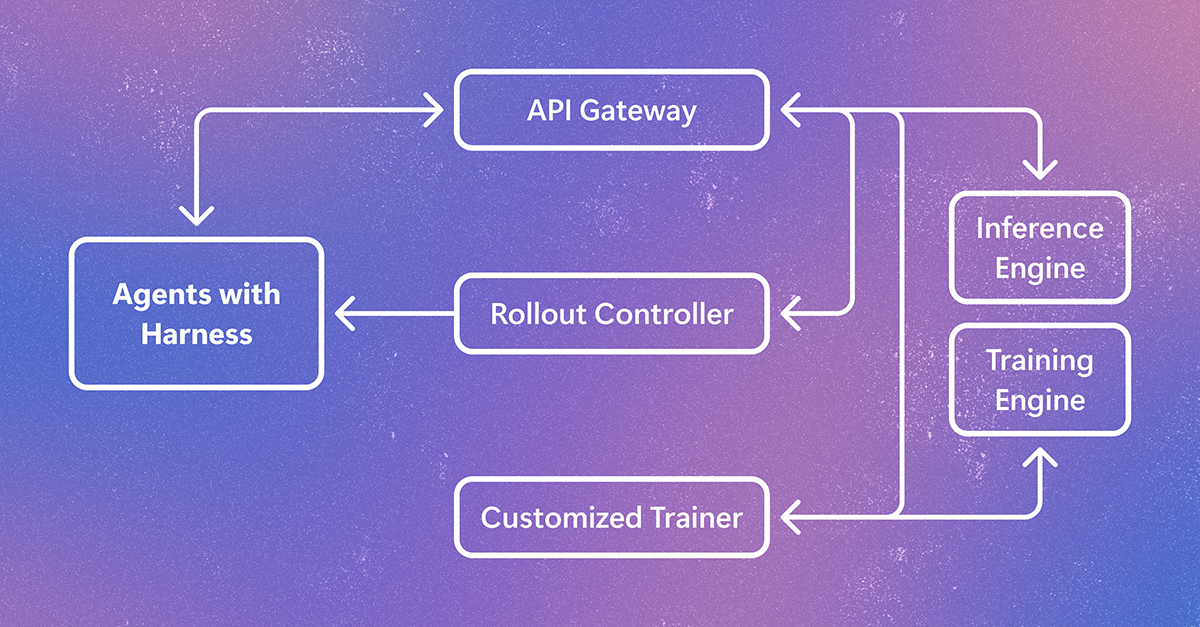
Training AI agents with reinforcement learning can be challenging because their tools, context, and decision-making are managed by complex frameworks. Agent Lightning connects existing agents to RL training, making it easier to improve them without rebuilding them. The post Agent Lightning v1.0: A 3,500-Line Lightweight Agentic RL Framework for Training Agents with Real Harnesses appeared first on Microsoft Research.
We use cookies to run the site and, with your consent, for analytics and to show ads.
See our Cookie Policy.