It is argued that offering federated computing as an important AmSC service would unlock privacy-constrained scientific collaborations, enabling public-private partnerships in model building while exercising and enhancing the platform's own federated infrastructure.
Abstract
The American Science Cloud (AmSC), established under the Genesis Mission of the U.S. Department of Energy (DOE), aims to integrate DOE high-performance computing systems, experimental facilities, and data resources into a single, coordinated, AI-driven discovery platform. AmSC's early services focus on curated artifacts, such as gated inference access to hosted models, experiment tracking, and function execution across computing facilities. However, what these services lack is a means to train a model across organizational boundaries where data cannot be centralized due to policy, privacy, or scale. This is, by definition, a use case for federated learning (FL) and a growing class of scientific AI. In this paper, we show that this gap can be bridged by deploying the orchestration logic of the Advanced Privacy-Preserving Federated Learning (APPFL) framework as a scalable cloud service on top of the primitives AmSC already provides: project-scoped authentication that supports secure and reliable federation membership, function execution that drives distributed training at each site, experiment tracking that records round-level performance, and finally, the model-hosting and inference infrastructure that can be leveraged to distribute the federated trained models to authorized participants. We argue that offering federated computing as an important AmSC service would unlock privacy-constrained scientific collaborations, enabling public-private partnerships in model building while exercising and enhancing the platform's own federated infrastructure.
Application developers of distributed learning services face challenges that a typical federated learning loop does not address. Specifically, the model updates can still leak private data, devices might not be able to participate in the training due to limited resources, a single aggregator might not be able to scale,...
Tian-Yue Chu, Filippo Vannella, Dimitra Tsigkari et al.· 0 citations
Federated Learning (FL) allows devices with private data to collaborate in training a shared model. We present a next-generation FL system based on Trusted Execution Environments (TEEs) that addresses operational challenges associated with earlier systems and provides externally verifiable central Differential Privacy...
Katharine Daly, Yu Xiao, Zachary Garrett et al.· 0 citations
Abstract Motivation Federated learning (FL) enables collaborative model training on geographically distributed genomic and clinical datasets while complying with data privacy laws and regulatory constraints. FeatureCloud is an existing platform for FL that provides an accessible web-based interface and a large reposito...
Large language model agents can automate data science workflows, but cloud-centric deployment exposes sensitive context and edge-only deployment limits analytical capability. We present FinDS-Agent, a cloud–edge framework that keeps raw records and program execution at the trusted edge while providing a policy-screened...
Xiao-Zheng Du, Rui-Jun Deng, Cheng Wang et al.· Future Internet· 0 citations
An extensive critical review of serverless functions in cloud–edge environments reveals that cloud–edge serverless systems need accountable placement, state-aware workflows, reproducible benchmarking, trustworthy orchestration, and carbon-aware lifecycle control, which can be achieved only by going beyond latency and e...
Abdullah Abbasi, D. Hakro, Asad Ullah et al.· Future Internet· 0 citations
An asynchronous framework named FedQS, which employs a multi-dimensional staleness evaluation mechanism that dynamically assesses updates by combining the similarity between local and global models with client latency metrics, and implements a decoupling solution via a queue scheduling algorithm to resolve the coupling...
Jia-Hui Zhou, Fang Li, Tian-Yu Shi et al.· Journal of Cloud Computing· 0 citations
Related blog posts
MIT News · Artificial Intelligence· news.mit.eduOct 2, 2026
Martin Trust Center Managing Director Bill Aulet introduces Dear Dreamer, a free platform for middle and high school students who want to learn about entrepreneurship.
Microsoft Research Blog· microsoft.comSep 30, 2026
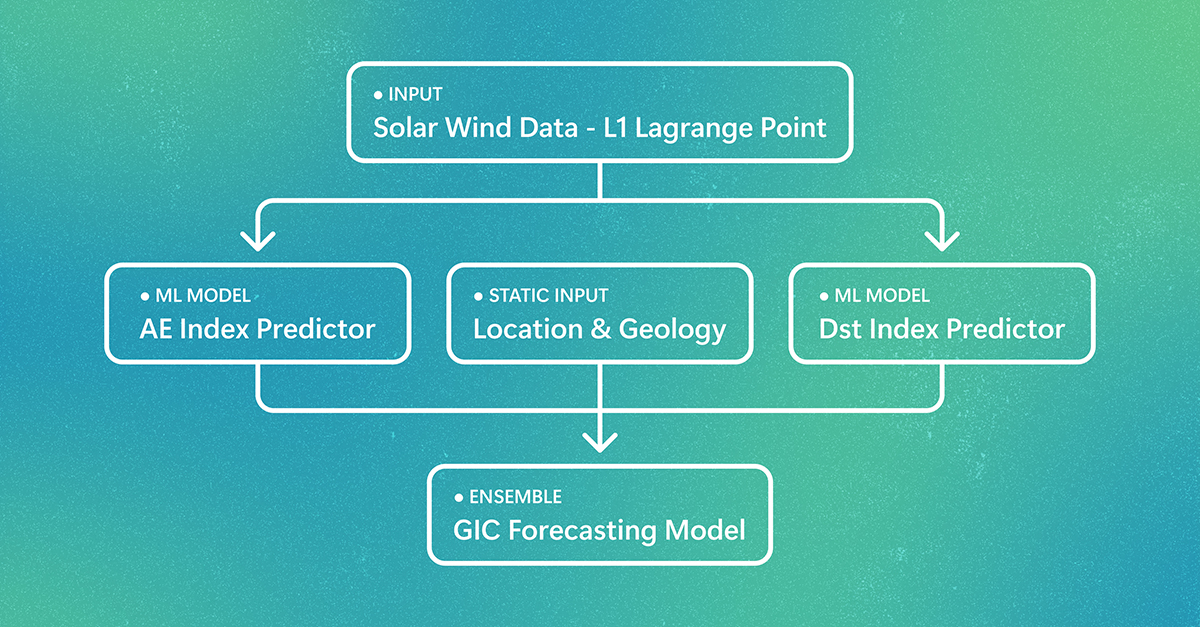
Extreme space-weather events can damage power systems on Earth and degrade GPS accuracy and satellite operations. A new machine learning system can predict where damage is likely to occur 30-60 minutes before a storm arrives. The post Forecasting space weather risks on power grids appeared first on Microsoft Research.
We use cookies to run the site and, with your consent, for analytics and to show ads.
See our Cookie Policy.