Skip to content
#edge computing Review Open access

A Survey of Decentralized Physical Infrastructure Network, Research Directions, and Open Challenges

Sep 2026 · IEEE Communications Surveys & Tutorials · 0 citations · 312 references
Engineering Computer Science

TL;DR

This paper analyzes the DePIN technology stack from six layers: physical infrastructure, blockchain, interaction, trust, incentive, and application, with special attention to their cross-layer feedback loops, implementation readiness, and deployment limitations.

Abstract

The Decentralized Physical Infrastructure Network (DePIN) represents a transformative paradigm that redefines the construction, operation, and governance of Information and Communication Technology (ICT) infrastructure in the Web 3.0 era. DePIN integrates physical resources, such as networking equipment, storage, and computing power, with decentralized digital governance, forming a self-incentivized ecosystem that is collaboratively built, shared, and governed by the community. It provides a foundational framework for future communication networks, facilitating decentralized edge intelligence, efficient resource sharing, and trustworthy coordination among heterogeneous devices. Focusing on the feasibility of this emerging paradigm, this paper examines the technology landscape in the pre-DePIN era and gaps between existing methodologies and the forthcoming decentralized infrastructure for Web 3.0. It provides a systematic and comprehensive survey of the background, core characteristics, technical architecture, and applications of DePIN across various vertical domains. The paper analyzes the DePIN technology stack from six layers: physical infrastructure, blockchain, interaction, trust, incentive, and application, with special attention to their cross-layer feedback loops, implementation readiness, and deployment limitations. To further bridge conceptual analysis and practical deployment, we propose a DePIN feasibility assessment framework covering technical, governance, and economic dimensions. Moreover, we highlight promising research directions, providing insights and guidance for further exploration and deployment of DePIN.

Read PDF

Similar papers

Review Open access Aug 2026

Democratizing Digital Ecosystems: The Role of Scalable Cloud Platforms in Global Software Accessibility

Approximately 2.6 billion people remain without internet access as of 2023, and cloud adoption failure rates among organizations in developing economies persist independently of regional connectivity investment. This article argues that this failure is structural, not incidental: scalability and accessibility are coupl...

Rajendar Reddy Sama · 0 citations
Open access Aug 2026

Enabling Systemic Trust in the Physical Internet: An eDSR Approach to Governance Model Design

The Physical Internet (PI) envisions a hyperconnected cyber‐physical logistics system inspired by the Digital Internet, yet adoption remains limited due to persistent trust and governance challenges. This study addresses these barriers by conceptualizing systemic trust as a foundational requirement for broad particip...

Malte Spanuth, Rod Franklin, André Ludwig · 0 citations
Open access Aug 2026

Cybernetic Governance for Renewable Energy Systems Using Blockchain: A Framework for Trustworthy Impact Monitoring

The transition toward decentralized renewable energy systems creates monitoring problems that current digital infrastructures do not solve: sustainability claims are produced by the same actors they evaluate, environmental evidence is reported periodically rather than observed continuously, and the communities most aff...

J. Taborda, Cesar Enrique Polo Castro, Alexander Armando Bustamante et al. · 0 citations
Preprint Sep 2026

Internet and Enterprise Strategy Revisited: From Digital Connectivity to AI-Enabled Enterprises, 1996 - 2026

This paper revisits the 1996 article Internet and Enterprise Strategy and assesses how its propositions were confirmed, transformed, or contradicted as digital connectivity evolved into an AI-enabled enterprise environment by 2026. The reassessment combines historical interpretation with a structured comparison of Inte...

Carlos J. Costa · 0 citations
Conference Open access 2026

Decentralization and Blockchain: Comparative analysis of energy management uses

It is reported how blockchain technology can, through its decentralized and secure nature, enable transparent, automated and peer-to-peer (P2P) energy transactions.

Minatallah El Labbakh, Amina Aghanim, H. Chekenbah et al. · 0 citations
Conference Aug 2026

Blockchain-Enabled Smart Contracts: Architecture, Applications, Security Challenges, and Future Directions

Blockchain technology has expanded from a system of verifying and recording peer-to-peer cryptocurrency transactions to a general-purpose system that has the capability to execute self-enforcing agreements in a digital form, called a smart contract. Smart Contracts remove the need for a trusted third party by decentral...

Harshraj N. Gadbail, Rajendra M. Rewatkar, Nupur G. Kamdi et al. · 0 citations

Related blog posts

Microsoft Research Blog Sep 29, 2026

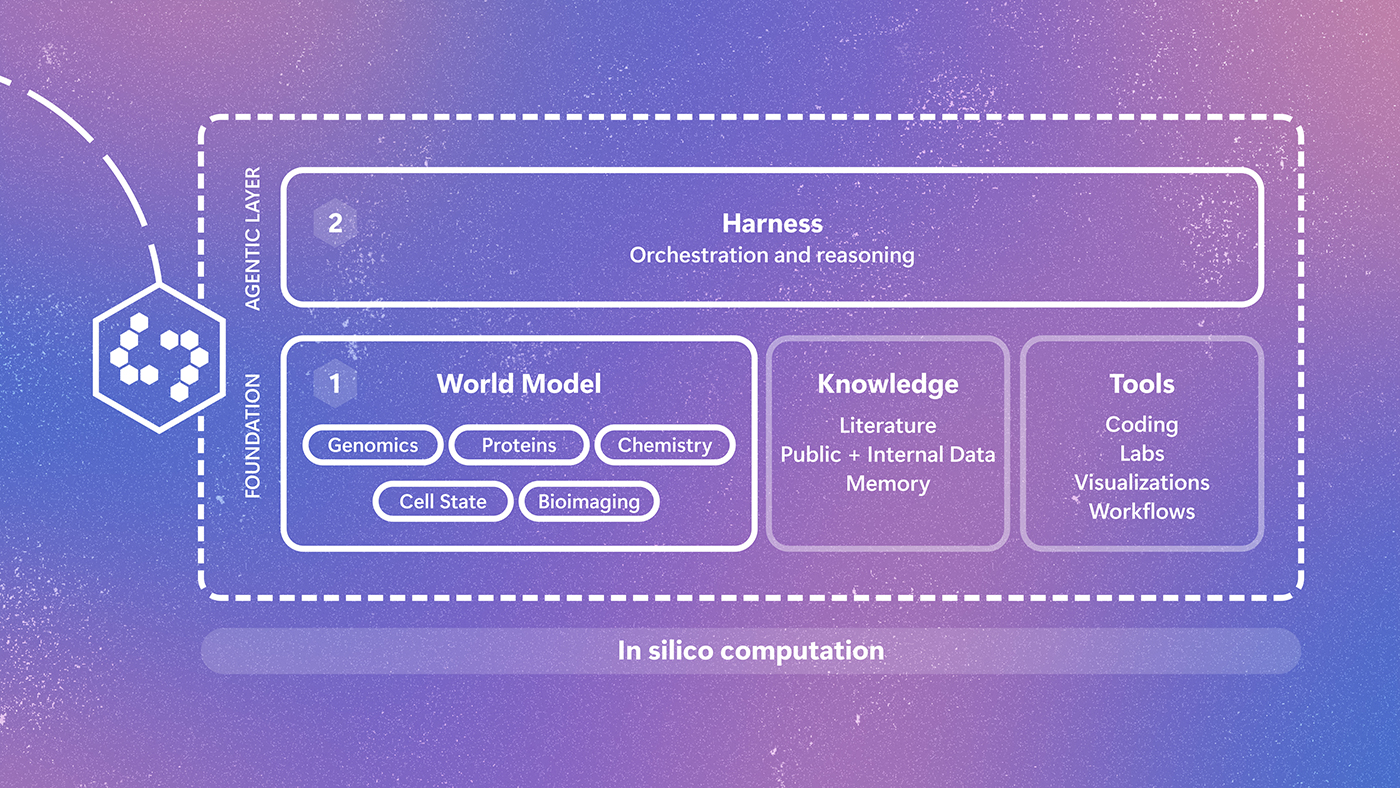
Introducing Quine: An AI research system designed for the complexity of biology

Biology doesn't operate in silos, and neither should the AI representation of it. Quine is an early-stage research effort to create a multimodal world model of biology. By connecting insights across biological scales and modalities, Quine helps scientists computationally search a space far larger than intuition allows and prioritize hypotheses before they reach the lab. Experimental results provide important feedback, helping researchers sharpen future research directions. The post Introducing Q…

We use cookies to run the site and, with your consent, for analytics and to show ads. See our Cookie Policy.