This work shows that one can extract LLM assets during inference, namely embeddings, attention, and quantized MLP weights, activations, and other inference states, from localized memories and compute subcircuits from localized memories and compute subcircuits by deploying laser voltage imaging.
Abstract
The move of LLM inference to edge AI accelerators introduces new physical vulnerabilities. During execution, model parameters and intermediate inference states are repeatedly loaded into and processed on the chip, making them suscep- tible to physical side-channel attacks. In this work, by deploying laser voltage imaging, we show that one can extract LLM assets during inference, namely embeddings, attention, and quantized MLP weights, activations, and other inference states, from localized memories and compute subcircuits. To validate our claims, we perform an attack on an FPGA-based LLM accelerator. Since such accelerators reuse the same buffers and compute subcircuits across addresses, tiles, modules, and layers, reading asset values comes down to probing different memories during inference. We demonstrate full recovery of the targeted values; however, we also establish a methodology to recover asset values even if some weights or bits remain unread. We further derive lower bounds that relate imaging effort to asset dimensions and show that even direct recovery scales linearly with the size of the targeted asset
The massive data-movement overhead in traditional architectures has led to the adoption of In-Memory Computing (IMC) for energy-efficient Deep Neural Network (DNN) processing. By leveraging emerging devices like Spin-Orbit Torque Magnetic Tunnel Junctions (SOT-MTJs), IMC bypasses the"memory wall"and reduces leakage power inherent in traditional CMOS. However, this shift introduces dual hardware threats: manufacturing Process Variation (PV) degrades reliability and increases vulnerability to fault injection, while power Side-Channel Attacks (SCAs) compromise security. Existing defenses address these threats in isolation. This work presents a posttraining framework that simultaneously hardens analog IMC accelerators against both threats without retraining the model. Implemented in the IMAC-Sim simulator, our approach uses the proposed Variation Impact Score (VIS) to guide the mapping of Fault Observation Windows (FOWs) and introduces the Leakage Per Inference (LPI) metric to quantify input-dependent power variability under stochastic injection and the resulting reduction in effective signal-to-noise ratio. Experiments show that PV-induced faults can degrade accuracy by over 50%, while our method restores near-baseline accuracy and mitigates the threat of correlation-based power analysis attacks.
Muhtasim Alam Chowdhury, Ramtin Zand, Soheil Salehi· 0 citations
The operational energy consumption of large language model (LLM) inference is becoming an increasingly important component of the environmental footprint of deployed AI systems. However, direct measurement of inference energy often requires hardware telemetry, power instrumentation, or infrastructure-specific monitoring, limiting its applicability in comparative studies, early-stage system design, and sustainability reporting. This report presents an analytically structured, empirically calibrated, GPU-level methodology for estimating LLM inference energy on NVIDIA H100-class accelerators without direct runtime measurement. The proposed estimator combines parameter-scaled transformer FLOP accounting, calibrated memory-traffic factors, and hardware-specific energy coefficients for FP16/BF16 tensor-core computation and high-bandwidth-memory movement. It explicitly separates prompt prefill from autoregressive decoding, enabling energy estimates for input tokens, output tokens, and complete inference requests. The methodology further decomposes total energy into compute, parameter-access, key-value-cache write, and attention-read components, allowing the scaling behavior with model size, context length, and generated-token count to be analyzed. The resulting estimates are not intended to replace physical power measurements; rather, they provide transparent, reproducible, and assumption-explicit approximations suitable for model comparison, green-coding analysis, and design-time evaluation of LLM inference workloads.
Tina Vartziotis, Rodopi Kosteli, Elli Vartziotis et al.· 1 citation
Prefill or prompt processing and Decode or token generation are two distinct subphases of LLM inference that are greatly influenced by LLM accelerators such as GPT-Generated Unified Format (GGUF Q4_K_M), NormalFloat 4-bit (NF4) Quantization, FlashAttention-2 and others. Although these accelerators clearly improve end-to-end LLM inference performance, their effectiveness over these subphases remains largely understudied. To address this gap, we present a cross-platform, multi-model empirical study, where we deploy multiple ∼ 1B-parameter LLMs on GPU, CPU, and Raspberry Pi 4B edge hardware platforms in the presence and absence of these accelerators. Each test case evaluates 10,000+ inference runs with separate phase-wise and end-to-end performance indicators. Our study brings several important observations, including the contrastive effect of quantization under different hardware bottlenecks, along with a quantification of runtime delays (up to +139%) caused by the lack of parallelism in the ARM architecture. Based on these benchmarking results and observations, we identify several open research challenges in the concluding section. Our work is fully reproducible and open-sourced on GitHub1.
Subhransu Das, Jiaming Cheng, Swathi Vallabhajosyula et al.· Practice and Experience in A...· 0 citations
Emerging chiplet-based accelerators introduce a new class of intrahost networks—the Accelerator Chiplet Network (ACN)—that links compute chiplets, IO chiplets, and memory modules and increasingly governs application performance. Yet ACN behavior remains largely opaque: existing tools overlook on-package communication and instead attribute overheads to compute or memory subsystems, while ACN-induced latency, bandwidth heterogeneity, and congestion are hard to observe due to proprietary microarchitectures, tight coupling with the execution pipeline, and complex mappings between application activity and hardware. To overcome this challenge, we build an ACN characterization framework that enables fine-grained, topology-aware probing of paths and links. We then use it to uncover fundamental ACN performance properties on multi-chiplet GPUs. Guided by these insights, we design PingPoint, a lightweight utility for ACN-native profiling. Our key insight is that modeling the ACN as a logical, hose-based graph with queueing abstractions, combined with in-situ software probing, makes systematic dissection of the otherwise opaque ACN possible. It injects latency and bandwidth probes while co-executing target kernels, captures cycle-level link- and path-granular distributions, and applies differential attribution to localize congestion to individual ACN links. Across diverse workloads and hardware, it exposes hidden bottlenecks, guides kernel placement and traffic shaping, quantifies the performance impact of ACN contention, and enables practical optimization with marginal overhead.
Junyeol Ryu, Ming Liu, Matthew D. Sinclair· Proceedings of the ACM SIGCO...· 1 citation
Modern edge system-on-chips (SoCs) combine CPUs, integrated GPUs (iGPUs), and neural processing units (NPUs), yet existing LLM runtimes typically make coarse device-level decisions or optimize operators in isolation. As a result, they underutilize heterogeneous resources, particularly on unified-memory platforms where performance depends on both device placement and task-graph coordination. We present HeteroMosaic, a heterogeneity-first scheduling framework for edge LLM inference. HeteroMosaic first uses a heterogeneous roofline model to identify when combining iGPU and NPU execution is beneficial. It then decomposes inference into dependency-preserving micro-batches that expose cross-accelerator overlap and applies trace-guided co-optimization of scheduling and device allocation under practical effects such as memory contention, DVFS, device variation, and NPU runtime overheads. We implement HeteroMosaic in PyTorch C++ and evaluate it on three AMD Ryzen AI platforms spanning NPU-heavy, balanced, and iGPU-heavy designs. On the balanced platform, HeteroMosaic achieves up to 1.73X speedup over an iGPU baseline, 1.78X over an NPU baseline, and 2.05X over frameworks such as llama dot cpp, while reducing energy by up to 45.3%. It also improves performance over prior heterogeneous edge AI solutions by up to 2.35X.
Gregory Jun, Wesley Pang, E. Richter et al.· 2 citations
EdgeXpert is proposed, a software-hardware co-designed LLM accelerator that resolves this incompatibility and achieves up to 56.3% latency reduction and 44.1% energy reduction compared to prior works, while maintaining near-baseline accuracy.
Sangwoo Ha, Hyunwoo Seo, Yurim Jo et al.· 0 citations
Related blog posts
MIT News · Artificial Intelligence· news.mit.eduSep 2, 2026
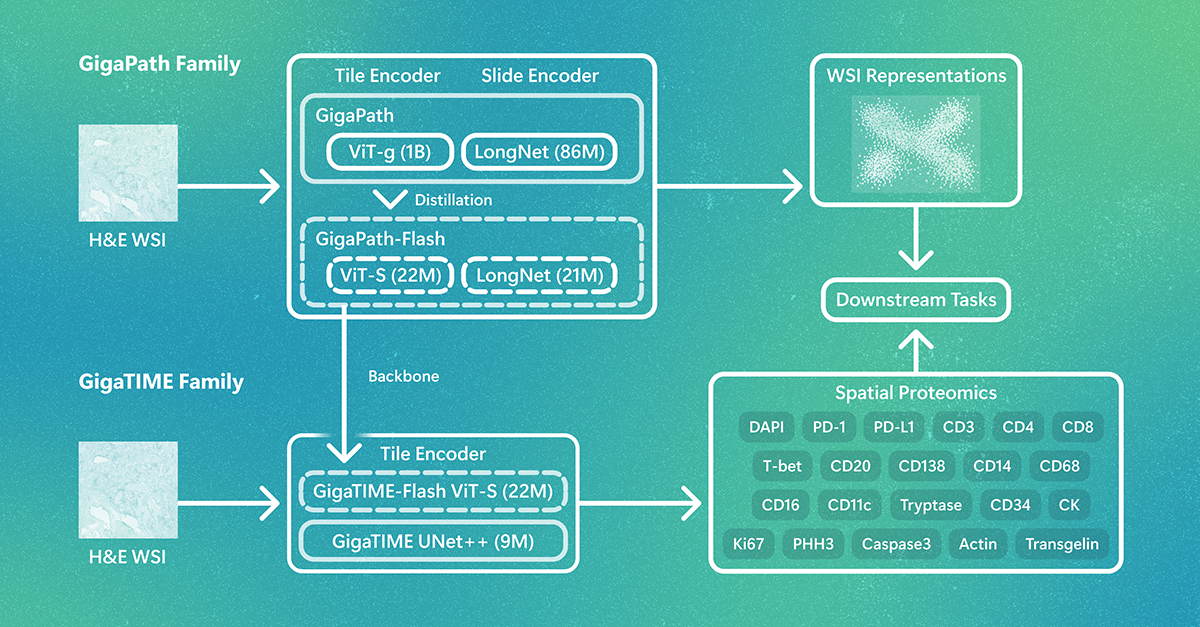
What if pathology foundation models could do more with less? GigaPath-Flash and GigaTIME-Flash cut computational demands while maintaining strong performance, opening the door to larger studies and broader exploration. The post GigaPath-Flash and GigaTIME-Flash: Toward population-scale discovery with efficient pathology foundation models appeared first on Microsoft Research.
MIT News · Artificial Intelligence· news.mit.eduAug 31, 2026
With millions of users across the world, Julia has been used to conduct cutting-edge research and to design new drugs, jet engines, heat pumps, and more.
MIT News · Artificial Intelligence· news.mit.eduAug 27, 2026
A new machine-learning framework aims to improve the success rate of computational protein design while moving away from results that reproduce sequences found in nature.