Skip to content

Seeing the knowledge graph: a multimodal vision–language framework with active learning for cold–start course recommendation

Aug 2026 · Proceedings: Computer Science · 0 citations · 33 references

TL;DR

ALARM is proposed, a multimodal active–learning framework pairing a frozen large language model (LLM) that encodes course and learner text, a vision transformer (ViT) that “observes” the KG by reading its rendered subgraph image, and a domain–specific acquisition function that selects which labels to query.

Abstract

: Course recommendation on online learning platforms operates under two constraints at once: a chronic coldstart regime that breaks collaborative filtering, and the high cost of reliable preference labels. Existing remedies treat the course knowledge graph (KG) as a symbolic object for graph neural networks or side information, discarding a rich signal: the spatial topology of a KG—which concepts cluster, chain, or sit at hubs—is naturally a visual object that modern vision encoders are built to read. We propose ALARM, a multimodal active–learning framework pairing a frozen large language model (LLM) that encodes course and learner text, a vision transformer (ViT) that “observes” the KG by reading its rendered subgraph image, and a domain–specific acquisition function that selects which labels to query. Fusion aligns ViT patch tokens with LLM hidden states in a shared retrieval space, and only lightweight LoRA adapters and projectors update per active–learning round, at roughly 0.08× the cost of full fine–tuning. On MOOCCube and a XuetangX subset,


Read PDF

Similar papers

#computer vision Review Aug 2026

Learning to Look Again: Loss-Gap Supervision for Free-form Crop Routing in Vision-Language Models

GapSight is proposed, a framework for learning visual re-reading: a VLM first takes a global glance, then selectively returns to a free-form region when the question calls for local evidence, and Mechanism analyses show that the router rescues concrete wrong answers, adapts its action rate by task, and forms a favorabl...

Jin-Chang Zhu, Rong Fu, Yi-Cheng Ding et al. · 1 citation
Sep 2026

GLoT: global–local token alignment for interpretable zero-shot graph reasoning with LLMs for e-commerce applications

A two-stage framework that tightly couples self-supervised graph learning with dual-projection prompting that guarantees that local context is derived from the same clustering signal used during pretraining, and global and local semantics are aligned through purpose-built pathways is proposed.

Yuan-Yuan Ji, Yuan-Kun Xu, Chu-Lei Xiang · 0 citations
Open access 2026

A Dual-Level Structural Context Collaborative Framework for Knowledge Graph Completion

These results demonstrate that collaborative modeling of instance-level and batch-level structural context can effectively enhance structure-aware entity representation and improve fine-grained entity prediction.

Jing Wang, Tian Xia, Hao Li · 0 citations
Open access Oct 2026

High-Information-Density Knowledge Graph Retrieval Augmentation for Large Language Models

Retrieval-Augmented Generation (RAG) mitigates hallucination and knowledge staleness in large language models (LLMs) by injecting external knowledge into the context window, yet its effectiveness is rigidly constrained by attention dilution and inference cost. Existing knowledge-graph-enhanced methods follow a sequenti...

Zi-Hao Zhou, Gang-Gang Yin, Ze-Jian Lu et al. · 0 citations

IMoKGNN: Dual-Stream Fusion of Generic and Task-Specific Language Model Features for Graph Neural Networks

Text-Attributed Graphs (TAGs) are prevalent in various real-world scenarios, where each node is associated with a text attribute. Representation learning on TAGs relies on a comprehensive understanding of both the textual attributes and the topological connections. Recent works have enhanced graph neural networks (GNNs...

Hao Yan, Chao-Zhuo Li, Jun Yin et al. · 0 citations
Preprint Oct 2026

SheafPrune: Sheaf-Guided Graph Propagation for Visual Token Pruning

Multimodal large language models process the complete visual token sequence, increasing prefill cost even when many tokens are irrelevant to the instruction. Token-wise saliency captures limited inter-token dependence; graph-based selection instead depends on how relations govern importance propagation and ranking. We...

Xiao-Yang Ma, Chi Wang, Hong Sun · 0 citations

Related blog posts

Microsoft Research Blog Jul 13, 2026

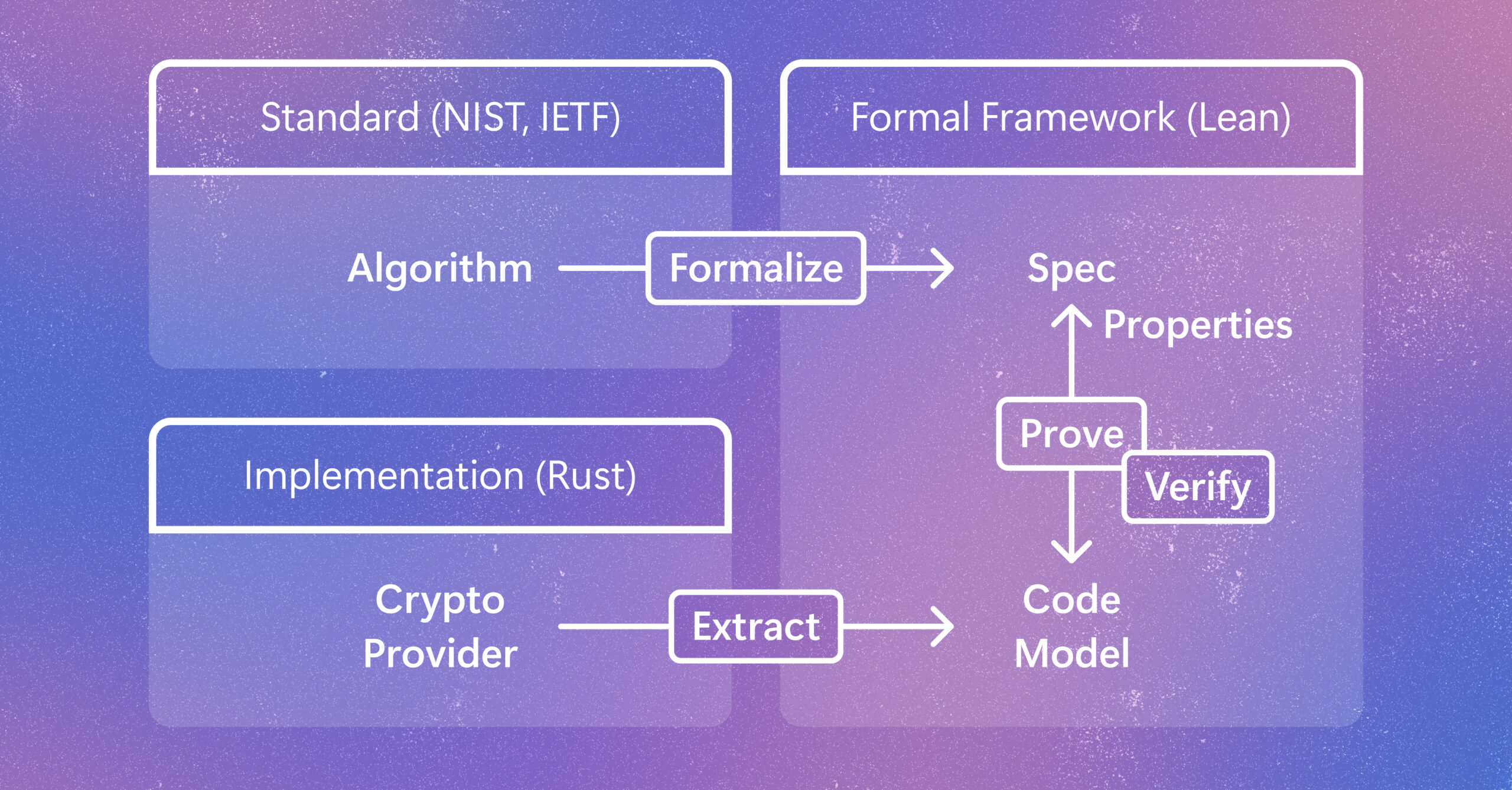
Verifying Rust cryptography in SymCrypt, from standards to code

Cryptographic code supports vital protections in modern computing systems. Learn how a new method helps verify code as developers write it while preserving speed and adaptability as it gets implemented and evolves. The post Verifying Rust cryptography in SymCrypt, from standards to code appeared first on Microsoft Research.

We use cookies to run the site and, with your consent, for analytics and to show ads. See our Cookie Policy.