Skip to content
#edge computing Open access

SEELE: Sense-Driven Edge-Cloud Foreground–Background Split Rendering for Immersive Media Services

Sep 2026 · Italian National Conference on Sensors · 0 citations · 21 references

TL;DR

This paper proposes SEELE, a Lyapunov-guided online control algorithm that represents accumulated budget pressure with two virtual queues and converts the long-term constrained problem into lightweight per-slot decisions, and provides steady-state QoE statistically comparable to a pretrained PPO policy while significantly reducing synchronization violations and improving composition stability.

Abstract

Immersive media services increasingly rely on edge-cloud rendering to deliver interactive visual content under dynamic network, computing, and mobility conditions. Rendering an entire scene as a single service couples interaction-sensitive foreground content with context-oriented background content, making it difficult to jointly control latency, quality, synchronization, and migration overhead. This paper studies sense-driven edge-cloud foreground–background split rendering for immersive media services. We formulate an online decision problem in which foreground and background rendering layers can be independently controlled under long-term system and migration cost budgets. The formulation turns structural scene separation into a coupled layer-state control problem by preserving asymmetric QoE roles and a common composition requirement. We propose SEELE, a Lyapunov-guided online control algorithm that represents accumulated budget pressure with two virtual queues and converts the long-term constrained problem into lightweight per-slot decisions. The resulting per-slot rule balances immediate QoE loss against queue-weighted system and migration costs. Under sustained resource and network stress, SEELE provides steady-state QoE statistically comparable to a pretrained PPO policy while significantly reducing synchronization violations and improving composition stability. It also improves steady-state QoE and system debt over deterministic and QoE-prioritized baselines. A prototype implementation and controlled characterization further validate split-stream deployment, runtime observability, practical control hooks, and the latency–capacity tradeoff of layered rendering.

Read PDF

Similar papers

Conference Aug 2026

Saliency-Aware Edge-Based 3D Gaussian Splatting for Immersive Video Streaming

3D Gaussian Splatting (3DGS) enables high-quality and efficient novel-view rendering, making it a promising representation for immersive scene streaming. However, supporting interactive 3DGS viewing on lightweight clients over wireless edge networks remains challenging, as view-dependent rendering workload, video encod...

Di-Hao Hu, Jinkai Zheng, T. Luan et al. · 0 citations
Conference Aug 2026

Joint Transmission-Rendering Scheduling for Chunked 3D Mesh Delivery in Mobile Augmented Reality Services

Mobile augmented reality (AR) supports rich interactive applications by enabling high-fidelity 3D content to be displayed in real time on mobile devices. However, under timevarying wireless conditions and fluctuating device-side rendering contention, reconstructing such high-fidelity 3D content in a timely manner remai...

Shi-Dong Wang, Bang-Cai Wei, Chun-Sheng Wang et al. · 0 citations
Preprint Aug 2026

Manifold4D: Denoising on Point Cloud Rendered Manifolds for Video Re-shooting

Video re-shooting re-renders a monocular video of a dynamic scene along a user-specified camera trajectory, and the dominant recipe supplies the target geometry explicitly: per-frame depth lifts the source video into a 4D point cloud, which is rasterized along the trajectory into a point cloud render. Because the rende...

Yongbo Mao, Zijia Dai, Zhi-Shu Liu et al. · 0 citations
Preprint Sep 2026

Streaming4D: Accelerate 4D World Models via Block-wise Video Generation and Incremental Reconstruction

Current 4D generation paradigms are often bottlenecked by a sequential decoupling design: video is generated first, followed by 3D reconstruction, leading to high interaction latency. This limits applications in interactive real-time scenarios. To this end, we propose \textbf{Streaming4D}, a tightly coupled synchronous...

Xiao-Yan Liu, Jia-Xin Liu, Kang Li et al. · 0 citations
Conference Aug 2026

A Multi-Modal Context-Aware Algorithm for Immersive Japanese Translation Screen via LiDAR-Driven Spatial Reconstruction and Visual Semantic Rendering

To address the issues of spatial positioning drift, unstable semantic overlay, and insufficient real-time rendering efficiency in complex dynamic scenes of immersive Japanese translation screens in augmented reality environments, which limit the development potential of related applications, this paper proposes a multi...

Li Wang · 0 citations
Review Open access Aug 2026

Adaptive 360° Video Streaming: Prediction, Tiling, and Transport Trade-Offs

The growing demand for virtual reality and immersive applications has increased interest in 360° video streaming. When viewing omnidirectional content through a head-mounted display, users observe only a limited portion of the content, i.e., the viewport, at any given time. Consequently, transmitting the complete panor...

Muhammad Farooq, G. Manfredi, L. De Cicco et al. · 1 citation

Related blog posts

Microsoft Research Blog Sep 29, 2026

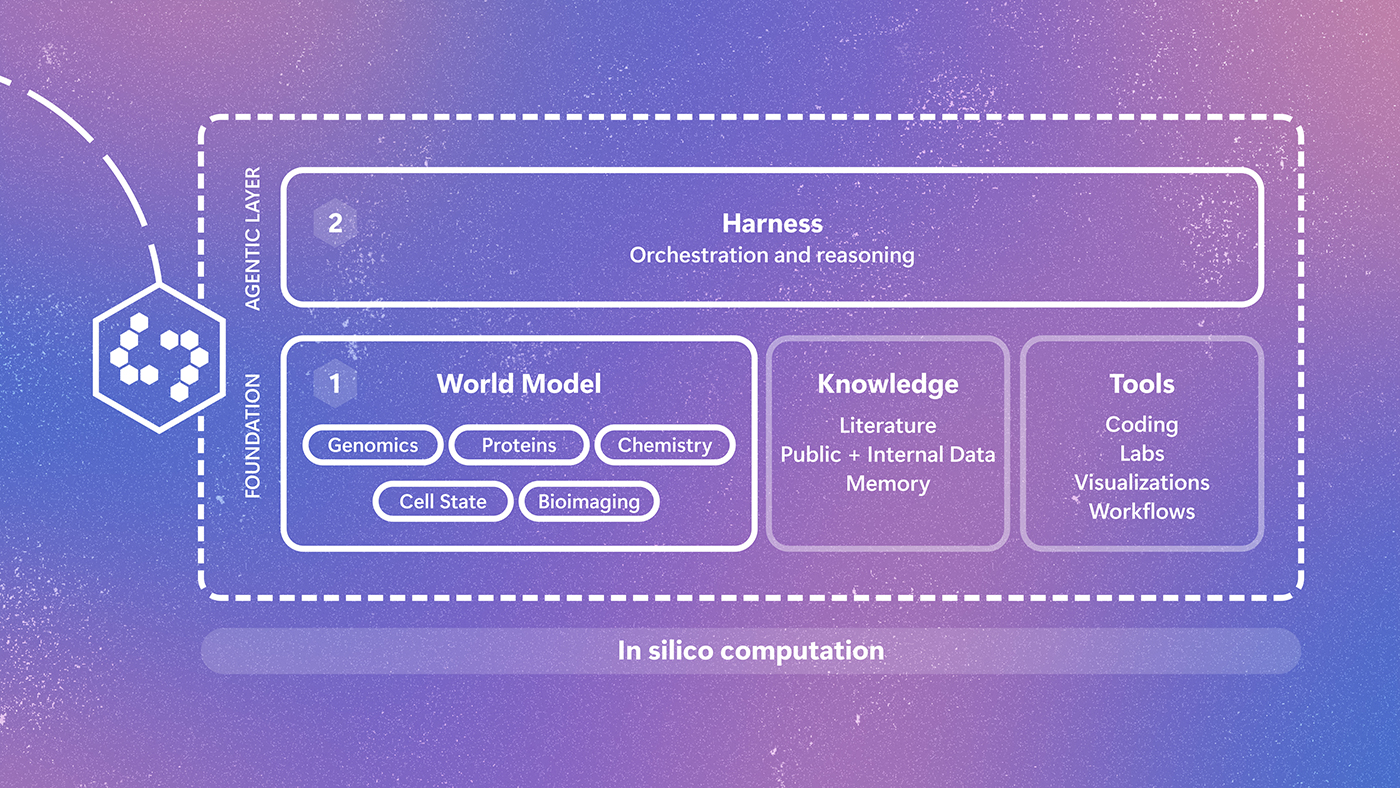
Introducing Quine: An AI research system designed for the complexity of biology

Biology doesn't operate in silos, and neither should the AI representation of it. Quine is an early-stage research effort to create a multimodal world model of biology. By connecting insights across biological scales and modalities, Quine helps scientists computationally search a space far larger than intuition allows and prioritize hypotheses before they reach the lab. Experimental results provide important feedback, helping researchers sharpen future research directions. The post Introducing Q…

We use cookies to run the site and, with your consent, for analytics and to show ads. See our Cookie Policy.