A novel framework called Adaptive Granular Hypergraph Generation (MGHRL) is introduced, which generates hyperedges at multiple levels of granularity through the adaptive splitting of granular-ball, effectively capturing high-order relationships based on the graph's topological structure.
Abstract
Hypergraph representation learning aims to capture high-order information in graphs by constructing hyperedges that simultaneously connect multiple nodes. These hyperedges adapt to the graph's topological features, facilitating the extraction of high-order relationships at multiple granularities. Most prior work relies on predefined definitions to generate hyperedges, overlooking the diversity in graph topological structures and the multi-granularity characteristics of hyperedges. As a result, this limits their ability to effectively and adaptively discover high-order relationships and efficiently process complex structural information. To address this limitation, we propose a novel framework called \underline{M}ulti-\underline{G}ranularity \underline{H}ypergraph \underline{R}epresentation \underline{L}earning (MGHRL). MGHRL introduces an Adaptive Granular Hypergraph Generation strategy, which generates hyperedges at multiple levels of granularity through the adaptive splitting of granular-ball, effectively capturing high-order relationships based on the graph's topological structure. Additionally, we propose a Multi-Granularity Hypergraph Network with multiple sub-networks, capturing features from hyperedges at different granularities and integrating them via hierarchical reversible connections. Experimental results show that MGHRL significantly outperforms baseline models on benchmark datasets.
This work introduces FALCON (Filtration-based hypergrAph aLignment via Cross-scale Optimal traNsport), an unsupervised optimal-transport framework for hypergraph alignment that constructs a filtration-induced sequence of clique-based co-occurrence dissimilarity matrices and jointly aligns all levels through one shared...
Lutz Oettershagen, Honglian Wang, A. Gionis· 0 citations
Graph pooling aims to compress the graph, including both node embeddings and their underlying topological patterns, into a more compact representation. Previous works focus primarily on the overly fine-grained representation of nodes, progressively coarsening the graph by removing nodes or merging them into clusters, t...
Sen Zhao, Gao-Jie Xu, Shuyin Xia et al.· 0 citations
CaN is proposed, a core-aware neural generation framework for attributed hypergraphs that integrates the hierarchical k-core structure as an explicit generative prior and uses deep neural encoders to model dependencies among multi-dimensional node attributes.
Xiangfei Fang, Ran Bao, Heng Zhang· Proceedings of the 32nd ACM...· 0 citations
HyMAGE models each node as an autonomous agent and leverages LLMs for local-level semantic selection, so that hyperedge formation and dissolution emerge from local semantic affinity and structural context in a self-organizing manner.
B. Gu, Ji Zeng, Nuoran Zhou et al.· Proceedings of the 32nd ACM...· 0 citations
Graph Contrastive Learning (GCL) is a popular self-supervised learning (SSL) technique. However, mainstream GCL methods usually favor single fine-grained random augmentation schemes, which will destroy the structural integrity of the graph, and they largely ignore the topology of the graph structure, that is, multi-gra...
Shuyin Xia, Guan Wang, Cheng Tan et al.· IEEE Transactions on Pattern...· 0 citations
Related blog posts
MIT News · Artificial Intelligence· news.mit.eduOct 2, 2026
Martin Trust Center Managing Director Bill Aulet introduces Dear Dreamer, a free platform for middle and high school students who want to learn about entrepreneurship.
Microsoft Research Blog· microsoft.comSep 30, 2026
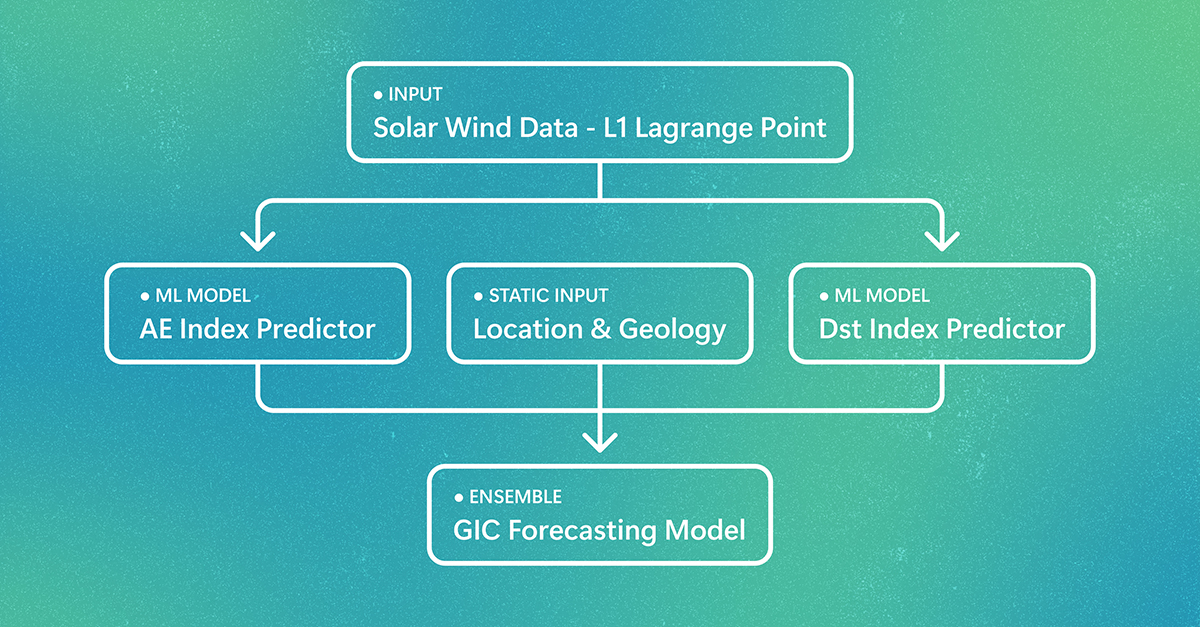
Extreme space-weather events can damage power systems on Earth and degrade GPS accuracy and satellite operations. A new machine learning system can predict where damage is likely to occur 30-60 minutes before a storm arrives. The post Forecasting space weather risks on power grids appeared first on Microsoft Research.
We use cookies to run the site and, with your consent, for analytics and to show ads.
See our Cookie Policy.