This paper proposes a robust decentralized personalized federated learning method R-DPFL, that enables clients to reduce the impact of Byzantine attacks via robust neighborhood direction estimation and history-based update trend prediction, rather than purely aggregating client models as in the existing work. In R-DPFL, each client first computes the current-round model update by aggregating the received neighborhood update vectors. It then predicts what this update should be based on its historical values and local model changes. Finally, R-DPFL computes the difference between these two quantities, adaptively clips this difference, and adds it to the local update. We prove convergence of the learning process through rigorous analysis and show that honest clients maintain stable personalized descent dynamics under Byzantine neighbor perturbations without requiring consensus among neighboring models. Extensive experiments on CIFAR-10 demonstrate that RDPFL consistently outperforms state-of-the-art decentralized and personalized federated learning baselines under heterogeneous and adversarial settings.
This work proposes SAPE-FL (Similarity-Aware Personalized Federated Learning), a novel personalization framework that anchors each client's model to both the global model and a similarity-weighted peer averaged model that mitigates negative transfer and enhances robustness in heterogeneous settings.
V. ArunKumarA, Sunil Gupta, Ngyuen Dang et al.· 0 citations
This paper shows that the proposed method ensures a bounded Byzantine influence on both distillation gradients and individual client private gradients after cross-modality fusion, thereby enabling stable local optimization for honest clients under Byzantine distillation.
Asynchronous federated learning improves the efficiency of conventional synchronous protocols by integrating updates as they arrive. However, asynchrony and data heterogeneity make learning objectives at global and local levels inherently inconsistent—global optimization trajectories can conflict with ongoing local upd...
Jiayun Zhang, Shuheng Li, Haiyu Huang et al.· Proceedings of the 32nd ACM...· 0 citations
Prototype-based federated learning enables efficient knowledge sharing by exchanging class prototypes rather than full model parameters. However, heterogeneous client data and limited local samples increase prototype estimation variance, making many client prototypes unreliable. Existing methods usually treat prototype...
Fu Qi, Weishan Zhang, Ling-Zhao Meng et al.· Proceedings of the Thirty-Fi...· 0 citations
Local Inference Guided Aggregation for Heterogeneous Training Environments to Yield Enhancement Through Agreement and Regularization (LIGHTYEAR), a federated learning framework that performs update selection in function space using an NTK-based agreement score to characterize predictive behavior and determine a persona...
Mirko Konstantin, S. Zachow, Anirban Mukhopadhyay· 0 citations
Martin Trust Center Managing Director Bill Aulet introduces Dear Dreamer, a free platform for middle and high school students who want to learn about entrepreneurship.
Microsoft Research Blog· microsoft.comSep 30, 2026
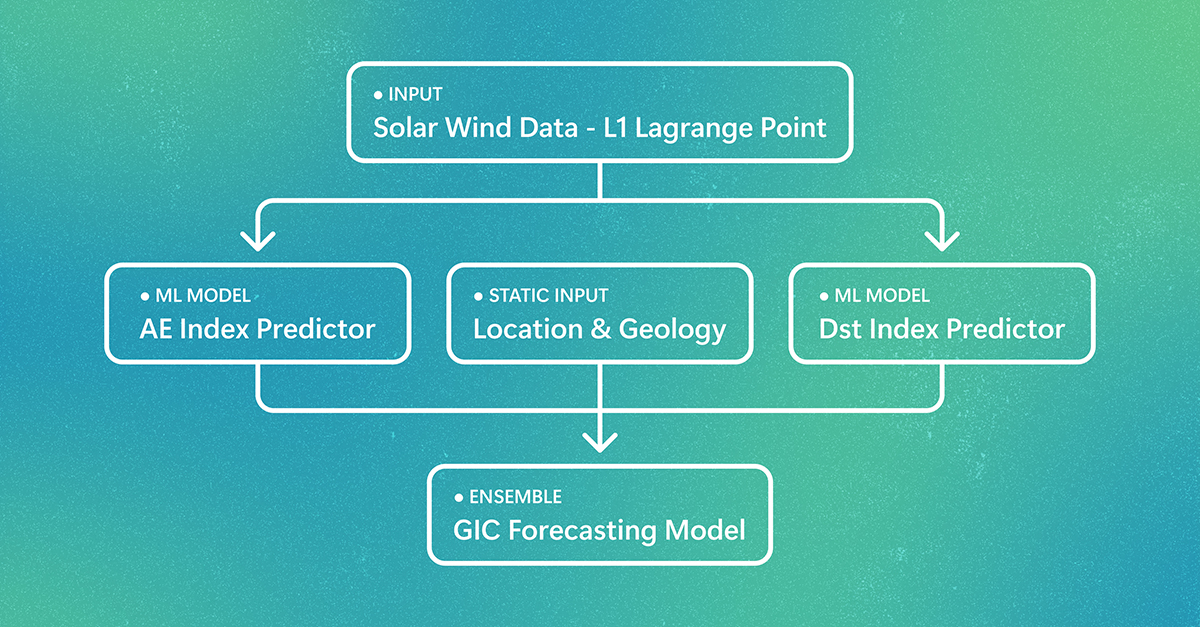
Extreme space-weather events can damage power systems on Earth and degrade GPS accuracy and satellite operations. A new machine learning system can predict where damage is likely to occur 30-60 minutes before a storm arrives. The post Forecasting space weather risks on power grids appeared first on Microsoft Research.
We use cookies to run the site and, with your consent, for analytics and to show ads.
See our Cookie Policy.