Skip to content

Think Wider: Mitigating Latent Rank Collapse in Implicit Chain-of-Thought Reasoning

Sep 2026 · 0 citations · 31 references
Computer Science

TL;DR

WIDER is proposed, a lightweight spectral regularizer for implicit CoT that improves matched implicit CoT baselines, while mechanistic analyses reveal higher effective rank, lower dominant-direction energy, and reduced redundancy among latent steps.

Abstract

Chain-of-thought (CoT) reasoning improves the reasoning ability of large language models by introducing intermediate computation, but explicit rationales increase decoding length, latency, and context cost. Implicit CoT offers a more efficient alternative by moving intermediate reasoning into continuous latent states. However, latent reasoning can be unstable: successive latent states may become overly similar and collapse toward a shared dominant direction, reducing the diversity of the reasoning trajectory. In this work, we identify $\textit{latent rank collapse}$ and propose $\textbf{WIDER}$, a lightweight spectral regularizer for implicit CoT. During training, WIDER estimates the shared direction of each latent trajectory and penalizes projections onto this direction, encouraging latent states to span a broader representational subspace. The method is plug-and-play and leaves the backbone model, latent schedule, and inference-time decoding procedure unchanged. We further formulate this collapse as a geometric bottleneck in implicit reasoning, casting its mitigation as a training-time regularization problem rather than an inference-time decoding change. Extensive experiments show that WIDER improves matched implicit CoT baselines, while mechanistic analyses reveal higher effective rank, lower dominant-direction energy, and reduced redundancy among latent steps. These results highlight latent subspace utilization as an important factor for efficient continuous reasoning, providing a geometric perspective for analyzing and improving implicit CoT. Code is available at https://github.com/whitesweater/WIDER.
View source

Similar papers

#artificial intelligence Preprint Sep 2026

A*-Thought-V2: Efficient Latent Reasoning via Geometric Dynamics of LLM

Chain-of-Thought (CoT) improves the reasoning ability of Large Language Models (LLMs) but incurs substantial computation and context costs. Existing methods either lose intermediate information through hard pruning or lack a principled criterion for continuous compression. We present A*-Thought-V2, a geometric dynamics...

Xiao-An Xu, Si-Yuan Liu, Shuo Wang et al. · 0 citations
Preprint Aug 2026

ChainPrune: Evaluating and Reducing Redundancy in Long Chain-of-Thought Reasoning

This work proposes ChainPrune, a novel reasoning path semantic structural optimization method to efficiently and controllably synthesize self-generated high-quality training data and incorporates a DPO-based preference learning method combined with supervised loss, effectively mitigating false reward suppression.

Weihang Pan, Zhengxu Yu, Yuxiang Zhang et al. · 1 citation
#artificial intelligence Preprint Sep 2026

Latent Recurrent Thoughts: Recurrent Refinement of Proposed Latents for Reasoning with Frozen LLMs

Latent Recurrent Thoughts substantially outperforms prior frozen-decoder continuous-space reasoning methods under an identical decoder, prompt, data, and training budget, and outperforms non-thinking-mode chain-of-thought prompting on the same backbone at a small fraction of its inference compute.

Zhaoxing Chen, Jie Fu · 0 citations
#artificial intelligence Preprint Sep 2026

When Steering Fails in Latent Reasoning: A Latent-to-Language Transition Gap

Activation steering has become a widely used approach for controlling language models during explicit chain-of-thought (CoT) reasoning, motivating its extension to latent CoT. However, we find that steering continuous thoughts produces substantially weaker effects on subsequent language generation than steering explici...

Gao-Xiang Huang, Lei Qi · 0 citations
#artificial intelligence Preprint Sep 2026

Structural Process Supervision for Latent Chain-of-Thought Reasoning

Latent reasoning approaches enhance token-level efficiency and robustness by replacing verbose, explicit chain-of-thought (CoT) tokens with compact continuous-space embeddings. However, existing methods lack efficient process supervision over these embeddings, which often leads to representation collapse and uneven inf...

Yi-Qi Li, Xu Chen, Chen Ju et al. · 0 citations
#artificial intelligence Preprint Sep 2026

Efficient Reasoning via Constrained Optimization in Latent Space

Large Reasoning Models (LRMs) have shown remarkable reasoning capabilities, yet they still suffer from overthinking, generating redundant reasoning steps which incur substantial token consumption. Existing methods, such as suppressing reflective keywords or forcing shorter reasoning lengths, attempt to mitigate this is...

Zhi-Nan Hou, Xing-Chen Li, Ke-You You · 0 citations

Related blog posts

Microsoft Research Blog Sep 30, 2026

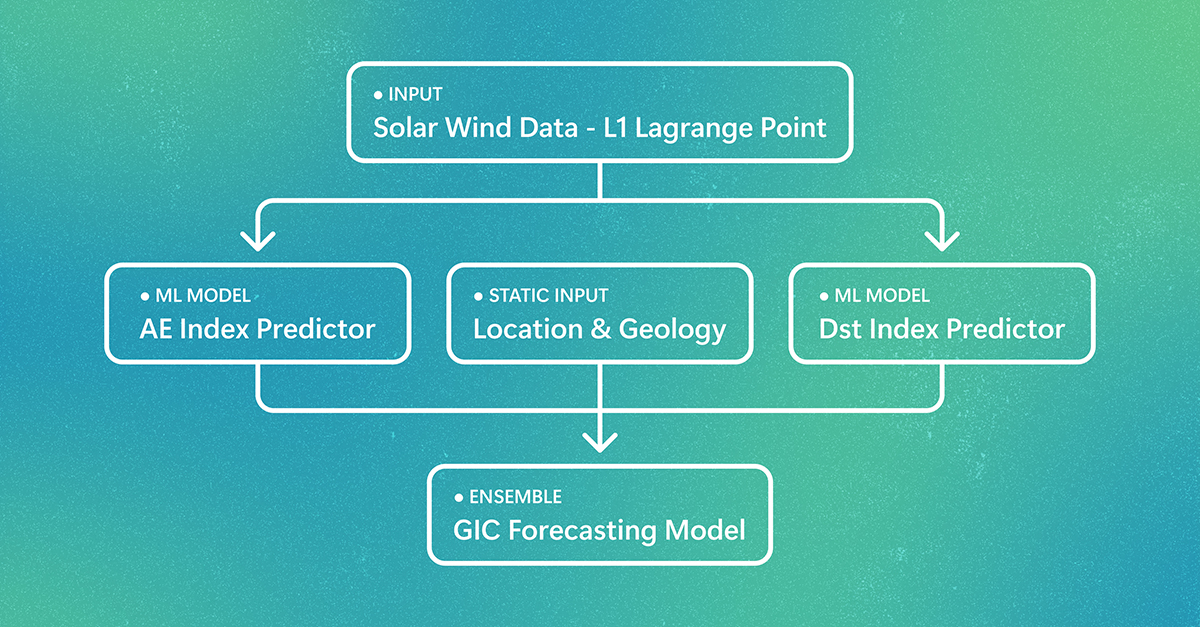
Forecasting space weather risks on power grids

Extreme space-weather events can damage power systems on Earth and degrade GPS accuracy and satellite operations. A new machine learning system can predict where damage is likely to occur 30-60 minutes before a storm arrives. The post Forecasting space weather risks on power grids appeared first on Microsoft Research.

We use cookies to run the site and, with your consent, for analytics and to show ads. See our Cookie Policy.