This work shows that informative embeddings can be derived without complicated model design and gradient-based training, and suggests that informative graph embeddings can arise from carefully chosen topological transformations before any learning operation is applied.
Abstract
Graph representation learning has largely focused on designing increasingly sophisticated models to transform graph topology into vector representations, or embeddings. However, the extent to which embedding quality depends on model learning, rather than on the underlying topological transformations, remains unclear. Here, we show that informative embeddings can be derived without complicated model design and gradient-based training. Propagating random features through implicit hierarchical structures induced by random walks and anonymous walks yields embeddings that capture node proximity and structural role, respectively. These two training-free embeddings preserve complementary aspects of graph organization and perform competitively with classic and recent methods across various node-, edge-, and graph-level tasks. They often require substantially less computation, resulting in a favorable quality-efficiency trade-off. Combining the two types of embeddings further improves inference quality of some tasks compared with using either embedding type alone. Our results suggest that informative graph embeddings can arise from carefully chosen topological transformations before any learning operation is applied.
Generating categorical graphs requires choosing node and edge types that form a coherent structure without depending on node order. Many graph generators encode categories as fixed one-hot vectors, which can impose an artificial geometry in which categories are equidistant. We propose Embedded Graph Flows (EGF), a gene...
Ethan Ma, Zi-Han Wang, C. Chow et al.· 0 citations
Experiments on synthetic and real-world datasets show that GraphK outperforms existing methods, accurately learns graph structures, and generates synthetic graphs without explicit definitions.
Resul Tugay, Eren Olug, Elif Ak et al.· 0 citations
This work introduces a graph generation method that incorporates graph-theoretic principles into the learning process and preserves both global and local characteristics of the input graph while correcting the degree distribution to avoid duplicating the original topology.
Yuliang Ji, Jie Chen, Yuan-Zhe Xi· Research in the Mathematical...· 0 citations
SimGAT, a structure-aware graph attention model built on SimRank-derived structural embeddings, is proposed, which computes structural similarity in the SimRank2Vec embedding space and injects it as a topological prior into the graph attention mechanism, enabling neighborhood aggregation to be jointly guided by node at...
Chengda Xu, Yinglong Zhang· Journal of King Saud Univers...· 0 citations
Experiments show that incorporating NC-LID-based regularization consistently improves reconstruction performance over the baseline without structural regularization and the method using hub-aware regularization, which highlights NC-LID as a useful structural signal for enhancing distance-based graph autoencoders in dyn...
Aleksandar Tomčić, Milos Savic, Milos Radovanovic· 0 citations
Graph neural networks typically rely on dense, floating-point node representations, which can impose substantial memory and computational costs. Binary graph hashing offers an alternative by encoding node information as compact bit strings. However, existing approaches either sacrifice global topological information fo...
Srajan Agarwal, P. Megha, Bikas C. Das et al.· 0 citations
Related blog posts
MIT News · Artificial Intelligence· news.mit.eduOct 2, 2026
Martin Trust Center Managing Director Bill Aulet introduces Dear Dreamer, a free platform for middle and high school students who want to learn about entrepreneurship.
Microsoft Research Blog· microsoft.comSep 30, 2026
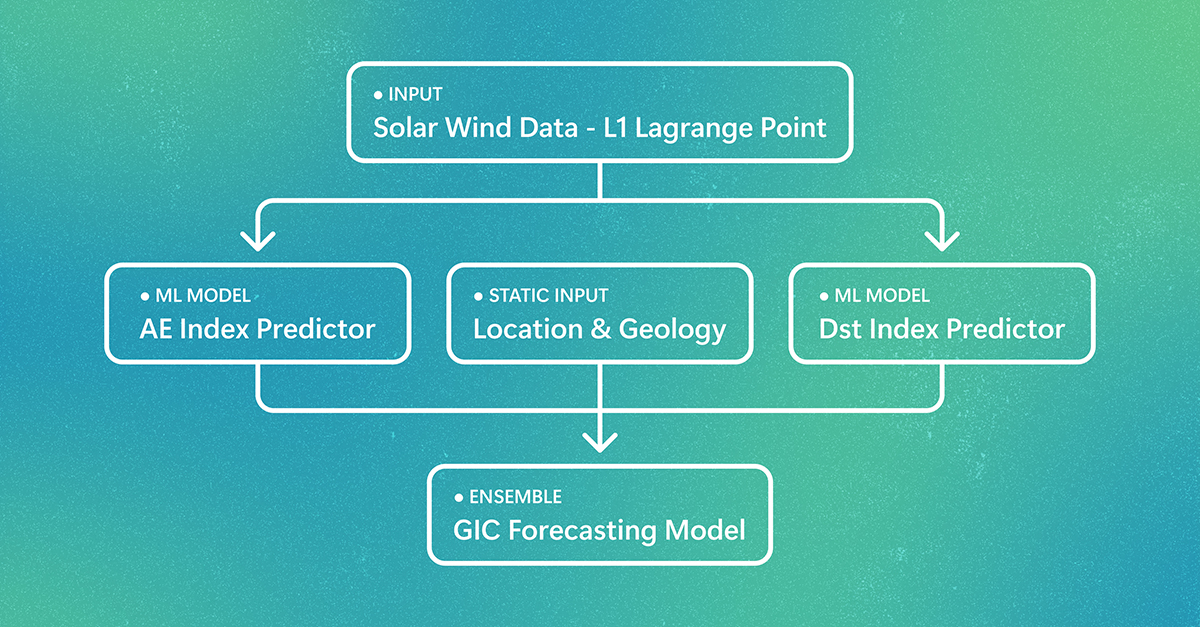
Extreme space-weather events can damage power systems on Earth and degrade GPS accuracy and satellite operations. A new machine learning system can predict where damage is likely to occur 30-60 minutes before a storm arrives. The post Forecasting space weather risks on power grids appeared first on Microsoft Research.
We use cookies to run the site and, with your consent, for analytics and to show ads.
See our Cookie Policy.