Skip to content

RFID-based Relative Localization for Nanodrone Swarm Platooning

Apr 2022 · 2 citations · 69 references
Computer Science

TL;DR

The design, implementation, and evaluation of RFDrone are presented, a system that can enable the relative positioning for the nanodrone swarm using the commodity passive RFID tags attached to each nanodrone for safe and accurate platooning.

Abstract

A nanodrone swarm is formulated by multiple lightweight and low-cost nanodrones to perform tasks in very challenging environments. Therefore, it is essential to recognize the relative positions of the nanodrones in the swarm for accurate and safe platooning. However, the camera or LiDAR sensors suffer from the line-of-sight (LoS) sensing. This paper presents the design, implementation, and evaluation of RFDrone, a system that can enable the relative positioning for the nanodrone swarm using the commodity passive RFID tags attached to each nanodrone for safe and accurate platooning. To do so, we propose a novel algorithm for spatial-temporal phase profiling based on the swarm platooning nature and further design a machine-learning model to predict the relative position of the tagged nanodrones in the swarm. Our experiments show that RFDrone can accurately estimate the relative positions of nanodrones in the swarm, whereby the 3D geometry of the nanodrone swarm pattern is easily obtained across different environments, tag diversity, and swarm pattern diversity.

View source

Similar papers

Conference Sep 2026

Soft-Information-Based Underwater Tracer Localization with USBL Hydrophone Arrays

Localization of underwater objects is required for numerous applications, including environmental monitoring, ropeless fishing, and equipment tracking. Ease of deployment and small, low-cost tracers running for years on a battery are incompatible with state-of-the-art solutions, especially in highly challenging multipa...

Peter Oppermann, Bernd-Christian Renner · 0 citations
Open access Sep 2026

Optimal base station selection for GNSS-denied UAV localization

Accurate and robust localization of UAV swarms in GNSS-denied urban environments remains a major challenge because signal blockage, multipath, and poor anchor geometry can severely degrade positioning performance. This paper extends our previous work on degree-centrality-based clustering for UAV swarm relative locali...

Asma Boulkaid, Aurelio Bermúdez, Rafael Casado et al. · 0 citations
Open access 2026

Long-Range Bluetooth Low Energy Detection via Drone-Based LoRa Relays for Search and Rescue Operations in Complex Terrain

This work demonstrates the feasibility of using BLE advertisements as opportunistic signals for remote sensing in drone-based SAR missions to increase the efficiency of locating missing persons.

D. Pérez-Díaz-de-Cerio, J. Valenzuela, J. M. González-Arbesú et al. · 0 citations
Open access 2025

ETHODOLOGY FOR ENSURING MANUFACTURABILITY OF UAV WITH ULTRASONIC POSITIONING IN LIMINITED SPACE CONDITIONS

Background. The manufacturability technique for UAVs with local positioning described in this paper can be used to coordinate several drones, allowing to correct their routes and avoid collisions in the local space while ensuring specified technical and economic feasibility. An important advantage of the proposed solut...

A. A. Adamova · 0 citations

Related blog posts

Microsoft Research Blog Nov 5, 2026

Formally verifying agent-written full-stack web apps with PDD Kit

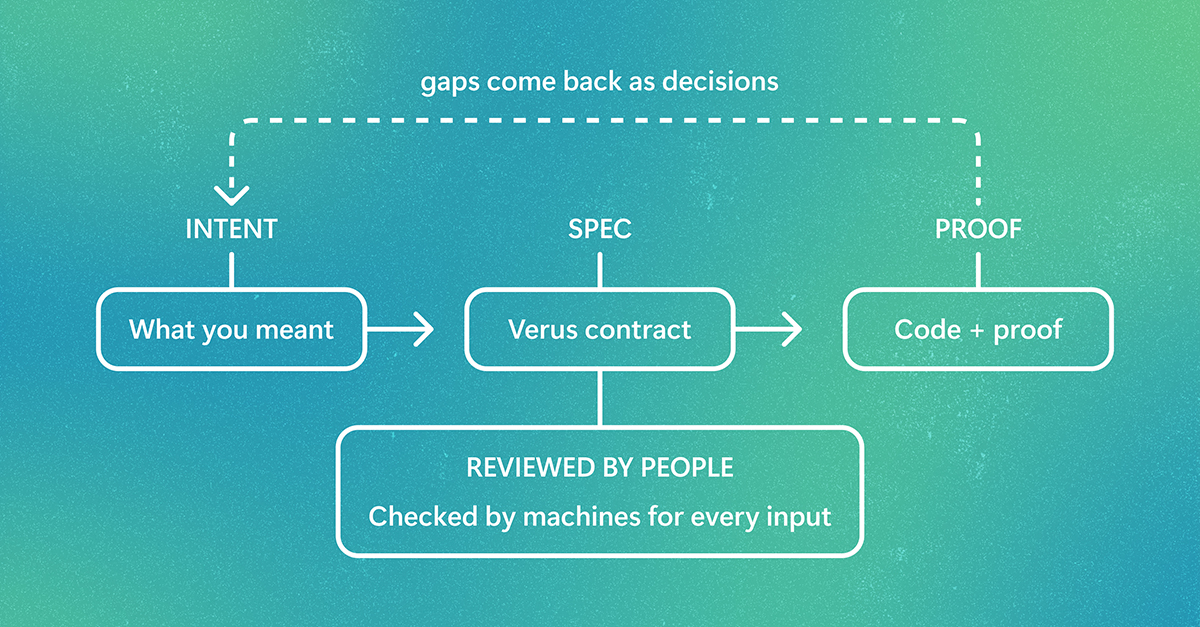
AI agents can generate code at a scale that’s hard for humans to review line-by-line. PDD Kit helps ensure the code is doing what the developer intended by creating formal specifications and testing against them. It converts developer intent into a Verus specification, proves AI-generated code meets it for every input, and uses tests where proofs aren't practical. Developers review intent, not every line. The post Formally verifying agent-written full-stack web apps with PDD Kit appeared first o…

MIT News · Artificial Intelligence Oct 28, 2026

Making machines that can listen

Professor Paris Smaragdis develops computers with superhuman hearing for applications like speech recognition, music understanding, and environmental monitoring.

MIT News · Artificial Intelligence Oct 23, 2026

Reinforcing the value of human understanding at MIT

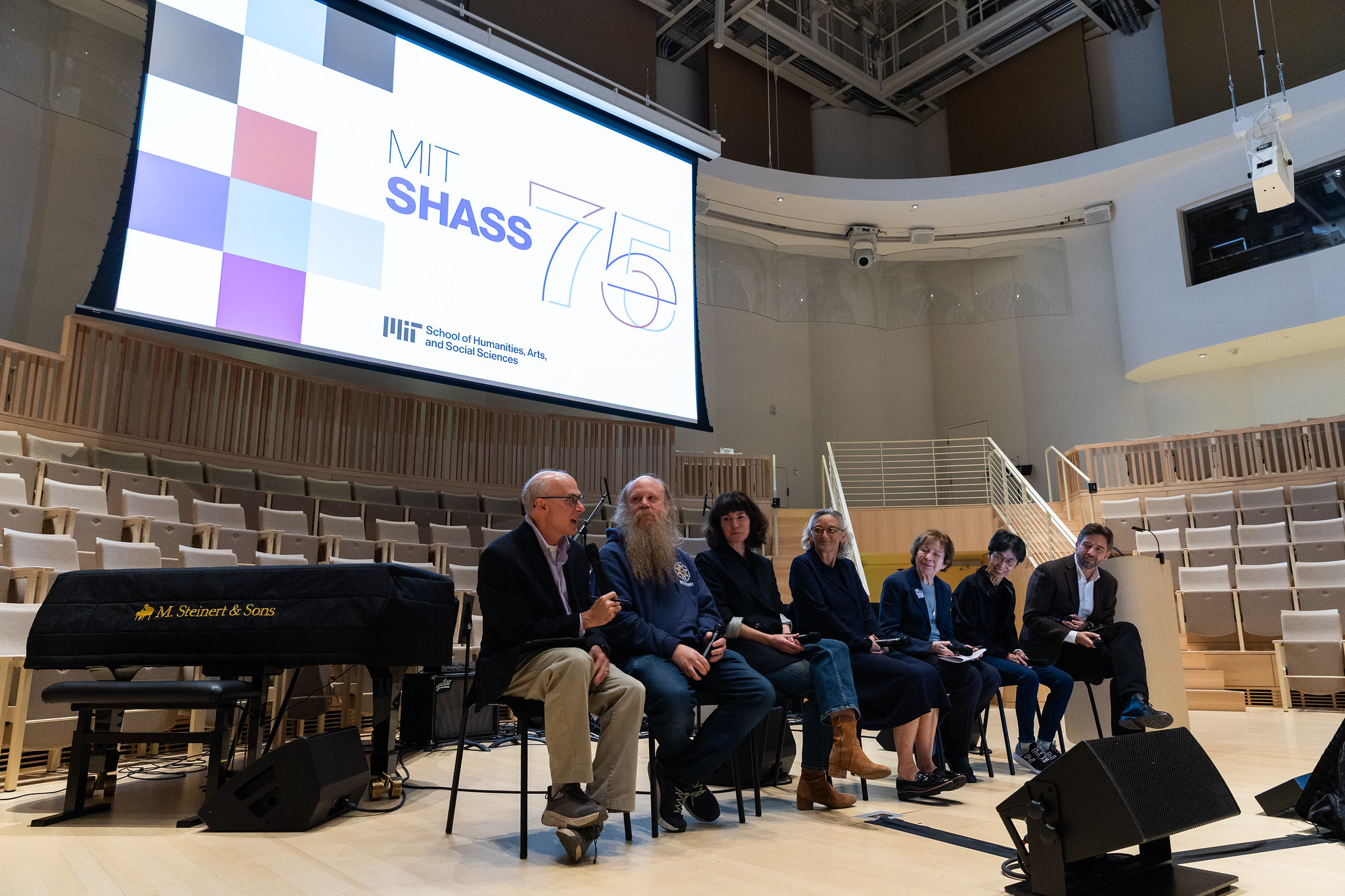
During the School of Humanities, Arts, and Social Sciences’ 75th Anniversary Symposium, President Sally Kornbluth said “MIT has never needed your particular insight and guidance more than we do now.”

We use cookies to run the site and, with your consent, for analytics and to show ads. See our Cookie Policy.