Skip to content
#generative ai Preprint

EraseSAE: Surgical Concept Erasure in Text-to-Video Diffusion Models via Sparse Autoencoders

Sep 2026 · 0 citations
Computer Science

TL;DR

This work proposes EraseSAE, a novel framework that leverages sparse autoencoders to achieve surgical concept erasure in DiT-based T2V diffusion models via a principled decompose-attribute-erase pipeline, and introduces the Partitioned Convolutional Sparse Autoencoder.

Abstract

Recent advances in text-to-video (T2V) diffusion models have demonstrated remarkable generative capabilities, yet their reliance on loosely curated training data raises pressing safety and copyright concerns. Concept erasure offers a principled remedy by removing unwanted semantics from pretrained models while preserving remaining concepts. However, existing approaches typically operate at a coarse granularity misaligned with the fine-grained, distributed nature of concept representations, leading to incomplete removal or degraded generation quality. We argue that surgical erasure fundamentally requires intervention at the level of monosemantic features, where each unit encodes a single interpretable concept. To this end, we propose EraseSAE, a novel framework that leverages sparse autoencoders to achieve surgical concept erasure in DiT-based T2V diffusion models via a principled decompose-attribute-erase pipeline. We first introduce the Partitioned Convolutional Sparse Autoencoder, which decomposes dense spatiotemporal activations into disentangled, interpretable sparse features while preserving spatiotemporal coherence. A contrastive attribution mechanism then contrasts activations from paired prompts to isolate concept-specific feature kernels. At inference, timestep-resolved spatiotemporal masks derived from the identified kernels confine erasure to regions where the target concept is active, leaving unrelated content intact. Extensive experiments across diverse diffusion models and concept erasure tasks demonstrate that EraseSAE achieves precise and robust concept removal with minimal quality degradation, substantially outperforming state-of-the-art methods. The code is available at https://github.com/HiDream-ai/EraseSAE.


View source

Similar papers

Preprint Oct 2026

Compositional Concept Erasure in Text-to-Image Diffusion Models via Hierarchically Grounded Semantic Surgery

Removing copyrighted, unsafe, or user-specified concepts from a deployed text-to-image diffusion model is now a practical requirement. Weight-editing methods can suppress fixed targets, but they require per-target retraining and modify the model checkpoint. Training-free methods, on the other hand, are deployment-frien...

Chen-Di Dai, Gan-Yu Zou, Nathan Self et al. · 0 citations
Preprint Oct 2026

STAGE: Subspace-Targeted Affine Generative Erasure for Text-to-3D Models

STAGE confines each edit to the low-dimensional subspace spanned by the differences between erase and anchor embeddings, and relaxes the norm-preserving (orthogonal) constraint of prior editors into a least-squares affine correction that maps target activations onto safe anchors subject to a penalty on the displacement...

Karol Dziekan, P. Spurek, Dawid Malarz · 0 citations
Preprint Oct 2026

FADE: Frame-Aware Diffusion-Transformer-based Multi-Concept Erasure for Video Unlearning

Text-to-video (T2V) diffusion models can reproduce copyrighted, violent, or explicit content, which motivates concept erasure: removing designated concepts from a pretrained model while preserving its behavior on everything else. Existing T2V erasure methods leave two problems open. Their frame-agnostic suppression can...

Yu-Chen Li, Kai-Yuan Deng, Chaoran Feng et al. · 1 citation
Preprint Sep 2026

HyperErase: Scale-Calibrated Hypernetwork for Multi-Concept Erasure in Text-to-Image Models

This approach first reframes concept erasure as prompt-conditioned parameter amortization and trains a hypernetwork to map textual descriptions to prompt-specific LoRA updates, eliminating the need for per-prompt gradient optimization or manual LoRA merging.

Yi Sun, Xin-Hao Zhong, Zhi-Qi Zhang et al. · 0 citations
Preprint Sep 2026

Motion Concept Unlearning in Video Diffusion Models

Text-to-video (T2V) diffusion models can generate realistic depictions of actions such as kicking, stabbing, and shooting, raising safety concerns that motivate targeted concept erasure. Although concept erasure has been extensively studied for static concepts in text-to-image and T2V models, erasing motion concepts re...

Ping Liu, Chi Zhang · 0 citations
Preprint Aug 2026

TINA+: Probing Residual Visual Knowledge in Unlearned Diffusion Models via Diffusion-Consistent Text-Free Inversion

Although text-to-image diffusion models exhibit remarkable generative power, concept erasure techniques are essential for preventing harmful content. Existing adversarial probes evaluate these methods by testing whether erased concepts can still be recovered. However, existing erasure and probe methods remain largely t...

Qian-Long Xiang, Miao Zhang, Kun Wang et al. · 1 citation

Related blog posts

Microsoft Research Blog Nov 16, 2026

TokenEconomizer: Learning from Experience to Make AI Coding Agents More Efficient

AI coding agents are increasingly help developers fix bugs and build features largely on their own, but every interaction with their models consumes tokens. In each session, an agent sends instructions, tool descriptions, and session history to its model. Most efforts to reduce this cost focus on individual tasks. Yet developers return to the same […] The post TokenEconomizer: Learning from Experience to Make AI Coding Agents More Efficient appeared first on Microsoft Research.

GPT-Lab Nov 13, 2026

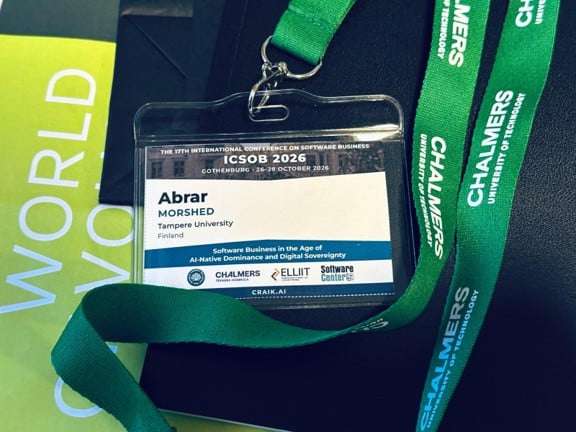
TenderIntell at ICSOB 2026: Three Days in Gothenburg

At ICSOB 2026 in Gothenburg, we presented TenderIntell, our work on multi-agent support for tendering. This post looks back at the conference, the idea behind a panel of three AI reviewers who score each proposal independently, and why evaluating agents reliably is the question we keep coming back to. The post TenderIntell at ICSOB 2026: Three Days in Gothenburg appeared first on GPT-Lab.

MIT News · Artificial Intelligence Nov 13, 2026

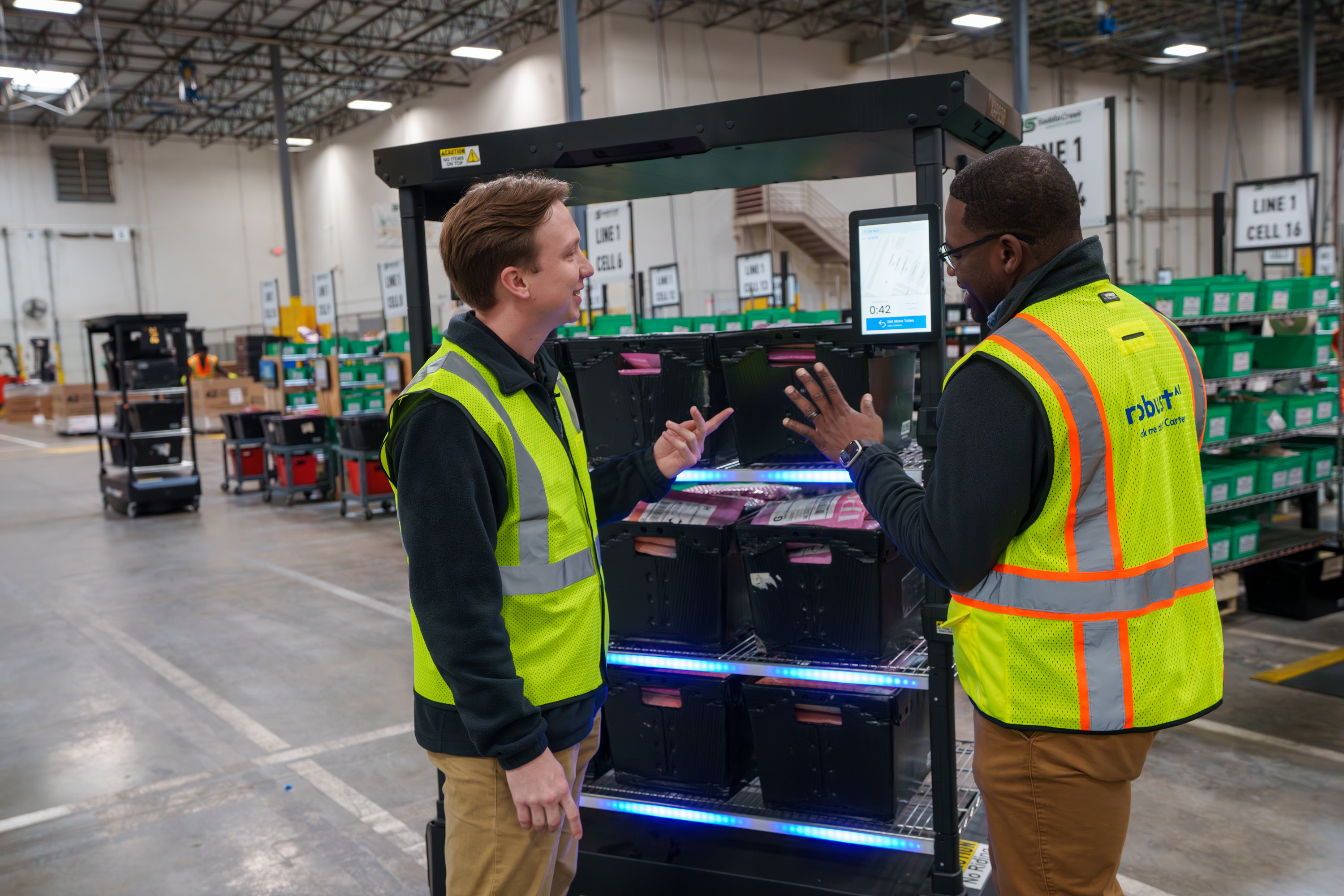
Helping robots fit into the human workplace

Founded by Anthony Jules ’92, SM ’92 and Professor Emeritus Rodney Brooks, Robust AI’s robots are designed to collaborate with humans in factories and warehouses.

We use cookies to run the site and, with your consent, for analytics and to show ads. See our Cookie Policy.