Skip to content

CoSIPR: Shared Service Orchestration with Dynamic Interest Coalitions in Edge Computing

Sep 2026 · Symmetry · 0 citations · 28 references
IoT and Edge/Fog Computing

TL;DR

Experiments show that CoSIPR improves service-category matching, request satisfaction, and the average number of accepted requests per instance, and reduces aggregate state-transfer cost and limits hotspot exposure while maintaining a controlled trade-off between end-to-end delay and state-transfer cost.

Abstract

Resource-intensive mobile edge computing (MEC) services are often provisioned on a per-request basis, resulting in repeated activation of equivalent service instances and redundant transmission of the same category-level state over overlapping inter-station links. Existing approaches rarely integrate demand aggregation, shared-instance provisioning, and reusable multi-target state distribution into a unified orchestration workflow. This paper proposes Coalition-based Shared Instance Provisioning and Routing (CoSIPR), a shared-service orchestration framework built around dynamic interest coalitions. CoSIPR predicts user requests and mobility, projects predicted locations onto the road network, filters unreliable or infeasible requests, and groups nearby users requesting the same service category. For each coalition, a marginal-gain-based candidate-reduction method and variable neighborhood search determine the serving stations, user assignments, and shared-instance counts. The selected stations then form the target set for a load-aware routing procedure that selects an existing state source and uses path-fusion reinforcement learning (PF-RL) to construct routes that reuse path segments across multiple targets. Experiments using real-world mobility and road-network data show that CoSIPR improves service-category matching, request satisfaction, and the average number of accepted requests per instance. It also reduces aggregate state-transfer cost and limits hotspot exposure while maintaining a controlled trade-off between end-to-end delay and state-transfer cost. These results demonstrate that dynamic interest coalitions and reusable multi-target paths can improve the efficiency of shared-service orchestration in MEC.


Read PDF

Similar papers

Open access Sep 2026

COATWD: Cost-Optimized Adaptive Three-Way Decision for Cloud–Edge Task Orchestration

With the increasing number of end devices and the growing heterogeneity of application demands, task orchestration in dynamic cloud–edge environments faces challenges arising from network fluctuations, resource contention, and decision uncertainty. To address these challenges, this paper proposes a Cost-Optimized Adapt...

Jin Yang, S. Sitjongsataporn · 0 citations
Open access Sep 2026

TAVRUM: Feasibility-First Contract Matching for Fragmentation-Aware Resource Allocation in IoT–Fog Networks

The rapid growth of Internet of Things (IoT) applications has increased the need for task-offloading mechanisms that can operate efficiently under heterogeneous Fog resources, dynamic workloads, and stringent latency requirements. A recurring limitation in existing allocation and matching approaches is that the choice...

Deafallah Alsadie · 0 citations
Conference Aug 2026

Broker-Coordinated Conflict-Based Search for Multi-Domain Virtual Network Embedding

Network virtualization enables multiple virtual networks to share physical network resources efficiently and flexibly. Realizing this capability requires solving the Virtual Network Embedding (VNE) problem, the task of assigning Virtual Network Requests (VNRs) to physical network resources while satisfying resource all...

Yi Zheng, Erik Kline, Sven Koenig et al. · 0 citations
Open access Sep 2026

Dynamic Scheduling Algorithm for Edge-cloud Collaborative Computing Resources Based on 5G NR-U and Distributed Large Model

The proposed MADDPG algorithm outperforms benchmark algorithms such as CO (Cloud-Only), GO (Greedy Offloading), SEP (Static Expert Partitioning), DDPG (Deep Deterministic Policy Gradient), COMA (Counterfactual Multi-Agent Policy Gradients), and MAPPO (Multi-Agent Proximal Policy Optimization) in terms of average iterat...

De-Feng Duan, Hong Liu, Li-Yun Huang et al. · 0 citations

CERLA-SFC: hierarchical orchestration of cost-efficient, reliable and low-latency SFCs in multi-access edge computing

CERLA-SFC is introduced, a hierarchical, multi-objective orchestrator that unifies learning-based placement, topology-aware routing and event-driven resource allocation in a single control loop that maintains near-zero latency violations across all urgency classes while keeping end-to-end delay in the millisecond range...

Yuanfei Xiao, Zhenli He, Xiaolong Zhai et al. · 0 citations

Related blog posts

MIT News · Artificial Intelligence Aug 27, 2026

Looking beyond natural sequences

A new machine-learning framework aims to improve the success rate of computational protein design while moving away from results that reproduce sequences found in nature.

Microsoft Research Blog Aug 20, 2026

Broadening access to Skala creates a faster path to predictive DFT 

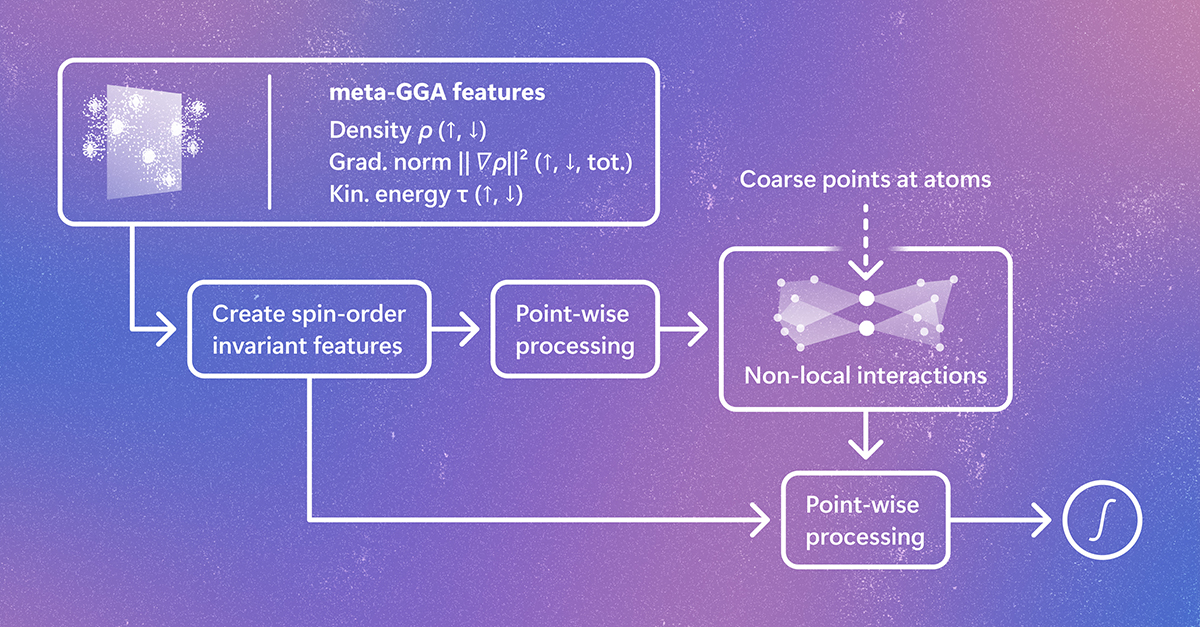
Skala 1.1, the updated deep-learning exchange-correlation functional from Microsoft Research, provides greater accuracy, expanded accessibility across the computational chemistry ecosystem, and a living benchmark to track computational performance. The post Broadening access to Skala creates a faster path to predictive DFT  appeared first on Microsoft Research.

We use cookies to run the site and, with your consent, for analytics and to show ads. See our Cookie Policy.