Skip to content

DGCR-Net: Dynamic Graph Contextual Reasoning Network for Semantic Segmentation of Remote Sensing Imagery

Sep 2026 · Remote Sensing · 0 citations · 33 references
Advanced Neural Network Applications

TL;DR

DGCR-Net integrates a ResNet18 encoder with a multi-stage decoder composed of cascaded dynamic graph reasoning blocks (DGRBs), which adaptively infer complex contextual dependencies among irregular objects and progressively refine multi-scale semantic representations, ensuring robust contextual reasoning.

Abstract

Semantic segmentation of remote sensing images is challenging because multi-scale irregular objects in complex scenes often exhibit large intra-class variability, high inter-class similarity, and sparse spatial distributions. These factors hinder accurate boundary delineation and reliable contextual modeling among spatially distant but semantically related regions. Considering the capability of graph neural networks in modeling irregular relationships, we propose DGCR-Net, a dynamic graph contextual reasoning network for semantic segmentation of remote sensing imagery. Specifically, DGCR-Net integrates a ResNet18 encoder with a multi-stage decoder composed of cascaded dynamic graph reasoning blocks (DGRBs), which adaptively infer complex contextual dependencies among irregular objects and progressively refine multi-scale semantic representations. A semantic graph adapter (SGA) is incorporated at each skip connection to enhance encoder features and project them into graph-compatible representations, ensuring robust contextual reasoning. Extensive experiments on the Vaihingen, Potsdam, LoveDA, and UAVid datasets demonstrate that DGCR-Net achieves competitive performance, with mIoU scores of 83.4%, 86.5%, 53.9%, and 69.4%, respectively.
Read PDF

Similar papers

Open access Aug 2026

Hypergraph-Driven Heterogeneous Spatial Relationship Learning for Remote Sensing Segmentation

A novel multi-relational-aware segmentation framework that leverages hypergraph theory to dynamically model higher-order semantic groupings across non-adjacent regions that achieves state-of-the-art mIoU performance on the LoveDA, Vaihingen, and Potsdam datasets.

Qi-Hao Zhang, Lan-Kun Peng, Fei-Yang Hu et al. · 0 citations
Open access 2026

Land-Oriented Scene Graph Generation for High-Resolution Remote Sensing Imagery: A Specialized Dataset and Semantic–Visual Collaborative Method

This study constructs the first land-oriented remote sensing SGG dataset by integrating and refining land-scene samples from ReCon1M and satellite-based terrain and relationship and proposes a semantic–visual collaborative SGG framework, which combines oriented object detection, global contextual modeling, and semantic...

Tong-Tong Zhang, Xiao-Yun Liu, Jun Li et al. · 0 citations
2026

Spatially Anisotropic Reasoning Network for Remote Sensing Scene Graph Generation

Remote sensing scene graph generation (RS-SGG) aims to advance remote sensing image interpretation from primitive entity recognition to high-level holistic scene understanding. Due to the large spatial coverage of remote sensing images, objects are often organized into multiple functional subscenes, while predicate sem...

Wen-Bin Wang, Yi-Heng Chen, Hang Sun et al. · 0 citations
Open access 2026

Seeing With Words: Autocaption-Guided Graph Transformer for Remote Sensing Segmentation

Semantic segmentation of remote sensing (RS) imagery is a cornerstone of geospatial analysis, which supports applications, such as land cover mapping, urban planning, and environmental monitoring. Despite significant progress with neural networks, existing approaches remain limited by their reliance on visual features...

Ge Song, Jia-Wei Guo, Yang Zhang et al. · 0 citations
2026

Enhancing Scene Generalization for Open-Vocabulary Remote Sensing Segmentation via Semantic–Structural Collaboration

Open-vocabulary semantic segmentation (OVSS) of remote sensing faces severe performance degradation when encountering unseen scene distributions caused by geographic, sensor, and resolution variations. Existing vision–language approaches provide strong semantic priors but lack scene-invariant structural representations...

Wu-Biao Huang, Hu-Chen Li, Shuai Zhang et al. · 0 citations

Related blog posts

Microsoft Research Blog Jul 13, 2026

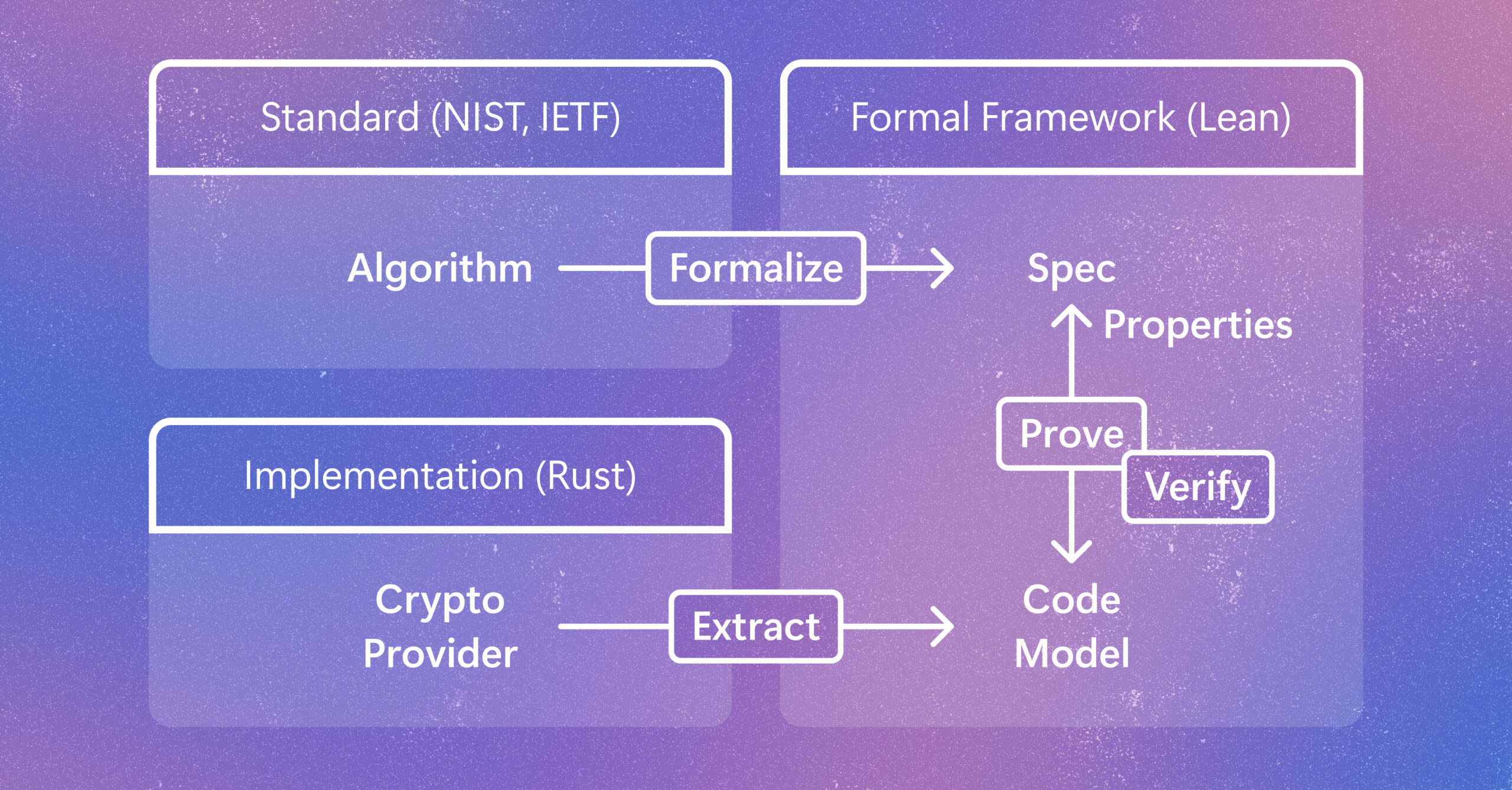
Verifying Rust cryptography in SymCrypt, from standards to code

Cryptographic code supports vital protections in modern computing systems. Learn how a new method helps verify code as developers write it while preserving speed and adaptability as it gets implemented and evolves. The post Verifying Rust cryptography in SymCrypt, from standards to code appeared first on Microsoft Research.

We use cookies to run the site and, with your consent, for analytics and to show ads. See our Cookie Policy.