A causal-abstraction-based audit instrument for efficiently evaluating fairness under interventions on the classifier-free guidance scale is proposed and experiments evaluate distributional fidelity, fairness-query accuracy, and computational efficiency.
Abstract
Fairness auditing of text-to-image diffusion models often requires generating large numbers of images across sampling configurations, making comprehensive evaluation computationally expensive. We propose a causal-abstraction-based audit instrument for efficiently evaluating fairness under interventions on the classifier-free guidance scale. Given a fixed prompt and a target feature function, we represent the diffusion process as a low-level structural causal model and construct a corresponding high-level model over abstract denoising states. We characterize the projected causal structure, establish identifiability of the fairness-relevant interventional query, and provide sufficient conditions under which the high-level model preserves this query. A probabilistic transformer implements the high-level model as an amortized predictor of target-feature distributions across guidance scales. Experiments evaluate distributional fidelity, fairness-query accuracy, and computational efficiency. We present two auditing demonstrations: one using standard Stable Diffusion 1.5 and another using StayFair, a fairness-enhanced Stable Diffusion model, to examine their behavior across guidance scales.
Although diffusion models produce high-quality images, they also reproduce and amplify demographic imbalances in their training data. Debiasing their generation process post-training w.r.t. some sensitive attribute usually relies on classifier guidance or explicit text extra-conditioning, but this reduces methods'appli...
Théau d'Audiffret, M. Vladimirova, Jean-Yves Franceschi· 0 citations
This work introduces FAIR-SHEPHERD, a structural policy-based framework for transparent fairness in real-world settings with noisy labels and shifting distributions and develops S-agnostic tools that optimize policy-aligned gradient objectives using lattice-defined proxies.
Shubham Mohole, Hongjun Choi, Christian Schroeder et al.· ACM Journal on Responsible C...· 0 citations
Over the past decade, Machine Learning (ML) has been trained under dual objectives: minimizing prediction error via Empirical Risk Minimization (ERM) while controlling unfairness bias. In practice, however, fairness-aware training often yields limited improvements over standard ERM, making reliable post hoc auditing es...
Large language models (LLM) are increasingly used to support educational risk prediction, but their decisions may encode sensitive-attribute bias and are difficult to audit after deployment. Prompt-based fairness repair can change model behavior, yet it usually does not record which causal pathways were repaired or whe...
Mei-Xia Guo, Xu-Peng Zhang· 2026 6th International Confe...· 0 citations
This work introduces Fairabel, a novel approach that repairs fairness by mutating the training data under the guidance of causal models and multi-objective optimization, and shows that Fairabel reduces ML software bias by 50% on average across three fairness metrics, outperforming the state-of-the-art with a 9% relativ...
Ying Xiao, Zhen-Peng Chen, Yepang Liu et al.· ACM Transactions on Software...· 0 citations
Large language models are increasingly used in contexts where their outputs can affect people directly, including hiring, admissions, and lending. This growing role makes it important to consider not only how well these models perform, but also whether their behavior is fair. Although many fairness metrics, bias benchm...
Samah Alhazmi· International Journal of Adv...· 0 citations
Exploring how generative AI could make machine vision more accessible to businesses. The post GenEye in a Box: Making Machine Vision Something You Can Just Ask For appeared first on GPT-Lab.
Microsoft Research Blog· microsoft.comAug 11, 2026
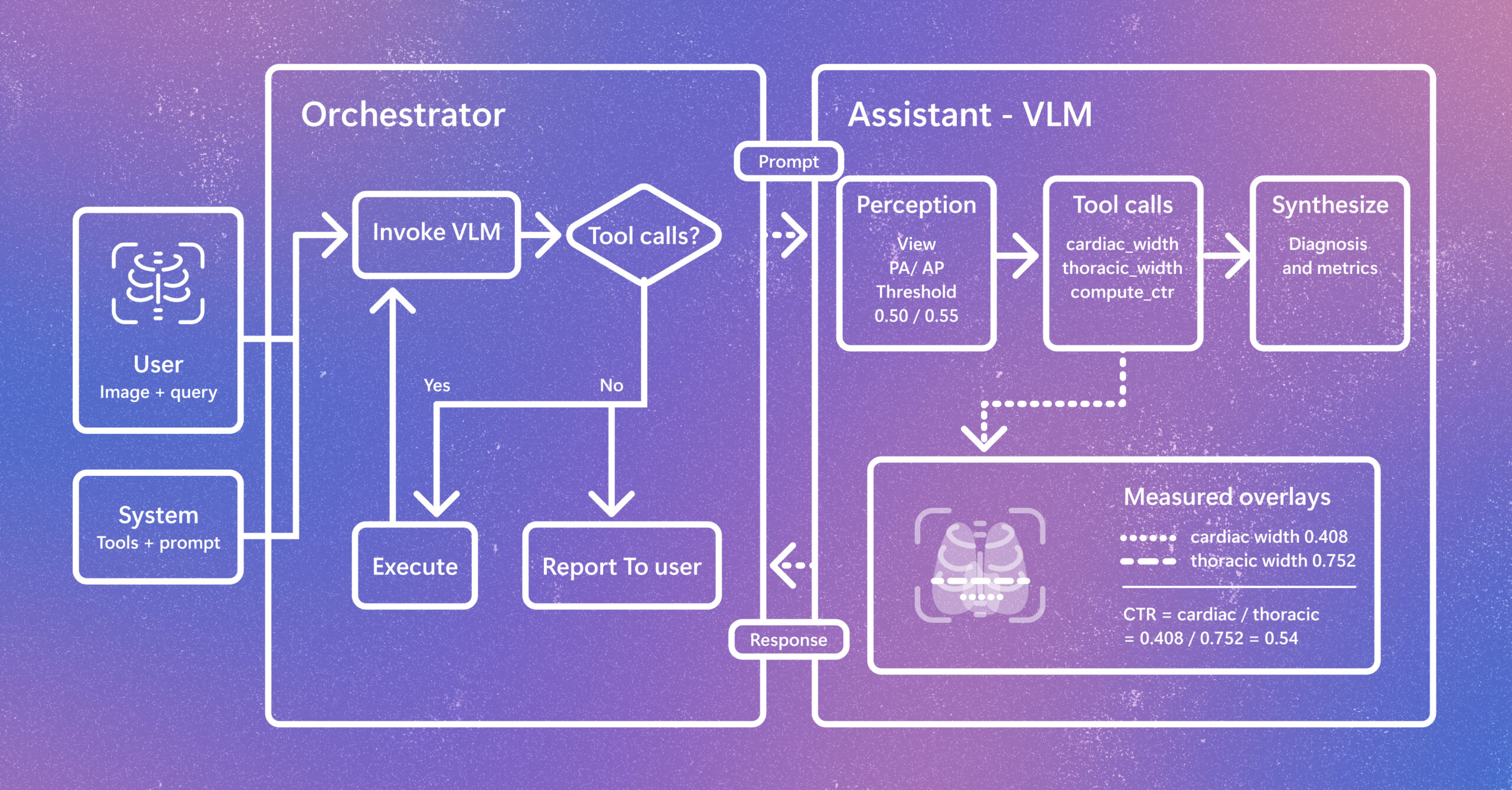
Radiology AI is evolving beyond report generation. CARE-X explores a unified approach that combines flexible reasoning, calibrated predictions, and measurement-based tools for chest X-ray interpretation. The post Introducing CARE-X: Towards Clinically Useful Radiology VLMs with Auxiliary Supervision, Reward-Aligned Learning, and Tool-Augmented Measurement appeared first on Microsoft Research.